
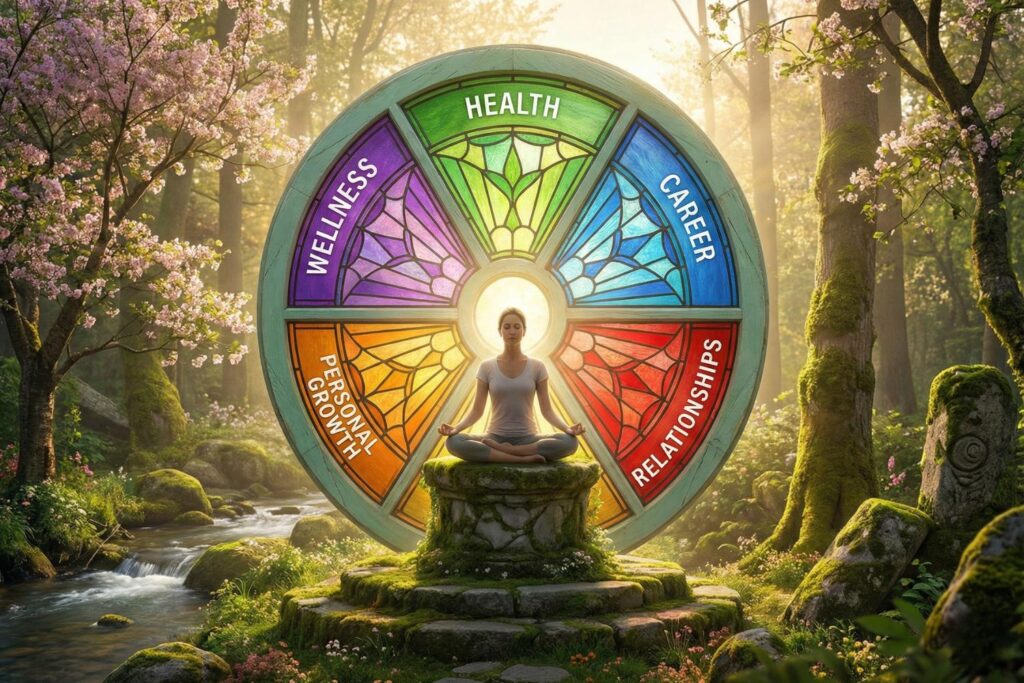
Life can often feel like a juggling act—work, relationships, health, personal growth—all pulling our attention in different directions. Achieving a sense of balance and fulfillment can seem daunting, but the wheel of wellness offers a practical framework for understanding and nurturing every aspect of your life.
The wheel of wellness is more than a visual tool; it’s a roadmap for personal development. By examining each segment of the wheel, you can identify areas that need attention and create actionable steps to bring your life into harmony. Whether you are feeling overwhelmed, stuck, or simply want to enhance your overall wellbeing, this guide will help you explore the concept, benefits, and practical applications of the wheel of wellness.
What Is the Wheel of Wellness?
The wheel of wellness is a circular diagram divided into key life domains, often ranging from 6 to 12 segments. Each segment represents a critical area of life, such as:
- Physical health
- Emotional wellbeing
- Social relationships
- Career and professional growth
- Financial stability
- Spirituality or purpose
- Recreation and leisure
- Personal development
The concept is simple yet powerful: balance occurs when each section is nurtured equally. Visualizing your life as a wheel allows you to assess where you may be over-investing or neglecting aspects of your wellbeing. A balanced wheel rotates smoothly, symbolizing harmony and life satisfaction, while an imbalanced wheel may feel “wobbly,” reflecting stress, burnout, or dissatisfaction.
Using the wheel of wellness, you can identify gaps, set goals, and measure progress over time. It’s not just about self-awareness—it’s about creating actionable strategies to achieve a more fulfilling and balanced life.
Benefits of Using the Wheel of Wellness
- Clarity and Self-Awareness
The wheel of wellness provides a snapshot of your life, highlighting strengths and weaknesses. By evaluating each segment, you gain clarity on which areas need focus. - Goal Setting Made Simple
Seeing your life broken down into categories helps you set realistic and meaningful goals. Whether it’s improving your physical fitness or deepening personal relationships, the wheel guides your growth. - Enhanced Work-Life Balance
When one area dominates your life, others suffer. Using the wheel of wellness encourages more balanced time allocation, reducing stress and increasing satisfaction. - Motivation and Accountability
Regularly tracking your wheel helps maintain momentum. You can celebrate progress in one area while identifying where adjustments are needed, keeping you accountable to yourself. - Improved Mental Health
Balanced living has been linked to reduced anxiety, improved mood, and better resilience in the face of challenges. The wheel encourages proactive mental wellness.
How to Create Your Personal Wheel of Wellness
Creating your own wheel of wellness is straightforward:
- Identify Your Life Categories
Choose 6–12 areas that reflect your priorities. Common categories include health, career, finances, social relationships, personal growth, spirituality, recreation, and environment. - Rate Your Satisfaction
Draw a circle and divide it into segments for each category. Rate your current satisfaction in each area from 1 (low) to 10 (high). - Visualize Your Wheel
Connect your ratings to create the “wheel.” A balanced wheel looks smooth and circular; uneven areas highlight where attention is needed. - Set Goals
Focus on segments that scored low. Set small, actionable goals to improve those areas. For example, if your physical health scored 4, commit to a 20-minute daily workout. - Track Progress
Reassess every month or quarter. Update your wheel and celebrate improvements, while adjusting goals as needed.
By using the wheel of wellness in this way, you transform a visual tool into a powerful system for personal growth and balance.
Practical Tips to Balance Every Area of Your Life
- Physical Health: Regular exercise, balanced diet, sufficient sleep, and mindfulness practices support your body and mind.
- Emotional Wellbeing: Journaling, therapy, and stress management techniques can help you navigate emotions and build resilience.
- Social Relationships: Nurture meaningful connections. Schedule time with friends, family, and supportive communities.
- Career and Professional Growth: Invest in skill development, networking, and aligning your work with your passions.
- Financial Stability: Budgeting, saving, and mindful spending create security and reduce financial stress.
- Spirituality or Purpose: Meditation, reflection, or involvement in meaningful causes can provide a sense of direction and fulfillment.
- Recreation and Leisure: Hobbies, travel, or creative pursuits recharge your energy and spark joy.
- Personal Development: Continuous learning, reading, or taking courses strengthens confidence and adaptability.
By consciously nurturing each segment, you create a more harmonious life. The wheel of wellness serves as a constant reminder that your wellbeing is multi-dimensional—improvement in one area often positively affects others.
Common Challenges and How to Overcome Them
- Neglecting Certain Areas
Life circumstances may cause temporary neglect of some areas. Acknowledge this without guilt and create a plan to rebalance. - Overcommitting
Trying to “perfect” every segment at once can lead to burnout. Focus on one or two areas at a time. - Resistance to Change
Change is uncomfortable. Start with small, achievable steps and gradually build momentum. - Inconsistent Tracking
A neglected wheel is less effective. Set reminders to review your wheel regularly.
By anticipating these challenges, the wheel of wellness becomes not just a tool, but a sustainable habit that supports long-term wellbeing.
Conclusion
The wheel of wellness is more than a visual diagram; it is a framework for self-discovery, growth, and balance. By assessing, nurturing, and tracking each area of your life, you can achieve greater harmony, reduce stress, and unlock your full potential.
Remember, balance does not mean perfection. It means consciously investing in all areas of life to create a sense of stability and fulfillment. Start by creating your own wheel of wellness today, and take one small step toward a more balanced, joyful, and meaningful life.