
In a world filled with filtered photos, unrealistic beauty standards, and constant comparison, struggling with how you see your body has become incredibly common. But here’s the truth—your worth has never been defined by your appearance.
If you’re on a journey of treating body image issues, you’re not alone. And more importantly, you’re not stuck. Healing is possible, and it starts with small, intentional steps toward self-awareness, acceptance, and compassion.
This guide will walk you through practical, real-life strategies to help you rebuild confidence and reconnect with your body in a healthier, more loving way.
What Are Body Image Issues?
Body image issues refer to negative thoughts, feelings, or perceptions about your physical appearance. This can include:
- Constant self-criticism
- Comparing yourself to others
- Feeling uncomfortable in your own skin
- Obsessing over flaws
- Avoiding mirrors or photos
These thoughts often go deeper than appearance—they’re tied to self-worth, identity, and emotional wellbeing.
Why Do Body Image Issues Develop?
Understanding the root cause is a powerful step in treating body image issues.
1. Social Media & Unrealistic Standards
We’re constantly exposed to “perfect” bodies that are often edited or staged. Over time, this creates unrealistic expectations.
2. Childhood Experiences
Comments from family, bullying, or early criticism can shape how you see yourself for years.
3. Cultural & Societal Pressure
Beauty standards differ across cultures, but the pressure to “fit in” exists everywhere.
4. Internal Dialogue
The way you talk to yourself matters. Negative self-talk can reinforce harmful beliefs.
Signs You May Be Struggling
You might be dealing with body image issues if:
- You avoid social situations because of your appearance
- Your mood depends on how you look that day
- You frequently check mirrors or avoid them completely
- You feel “not good enough” physically
- You compare your body to others constantly
Recognizing these signs is the first step toward change.
Practical Steps for Treating Body Image Issues
Now let’s focus on what actually helps.
1. Challenge Negative Thoughts
Your mind is powerful—but it’s not always truthful.
When you catch yourself thinking:
- “I hate how I look”
- “I’m not attractive enough”
Pause and ask:
- Is this fact or feeling?
- Would I say this to a friend?
Replace harsh thoughts with neutral or kind ones:
- “I’m learning to accept myself”
- “My body deserves respect”
This isn’t about fake positivity—it’s about fairness.
2. Limit Comparison
Comparison is one of the biggest obstacles in treating body image issues.
Remember:
- You’re comparing your real life to someone else’s highlight reel
- Every body is different—genetics, lifestyle, and health all play a role
Try this:
- Unfollow accounts that make you feel inadequate
- Follow people who promote body diversity and realism
Your environment shapes your mindset more than you realize.
3. Focus on What Your Body Can Do
Shift your perspective from appearance to function.
Instead of asking:
- “How does my body look?”
Ask:
- “What can my body do for me today?”
Your body:
- Helps you move
- Carries you through life
- Allows you to experience joy, connection, and growth
Gratitude can slowly replace criticism.
4. Practice Self-Compassion
Healing begins when you treat yourself with kindness.
Self-compassion means:
- Being gentle with yourself on bad days
- Accepting imperfections without judgment
- Understanding that struggle is part of being human
Try this simple exercise:
Place your hand on your heart and say:
“I’m doing the best I can, and that’s enough.”
It may feel awkward at first—but it works over time.
5. Dress for Comfort, Not Approval
Clothing should make you feel good—not judged.
Wear what:
- Fits your body now (not the body you’re trying to achieve)
- Feels comfortable and empowering
- Reflects your personality
When you stop dressing for others, you start reclaiming your confidence.
6. Stop “Body Checking”
Constantly checking your body in mirrors or photos can reinforce negative thoughts.
If you notice yourself:
- Checking your reflection repeatedly
- Zooming into photos to find flaws
Try to:
- Reduce frequency gradually
- Redirect your focus to something meaningful
Awareness is key here—not perfection.
7. Build a Healthy Relationship with Food
Food is not the enemy.
Avoid labeling food as:
- “Good” or “bad”
- “Allowed” or “forbidden”
Instead:
- Listen to your body’s hunger cues
- Eat in a balanced, mindful way
- Remove guilt from eating
A healthy mindset around food supports both physical and emotional healing.
8. Surround Yourself with Support
You don’t have to do this alone.
Talk to:
- Friends who uplift you
- Supportive family members
- Online communities focused on self-growth
If needed, consider professional help like therapy. Sometimes deeper healing requires guidance—and that’s okay.
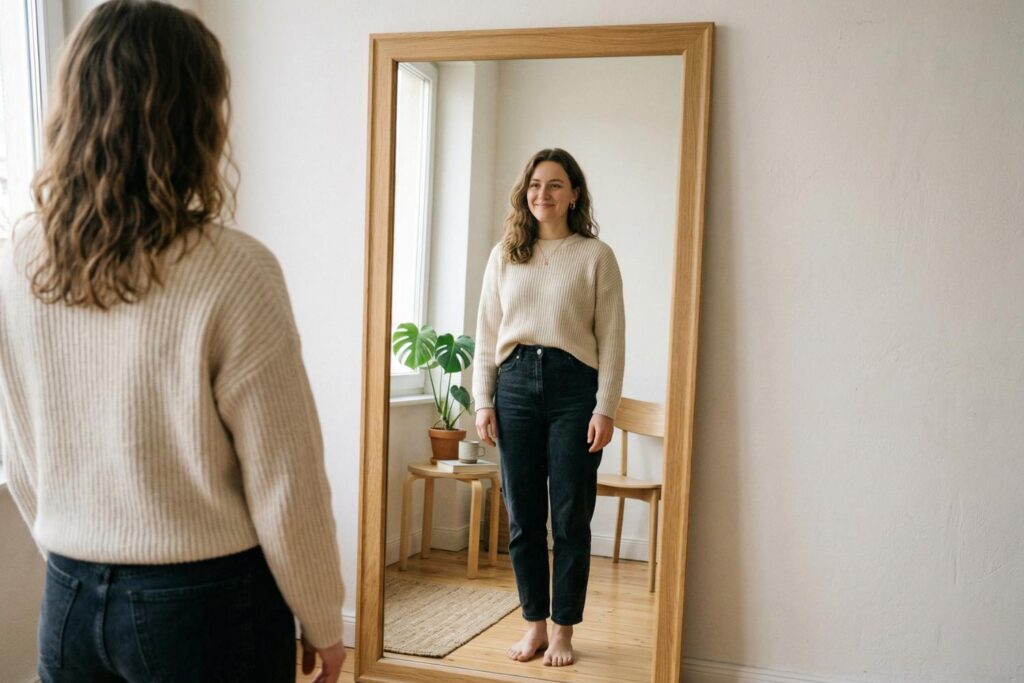
9. Practice Mirror Work
Instead of avoiding mirrors, use them as a tool for healing.
Start small:
- Look at yourself for a few seconds
- Notice without judging
- Say one neutral or positive thing
Example:
- “This is my body, and I’m learning to accept it.”
Over time, this reduces fear and builds familiarity.
10. Redefine Beauty
Who decided what beauty looks like?
Challenge the idea that:
- Only one body type is “ideal”
- Your value depends on appearance
Beauty is:
- Confidence
- Kindness
- Authenticity
- Energy
When you redefine beauty, you take your power back.
Daily Habits That Support Healing
Consistency matters more than perfection.
Here are small daily habits that support treating body image issues:
- Journaling your thoughts and feelings
- Practicing gratitude
- Moving your body in ways you enjoy (not punishment)
- Taking breaks from social media
- Speaking kindly to yourself
These habits may seem simple—but they create lasting change over time.
What Healing Actually Looks Like
Let’s be real—healing isn’t linear.
Some days you’ll feel confident.
Other days, old thoughts may come back.
That doesn’t mean you’ve failed.
Healing looks like:
- Catching negative thoughts faster
- Being kinder to yourself
- Letting go of unrealistic expectations
- Feeling more at peace in your body
Progress is subtle—but powerful.
When to Seek Professional Help
If body image issues are affecting your daily life, it’s important to seek support.
Consider professional help if:
- You experience extreme anxiety about your appearance
- You avoid social interactions
- Your relationship with food is unhealthy
- You feel overwhelmed or stuck
Therapists can help you explore deeper patterns and provide tools tailored to your situation.
Final Thoughts
Treating body image issues is not about becoming perfect—it’s about becoming more accepting, more compassionate, and more connected to yourself.
You are not defined by:
- A number on a scale
- A reflection in the mirror
- Someone else’s opinion
You are defined by your experiences, your growth, your resilience, and your humanity.
Start small. Be patient. And remember:
You deserve to feel comfortable, confident, and at peace in your own body.