Social media has become a central part of everyday life. Whether scrolling through Instagram, watching videos on TikTok, networking on LinkedIn, or connecting with friends on Facebook, billions of people spend hours online every day. While these platforms offer countless opportunities for communication, entertainment, and learning, they also raise important questions about social media and mental health.
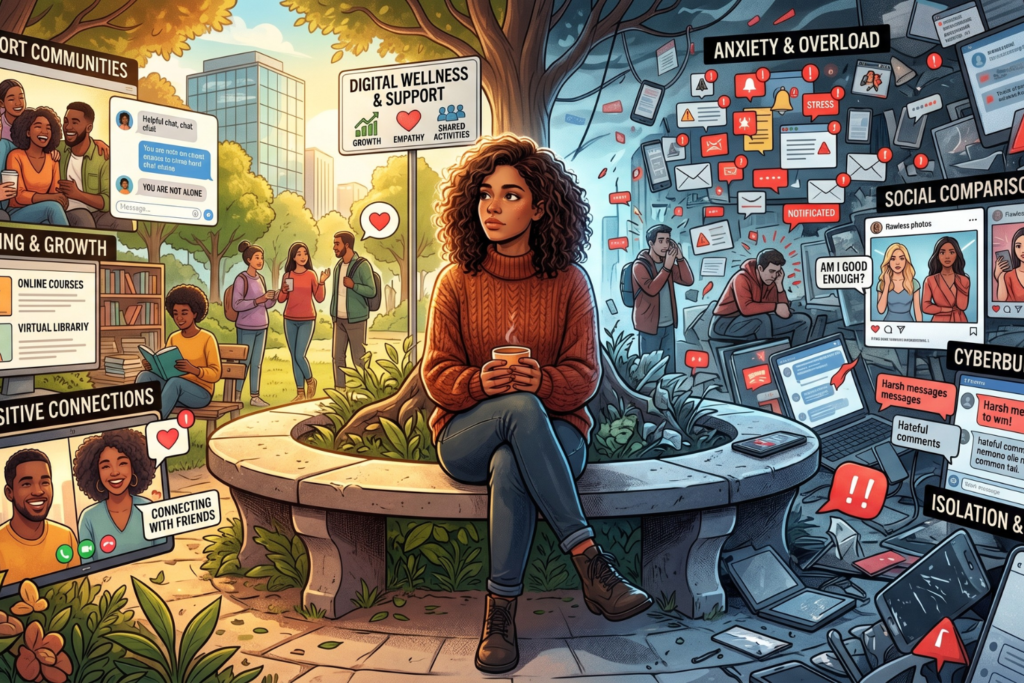
The relationship between social media and mental well-being is complex. For some people, social media provides support, inspiration, and a sense of belonging. For others, excessive use can contribute to anxiety, stress, depression, and low self-esteem.
Understanding both the positive and negative effects of social media can help individuals develop healthier digital habits. In this article, we’ll explore the benefits, risks, and practical ways to maintain balance in an increasingly connected world.
Understanding the Connection Between Social Media and Mental Health
Mental health refers to our emotional, psychological, and social well-being. It affects how we think, feel, and interact with others. Social media influences many aspects of mental health because it shapes how we communicate, consume information, and perceive ourselves.
Research shows that social media can affect mood, self-esteem, relationships, sleep quality, and overall life satisfaction. However, the impact often depends on how people use these platforms rather than simply how much time they spend on them.
When used intentionally and in moderation, social media can support mental wellness. When used excessively or negatively, it can contribute to emotional challenges.
The Benefits of Social Media for Mental Health
Although social media often receives criticism, it also offers several positive mental health benefits when used responsibly.
1. Building Connections and Reducing Loneliness
One of the biggest advantages of social media is its ability to connect people regardless of location.
People can:
- Stay in touch with family and friends
- Reconnect with old classmates
- Join communities with shared interests
- Find support groups for personal challenges
For individuals who feel isolated, social media can create a sense of belonging and help reduce feelings of loneliness.
2. Access to Mental Health Resources
Many organizations, therapists, and mental health advocates share valuable information online.
Users can access:
- Educational content
- Self-care strategies
- Coping techniques
- Mental health awareness campaigns
- Professional guidance
These resources help normalize conversations about mental health and encourage people to seek support when needed.
3. Emotional Support During Difficult Times
Social media allows people to share experiences and receive encouragement from others.
Whether someone is dealing with grief, anxiety, depression, or life transitions, online communities often provide understanding and emotional validation.
Knowing others face similar struggles can help individuals feel less alone.
4. Opportunities for Self-Expression
Creative expression plays an important role in mental well-being.
Social media gives users platforms to:
- Share artwork
- Write personal stories
- Post photography
- Create videos
- Express opinions
Healthy self-expression can boost confidence and help people process emotions.
5. Learning and Personal Growth
Many users follow educational accounts that promote:
- Personal development
- Mindfulness
- Productivity
- Emotional intelligence
- Healthy lifestyle habits
Exposure to positive and informative content can inspire growth and motivation.
The Risks of Social Media on Mental Health
While there are benefits, the risks associated with social media and mental health cannot be ignored.
1. Comparison and Low Self-Esteem
Social media often showcases carefully curated highlights of people’s lives.
Users frequently see:
- Vacation photos
- Career achievements
- Fitness transformations
- Luxury lifestyles
- Relationship milestones
Constant exposure to these idealized images can lead people to compare themselves unfairly to others.
This comparison may result in:
- Feelings of inadequacy
- Lower self-esteem
- Dissatisfaction with life
- Negative body image
Many people forget that social media often reflects selected moments rather than reality.
2. Anxiety and Fear of Missing Out (FOMO)
Fear of Missing Out, commonly known as FOMO, occurs when individuals believe others are having better experiences than they are.
Social media can intensify these feelings by constantly displaying social events, achievements, and activities.
Symptoms of FOMO may include:
- Anxiety
- Restlessness
- Constant checking of notifications
- Difficulty focusing on the present moment
Over time, this can negatively impact emotional well-being.
3. Cyberbullying and Online Harassment
Unlike traditional bullying, cyberbullying can occur 24 hours a day.
Negative experiences may include:
- Harassment
- Mean comments
- Public humiliation
- Threats
- Social exclusion
Victims of cyberbullying often experience:
- Increased anxiety
- Depression
- Emotional distress
- Reduced self-confidence
Young people are particularly vulnerable to these effects.
4. Sleep Disruption
Many people use social media before bedtime without realizing its impact on sleep quality.
Problems may arise from:
- Excessive screen time
- Blue light exposure
- Emotional stimulation
- Late-night scrolling
Poor sleep is closely linked to:
- Anxiety
- Depression
- Mood swings
- Reduced concentration
Maintaining healthy sleep habits is essential for mental wellness.
5. Addiction and Excessive Use
Social media platforms are designed to capture attention.
Features such as:
- Notifications
- Likes
- Comments
- Infinite scrolling
can encourage repetitive use.
Excessive social media consumption may lead to:
- Reduced productivity
- Increased stress
- Neglected responsibilities
- Social withdrawal
When online engagement begins interfering with daily life, it may indicate unhealthy usage patterns.
Social Media and Anxiety
Anxiety is one of the most commonly discussed mental health concerns related to social media.
Several factors contribute to this connection:
Constant Connectivity
Being available online at all times can create pressure to respond immediately to messages and notifications.
This continuous connectivity can leave individuals feeling mentally exhausted.
Information Overload
Social media exposes users to an endless stream of content, news, opinions, and updates.
Too much information can become overwhelming and increase feelings of stress and anxiety.
Validation Seeking
Many users become emotionally invested in metrics such as:
- Likes
- Shares
- Followers
- Comments
When online validation becomes tied to self-worth, anxiety levels may increase.
Social Media and Depression
Research has found associations between excessive social media use and symptoms of depression.
Possible contributing factors include:
Social Comparison
Comparing real life to curated online content often creates unrealistic expectations.
Individuals may feel they are falling behind others in life, leading to sadness and discouragement.
Isolation Despite Connectivity
Ironically, spending excessive time online can sometimes replace meaningful face-to-face interactions.
Virtual communication cannot always provide the same emotional benefits as in-person relationships.
Exposure to Negative Content
Constant exposure to negative news, conflicts, or emotionally charged content may contribute to feelings of hopelessness and emotional fatigue.
The Impact of Social Media on Teen Mental Health
Teenagers are among the most active social media users.
Adolescence is already a period of significant emotional and psychological development. Social media can amplify challenges related to:
- Identity formation
- Self-esteem
- Peer acceptance
- Body image
Young users may be particularly sensitive to online feedback and social comparison.
Parents, educators, and caregivers can help by encouraging healthy digital habits and open conversations about online experiences.
Signs That Social Media May Be Affecting Your Mental Health
It’s important to recognize warning signs that indicate social media use may be becoming unhealthy.
These signs may include:
- Feeling anxious after scrolling
- Constantly comparing yourself to others
- Difficulty sleeping
- Reduced productivity
- Mood changes linked to online activity
- Obsessively checking notifications
- Feeling emotionally drained after using social platforms
Recognizing these patterns is the first step toward creating healthier habits.
How to Maintain a Healthy Relationship with Social Media
The goal is not necessarily to eliminate social media but to use it mindfully.
Set Time Limits
Track your daily screen time and establish reasonable boundaries.
Many smartphones now offer built-in tools that help monitor usage.
Curate Your Feed
Follow accounts that:
- Educate
- Inspire
- Motivate
- Support mental wellness
Unfollow accounts that consistently trigger negative emotions.
Take Regular Breaks
Digital detox periods can improve focus and reduce stress.
Consider:
- Screen-free mornings
- Social media-free weekends
- Notification breaks
Even short breaks can provide mental relief.
Prioritize Real-Life Connections
Spend quality time with family and friends offline.
Face-to-face interactions often provide deeper emotional support than online communication.
Avoid Social Media Before Bed
Create a nighttime routine that supports healthy sleep.
Try reading, journaling, or practicing relaxation exercises instead of scrolling before bedtime.
Practice Mindful Usage
Before opening a social media app, ask yourself:
- Why am I using this right now?
- How do I feel before and after using it?
- Is this helping or harming my well-being?
Awareness can lead to healthier choices.
Creating a Positive Digital Environment
Building a healthier online experience involves intentional choices.
You can:
- Follow positive and educational creators
- Limit exposure to toxic discussions
- Engage in meaningful conversations
- Report harmful content
- Support mental health awareness initiatives
A positive digital environment can significantly improve the relationship between social media and mental health.
The Future of Social Media and Mental Wellness
As awareness grows, many platforms are taking steps to support user well-being.
Examples include:
- Screen-time reminders
- Content moderation
- Mental health resources
- Privacy controls
- Well-being features
At the same time, individuals must take personal responsibility for how they engage online.
Technology itself is neither good nor bad; its impact depends largely on how it is used.
Conclusion
The connection between social media and mental health is both powerful and complex. Social media offers valuable opportunities for connection, education, support, and self-expression. However, excessive or unhealthy use can contribute to anxiety, depression, low self-esteem, sleep problems, and emotional stress.
The key lies in balance. By using social media mindfully, setting healthy boundaries, and prioritizing real-world relationships, individuals can enjoy the benefits while minimizing the risks.
Rather than allowing social media to control our lives, we can learn to use it as a tool that supports mental wellness, personal growth, and meaningful connection.
Frequently Asked Questions
How does social media affect mental health?
Social media can positively affect mental health by providing connection, support, and educational resources. However, excessive use may contribute to anxiety, depression, low self-esteem, and stress.
Can social media cause anxiety?
Social media can contribute to anxiety through constant comparison, fear of missing out (FOMO), information overload, and pressure for online validation.
Is social media bad for mental health?
Social media is not inherently bad. Its impact depends on how it is used. Healthy and mindful usage can provide benefits, while excessive or negative use may harm mental well-being.
How can I use social media in a healthier way?
You can improve your relationship with social media by setting time limits, taking breaks, curating your feed, prioritizing offline relationships, and practicing mindful usage.
Why do teenagers struggle with social media?
Teenagers may be more vulnerable to social comparison, cyberbullying, body image concerns, and peer pressure, making social media a significant influence on their mental health.