
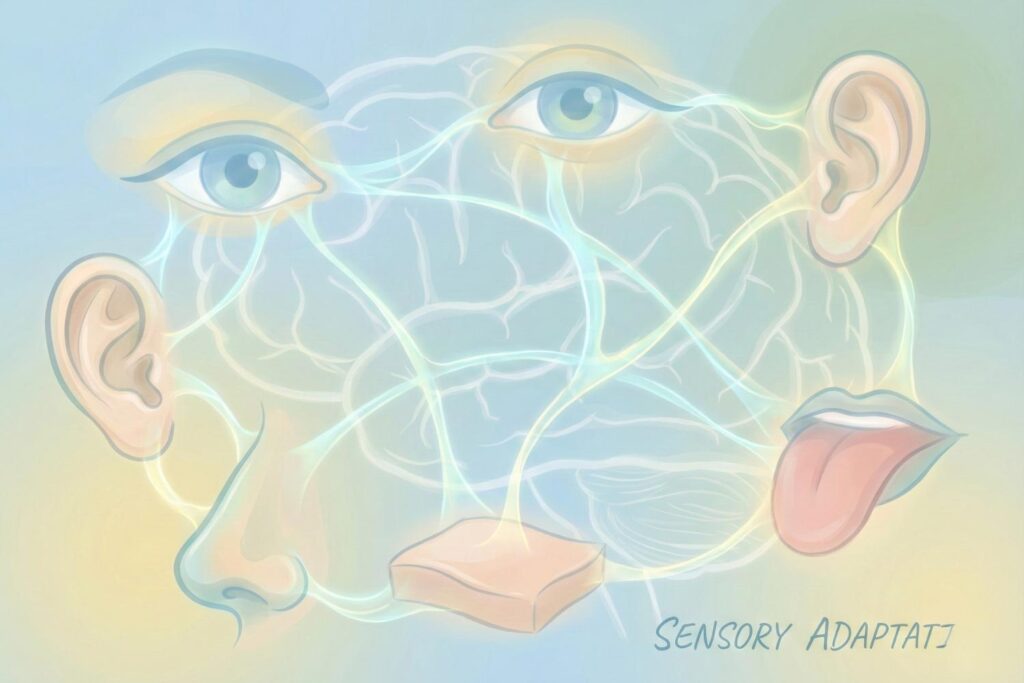
Have you ever noticed that when you first walk into a room with a strong smell, it seems overwhelming, but after a few minutes, you hardly notice it? Or that the ticking of a clock seems loud at first but fades into the background over time? These everyday experiences are examples of sensation adaptation—the ability of our sensory systems to adjust to constant or repetitive stimuli.
Sensation adaptation is a fascinating process that helps our brains filter out unnecessary information, allowing us to focus on what’s important. Without it, the world around us would constantly overwhelm our senses, making it nearly impossible to function efficiently. In this article, we will explore the science behind sensory adaptation, the different ways it manifests across our senses, and why it plays a crucial role in our mental and physical wellbeing.
What Is Sensory Adaptation?
Sensation adaptation refers to the process by which our sensory receptors become less sensitive to constant or unchanging stimuli over time. This phenomenon occurs across all five major senses: sight, hearing, touch, taste, and smell.
For example, when you enter a room filled with a particular scent, your olfactory receptors initially detect it strongly. Over a few minutes, however, these receptors “tune out” the smell, allowing your brain to focus on new or more important stimuli. Similarly, when wearing a watch or ring, you might feel it on your skin at first, but over time, you barely notice it due to sensation adaptation.
This adjustment mechanism is vital for human survival and efficiency. By filtering out constant stimuli, our nervous system ensures we are more responsive to sudden changes or threats in our environment. In essence, sensation adaptation prevents sensory overload and helps prioritize our attention.
The Science Behind Sensory Adaptation
At the cellular level, sensory adaptation involves changes in receptor activity and neural processing. When a stimulus is first detected, sensory neurons fire rapidly, sending a strong signal to the brain. Over time, these neurons decrease their firing rate, even though the stimulus is still present.
- Visual Adaptation: Photoreceptors in our eyes adjust to changes in light. For instance, when moving from a bright outdoor environment to a dimly lit room, our eyes gradually adjust to allow us to see clearly without being blinded.
- Auditory Adaptation: Continuous sounds, such as the hum of a refrigerator or traffic noise, become less noticeable as auditory receptors reduce their response.
- Tactile Adaptation: Skin receptors adapt to ongoing pressure or contact, explaining why we don’t constantly feel our clothes against our skin.
- Olfactory Adaptation: Smell receptors diminish their response to persistent odors, which is why perfumes or air fresheners may “fade” over time.
- Gustatory Adaptation: Taste buds can also adapt, which is why foods eaten repeatedly might seem less intense in flavor over time.
This neural tuning demonstrates the brain’s incredible ability to focus resources on stimuli that are changing, unusual, or potentially important for survival. It is an elegant mechanism that balances sensitivity and efficiency.
Everyday Examples of Sensory Adaptation
Sensation adaptation happens all around us, often without conscious awareness:
- Smells in Your Home – Cooking odors or scented candles are initially strong, but after a short period, they fade from conscious perception.
- Background Noise – Fans, air conditioners, or distant traffic noise often go unnoticed once your auditory system adapts.
- Clothing & Accessories – Rings, watches, or shoes feel noticeable at first, then seem to disappear from awareness.
- Temperature Adjustments – When stepping into a warm or cold environment, your body senses the change initially, but gradually you feel more comfortable.
These examples show how sensation adaptation helps us navigate daily life without being constantly distracted or overwhelmed by sensory input.
Benefits of Sensory Adaptation
Sensation adaptation is not just a quirk of the nervous system—it provides several key benefits:
- Prevents Sensory Overload: Constant stimuli can overwhelm the brain. Adaptation reduces unnecessary input, allowing focus on critical changes.
- Enhances Focus: By tuning out predictable stimuli, our attention can be directed to novel or important events in the environment.
- Protects the Brain: Continuous high-intensity stimulation can be stressful. Adaptation moderates the brain’s response, promoting mental wellbeing.
- Supports Survival: In evolutionary terms, being able to ignore constant background stimuli allows rapid detection of threats or opportunities in the environment.
How Sensory Adaptation Impacts Mental Wellbeing
Sensation adaptation has subtle but significant effects on our mental health:
- Stress Reduction: By filtering out constant background stimuli, the brain experiences less stress, creating a calmer mental state.
- Improved Mindfulness: Being aware of new stimuli against a background of adapted senses can enhance focus and presence.
- Better Emotional Regulation: Reducing sensory overload can help regulate mood and prevent irritability.
Practices such as mindful observation or intentional focus on previously unnoticed stimuli can leverage the benefits of sensation adaptation for personal growth and emotional resilience.
Enhancing Sensory Awareness While Respecting Adaptation
While sensory adaptation allows us to filter out unnecessary input, increasing awareness of subtle sensory cues can enhance life experiences:
- Mindfulness Exercises: Focus on subtle sounds, textures, or scents you might otherwise ignore.
- Sensory Challenges: Change your environment periodically to “reset” adaptation. For instance, open windows for fresh scents or try new foods to re-engage taste.
- Meditative Practices: Techniques like deep breathing or guided meditation can heighten sensory perception and emotional awareness simultaneously.
Understanding how sensation adaptation works allows you to consciously balance filtering and awareness, enriching your sensory and emotional life.
Conclusion
Sensation adaptation is a fundamental aspect of human perception, helping us navigate a complex world without being overwhelmed by constant stimuli. From adjusting to smells, sounds, and touch to fine-tuning visual perception, this process ensures that our brains remain focused, efficient, and resilient. By understanding and leveraging sensory adaptation, we can improve mental wellbeing, enhance mindfulness, and deepen our engagement with everyday experiences.
Next time you notice a smell fading, a sound becoming background noise, or your watch disappearing from your awareness, remember: it’s your nervous system at work, protecting you, guiding your focus, and supporting your mental wellbeing through sensation adaptation.