When your doctor recommends a cardiac stress test, the first thing you may wonder is what the procedure involves and how much it could cost. If you’ve looked at your medical bill or insurance paperwork, you may have also noticed something called CPT codes. These codes are important because they help healthcare providers and insurance companies identify the exact medical service performed.
In this guide, we’ll break down stress test CPT codes in simple language so patients, caregivers, and beginners can easily understand what they mean, why they matter, and how they affect billing and insurance claims.
What Are CPT Codes?
CPT stands for Current Procedural Terminology. These are standardized medical billing codes created by the American Medical Association to describe medical procedures and services.
Doctors, hospitals, and insurance companies use CPT codes to:
- Identify medical procedures
- Process insurance claims
- Determine reimbursement
- Keep medical records organized
- Avoid billing confusion
Every medical procedure has a unique CPT code, including stress tests.
What Is a Stress Test?
A stress test checks how well your heart works during physical activity. Since exercise makes the heart pump harder and faster, the test helps doctors detect problems related to blood flow, heart rhythm, or blocked arteries.
Stress tests are commonly recommended for people who experience:
- Chest pain
- Shortness of breath
- Dizziness
- Fatigue during exercise
- Irregular heartbeat
- Signs of coronary artery disease
There are several types of cardiac stress tests, and each may have different CPT codes.
Why Are Stress Test CPT Codes Important?
Understanding stress test CPT codes can help patients:
- Review medical bills accurately
- Understand insurance coverage
- Avoid unexpected charges
- Communicate better with providers
- Verify claims and reimbursements
Healthcare providers also rely on these codes to ensure proper documentation and billing compliance.
Common Stress Test CPT Codes Explained
Below are the most commonly used CPT codes related to cardiac stress testing.
CPT Code 93015 – Complete Cardiovascular Stress Test
93015
CPT Code 93015 is the most common code for a complete cardiovascular stress test.
This code includes:
- Supervision of the test
- Continuous ECG monitoring
- Interpretation of results
- Written report
This is often billed when the entire stress test process is performed by one provider or facility.
Typical Use
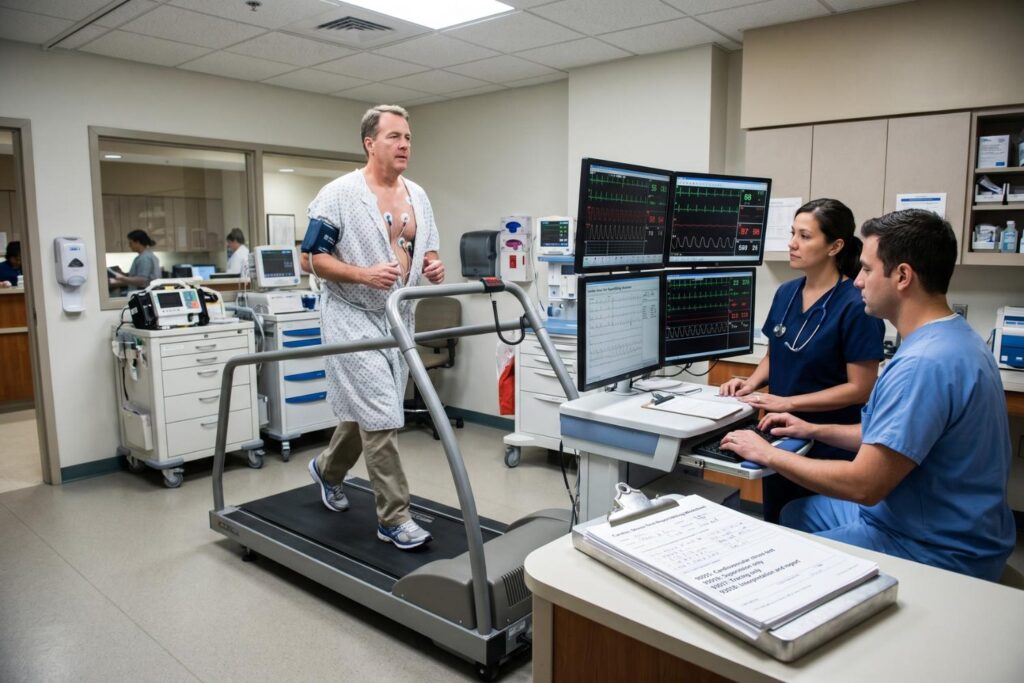
A patient walks on a treadmill while their heart rate, blood pressure, and ECG are monitored.
CPT Code 93016 – Stress Test Supervision Only
93016
This code is used when a physician only supervises the stress test but does not interpret the results or provide the report.
What It Includes
- Physician supervision during testing
- Monitoring patient safety during exercise
What It Does NOT Include
- ECG tracing
- Interpretation
- Final report
CPT Code 93017 – Tracing Only
93017
93017 is used when only the technical component of the stress test is performed.
This generally includes:
- ECG monitoring
- Recording heart activity
- Technical staff assistance
Hospitals or diagnostic labs commonly bill this code.
CPT Code 93018 – Interpretation and Report Only
93018
This code is billed when a physician interprets the stress test findings and prepares the written report.
Includes
- Reviewing ECG results
- Analyzing heart response
- Preparing interpretation report
This code does not include performing or supervising the actual test.
Types of Stress Tests and Their CPT Codes
Different types of stress tests may involve additional or separate billing codes.
Exercise Stress Test
This is the standard treadmill or bicycle stress test.
Common CPT Codes
- 93015
- 93016
- 93017
- 93018
The patient exercises while heart activity is monitored.
Nuclear Stress Test
A nuclear stress test uses radioactive imaging to show blood flow to the heart.
Common CPT Codes
- 78452
- 93015
- 93017
This test provides more detailed imaging and is often used when doctors suspect blocked arteries.
What Happens During the Test?
- A radioactive tracer is injected
- Images of the heart are taken
- Exercise or medication stresses the heart
- Blood flow is analyzed
Because imaging is involved, nuclear stress tests are usually more expensive.
Stress Echocardiogram
A stress echocardiogram combines ultrasound imaging with exercise stress testing.
Common CPT Codes
- 93350
- 93015
Doctors use ultrasound images to evaluate heart function before and after exercise.
Benefits
- No radiation exposure
- Detailed heart muscle evaluation
- Useful for diagnosing valve problems
Pharmacologic Stress Test
Some patients cannot exercise due to physical limitations. In these cases, medication is used to simulate exercise effects on the heart.
Common CPT Codes
- 93015
- 78452
- J codes for medications
The medication increases heart workload similarly to physical exercise.
How Insurance Uses Stress Test CPT Codes
Insurance companies use CPT codes to decide:
- Whether the procedure is medically necessary
- How much the provider will be reimbursed
- What portion the patient must pay
Your insurance claim may show several separate charges because different providers bill different parts of the procedure.
For example:
| Service | CPT Code |
|---|---|
| Stress test supervision | 93016 |
| ECG tracing | 93017 |
| Interpretation/report | 93018 |
Sometimes all services are combined under 93015.
What Affects the Cost of a Stress Test?
Several factors influence the total cost.
Type of Test
Basic treadmill tests cost less than nuclear or imaging stress tests.
Healthcare Facility
Hospitals often charge more than outpatient clinics.
Insurance Coverage
Your plan may cover part or all of the procedure depending on medical necessity.
Geographic Location
Healthcare costs vary by region and provider.
Additional Imaging
Tests involving radioactive tracers or echocardiograms increase expenses.
Questions Patients Should Ask Before a Stress Test
Before scheduling a stress test, consider asking:
- What type of stress test do I need?
- Which CPT codes will be billed?
- Is prior insurance authorization required?
- How much will my insurance cover?
- Will I receive separate bills?
- Are imaging services included?
Understanding these details beforehand can help avoid billing surprises.
How to Read Stress Test Billing Statements
Medical bills can look confusing, but knowing a few basics helps.
Look For:
- CPT codes
- Provider name
- Service date
- Insurance adjustments
- Patient responsibility
If something seems incorrect, contact the billing department and ask for clarification.
Common Reasons Claims Are Denied
Insurance claims related to stress test CPT codes may be denied for several reasons:
Missing Medical Necessity
The insurer may believe the test was unnecessary.
Coding Errors
Incorrect CPT codes can trigger claim denials.
Lack of Prior Authorization
Some imaging tests require approval before the procedure.
Duplicate Billing
Insurance may reject duplicate charges for overlapping services.
Patients should always review Explanation of Benefits (EOB) statements carefully.
Tips for Patients to Save Money
Here are a few ways patients can reduce healthcare costs:
Verify Insurance Coverage
Always check benefits before scheduling tests.
Ask for Cost Estimates
Request an estimate from the provider.
Use In-Network Facilities
Out-of-network providers can significantly increase expenses.
Review Bills Carefully
Look for duplicate or incorrect CPT codes.
Request Payment Plans
Many hospitals offer flexible payment options.
Difference Between CPT Codes and ICD-10 Codes
Many people confuse CPT codes with ICD-10 codes.
CPT Codes
Describe the procedure performed.
Example:
- 93015 = Cardiac stress test
ICD-10 Codes
Describe the diagnosis or medical condition.
Example:
- Chest pain
- Coronary artery disease
- Shortness of breath
Insurance companies usually require both codes together.
Who Performs a Stress Test?
A stress test may involve several healthcare professionals:
- Cardiologist
- Physician assistant
- Nurse
- ECG technician
- Imaging specialist
Different providers may bill different portions of the service using separate CPT codes.
Are Stress Tests Safe?
Stress tests are generally very safe and commonly performed.
Doctors monitor patients closely throughout the procedure. Rare complications may include:
- Abnormal heart rhythms
- Chest pain
- Dizziness
- Shortness of breath
Emergency equipment is available if needed.
Preparing for a Stress Test
Patients are usually advised to:
- Avoid caffeine
- Wear comfortable clothes
- Avoid smoking before the test
- Discuss medications with the doctor
- Avoid heavy meals beforehand
Always follow your healthcare provider’s instructions carefully.
How Long Does a Stress Test Take?
The duration depends on the type of test.
| Test Type | Average Time |
|---|---|
| Standard Exercise Stress Test | 30–60 minutes |
| Nuclear Stress Test | 2–4 hours |
| Stress Echocardiogram | 1 hour |
Imaging procedures usually take longer.
Understanding Results
Your doctor reviews the stress test to check:
- Heart rhythm
- Blood flow
- Oxygen supply
- Exercise tolerance
- Signs of blocked arteries
Abnormal results may lead to additional testing or treatment.
Final Thoughts on Stress Test CPT Codes
Understanding stress test CPT codes can make healthcare billing far less confusing. These codes help identify the exact cardiac testing services performed and ensure proper insurance processing.
Whether you’re preparing for a treadmill test, nuclear imaging study, or stress echocardiogram, knowing the meaning behind the codes can help you make informed decisions and avoid unnecessary billing confusion.
Patients should always review medical statements carefully, ask questions before testing, and confirm insurance coverage whenever possible.
With the right knowledge, medical billing becomes much easier to understand.