Medical billing can feel confusing, especially when you come across terms like CPT codes, diagnostic testing, and insurance claims. One topic that often raises questions is stress test CPT codes. Whether you are a patient trying to understand your medical bill, a healthcare student, or someone working in medical administration, learning the basics of these codes can make things much easier.
In this beginner-friendly guide, we will explain what stress test CPT codes are, why they matter, the common codes used for cardiac stress testing, and how billing works. By the end, you will have a much clearer understanding of this important part of healthcare documentation.
What Are CPT Codes?
CPT stands for Current Procedural Terminology. These codes are created and maintained by the American Medical Association to describe medical, surgical, and diagnostic services.
Doctors, hospitals, and insurance companies use CPT codes to:
- Identify medical procedures
- Process insurance claims
- Keep accurate patient records
- Standardize healthcare billing
Every medical service has a unique code attached to it. For example, routine checkups, lab work, X-rays, and stress tests all have specific CPT codes.
When it comes to heart-related testing, understanding stress test CPT codes becomes especially important because different tests may require different billing codes.
What Is a Stress Test?
A stress test is a medical procedure that checks how well your heart works during physical activity. Since exercise makes the heart pump harder and faster, doctors use stress tests to identify potential heart problems.
Stress tests are commonly recommended for people who experience:
- Chest pain
- Shortness of breath
- Irregular heartbeat
- Dizziness during exercise
- Fatigue related to heart conditions
Doctors may also order a stress test for patients with a history of heart disease or before major surgery.
Why Stress Test CPT Codes Matter
Understanding stress test CPT codes is important for several reasons:
1. Accurate Insurance Billing
Insurance companies rely on CPT codes to determine coverage and reimbursement. Incorrect coding can lead to denied claims or billing errors.
2. Proper Medical Documentation
CPT codes help healthcare providers maintain detailed and organized records.
3. Transparency for Patients
Patients reviewing medical bills can better understand what services they received.
4. Reduced Administrative Errors
Correct coding minimizes delays and confusion between healthcare providers and insurers.
Types of Cardiac Stress Tests
Before discussing specific stress test CPT codes, it helps to understand the different types of stress tests available.
Exercise Stress Test
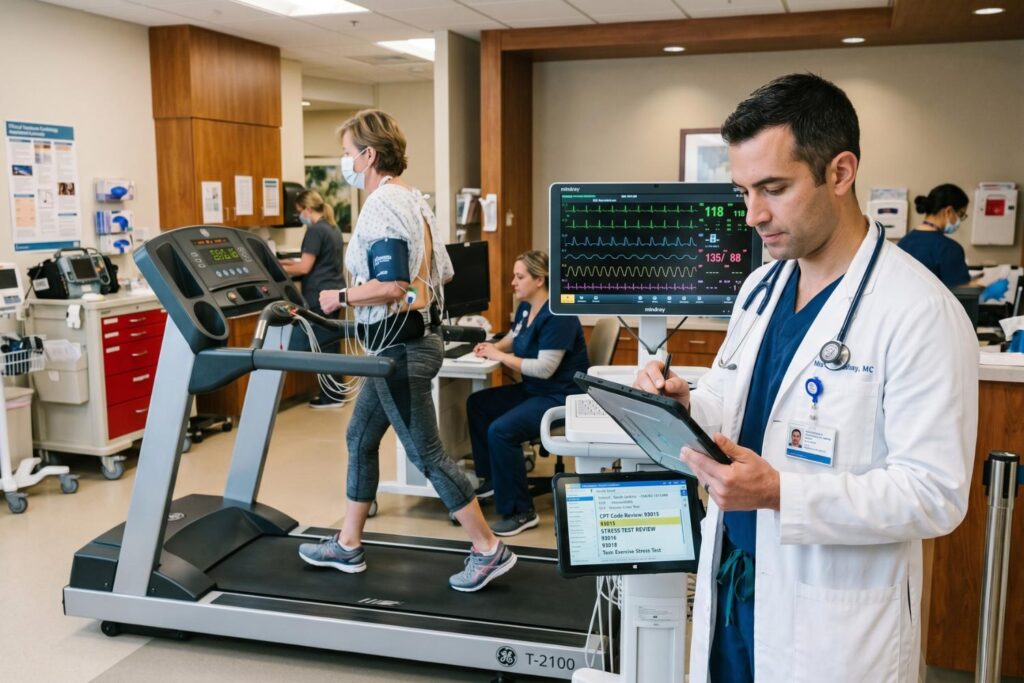
This is the most common type. Patients walk on a treadmill or ride a stationary bike while doctors monitor heart activity.
Nuclear Stress Test
This test uses radioactive imaging to show blood flow to the heart.
Stress Echocardiogram
This combines ultrasound imaging with exercise testing.
Pharmacological Stress Test
Medication is used to stimulate the heart for patients who cannot exercise.
Each type may involve different CPT codes depending on the procedures performed.
Common Stress Test CPT Codes Explained
Here are some commonly used stress test CPT codes in simple language.
CPT Code 93015
This is one of the most frequently used codes for a cardiovascular stress test.
It includes:
- Supervision
- Interpretation
- Report preparation
- Tracing
This code is often used when the entire stress test process is completed by one provider.
CPT Code 93016
This code covers only the supervision portion of the stress test.
It is used when one healthcare professional supervises the procedure but does not handle interpretation or reporting.
CPT Code 93017
This code applies to the tracing component of the stress test.
Tracing refers to recording the electrical activity of the heart during exercise.
CPT Code 93018
This code covers the interpretation and report section.
Doctors analyze the test results and create a detailed report explaining heart performance and abnormalities.
CPT Code 78452
This code is commonly associated with a nuclear stress test involving imaging of the heart muscle.
Nuclear stress tests are more advanced and usually cost more than standard treadmill stress tests.
CPT Code 93350
This code is used for a stress echocardiogram, which combines ultrasound imaging with stress testing.
It helps doctors visualize heart movement and blood flow under stress conditions.
How Stress Test Billing Works
Stress test billing depends on several factors:
- Type of stress test performed
- Healthcare provider involvement
- Facility charges
- Imaging requirements
- Insurance policy details
Sometimes multiple CPT codes are combined for one patient visit. For example, a patient receiving both a treadmill test and imaging may see several related codes on their bill.
Understanding Global vs Component Billing
One confusing aspect of stress test CPT codes is the difference between global and component billing.
Global Billing
One provider bills for the entire procedure.
Example:
- CPT 93015
Component Billing
Different providers bill separately for:
- Supervision
- Tracing
- Interpretation
Examples:
- 93016
- 93017
- 93018
This system allows hospitals and specialists to divide responsibilities accurately.
Who Uses Stress Test CPT Codes?
Several healthcare professionals rely on these codes daily:
- Cardiologists
- Medical coders
- Billing specialists
- Insurance companies
- Hospital administrators
- Primary care physicians
Even patients benefit from understanding these codes because it helps them review insurance statements and medical bills more confidently.
Common Reasons for Stress Tests
Doctors may recommend stress testing for many reasons.
Diagnosing Coronary Artery Disease
Stress tests can identify blocked arteries affecting blood flow.
Evaluating Chest Pain
Testing helps determine whether symptoms are heart-related.
Monitoring Heart Treatment
Doctors may track how medications or procedures are improving heart function.
Assessing Exercise Safety
Patients with heart conditions may need clearance before starting exercise programs.
How to Read a Medical Bill With Stress Test CPT Codes
Medical bills can look overwhelming at first glance. Here are simple tips to understand them better.
Check the CPT Code
Look for a five-digit number on your statement.
Compare With Services Received
Make sure the listed services match your appointment.
Review Insurance Coverage
Insurance companies often explain which procedures were covered.
Ask Questions
If something seems incorrect, contact your healthcare provider or insurer.
Common Billing Mistakes With Stress Test CPT Codes
Errors can happen during medical billing. Some common issues include:
- Using incorrect CPT codes
- Duplicate billing
- Missing modifiers
- Coding outdated procedures
- Incorrect patient information
These mistakes can lead to delayed payments or denied insurance claims.
Tips for Patients
If you are scheduled for a cardiac stress test, here are a few helpful tips.
Ask About Costs in Advance
Understanding expected charges can prevent surprises later.
Verify Insurance Coverage
Contact your insurance company before the procedure.
Keep Copies of Medical Bills
Having records makes it easier to resolve billing issues.
Understand the CPT Codes Used
Knowing the basics of stress test CPT codes helps you stay informed about your healthcare.
The Role of Medical Coders
Medical coders play a major role in healthcare administration. They translate medical procedures into standardized CPT codes.
A skilled coder ensures:
- Accurate billing
- Faster insurance processing
- Reduced claim denials
- Compliance with healthcare regulations
In cardiology departments, coding accuracy is especially important because heart testing often involves multiple procedures and providers.
How Technology Improves Medical Coding
Modern healthcare systems now use advanced software to reduce coding errors.
Electronic health records help providers:
- Store patient data securely
- Generate accurate billing information
- Improve communication between departments
Artificial intelligence tools are also being introduced to assist with coding efficiency and claim management.
Stress Tests and Insurance Coverage
Most insurance plans cover medically necessary stress tests. However, coverage may vary depending on:
- Type of insurance plan
- Medical necessity
- Provider network
- Test complexity
Patients should always confirm:
- Copay requirements
- Deductibles
- Preauthorization needs
Understanding the related stress test CPT codes can help during insurance discussions.
Frequently Asked Questions
Are stress test CPT codes the same everywhere?
Yes. CPT codes are standardized across the United States healthcare system.
Can one stress test have multiple CPT codes?
Yes. Different parts of the procedure may use separate codes.
Why do imaging stress tests cost more?
Imaging procedures require specialized equipment, materials, and interpretation.
What happens if the wrong CPT code is used?
Incorrect coding can cause insurance denials or billing disputes.
Do patients need to memorize CPT codes?
No, but understanding common codes can help you review medical bills more effectively.
Final Thoughts
Healthcare billing may seem complicated, but learning the basics of stress test CPT codes can make a big difference. These codes help doctors, hospitals, and insurance providers communicate clearly about the services patients receive.
Whether it is a simple treadmill test or an advanced nuclear imaging procedure, each test has a specific billing code that supports accurate medical documentation and insurance processing.
For patients, understanding these codes means fewer surprises on medical bills and more confidence when discussing healthcare costs. For healthcare professionals, accurate coding helps maintain efficiency and compliance across the medical system.
As medical technology continues to evolve, CPT coding will remain an essential part of modern healthcare administration.