Human emotions are complex. Some days feel light and easy, while others feel heavy and confusing without any clear reason. In psychology and spiritual conversations, two concepts often come up when discussing emotional awareness and personal transformation: affect expansive emotional states.
At first glance, these may sound technical or abstract. But in reality, they describe something we all experience every day—how we feel, how we respond, and how our emotional world either contracts or expands depending on our mindset, environment, and inner healing.
In this article, we’ll explore what “affect” really means, what it means to live in an expansive emotional state, and how understanding both can help you grow emotionally, mentally, and spiritually.
What Does “Affect” Mean in Psychology?
In psychology, affect refers to the visible expression of emotion. It includes facial expressions, tone of voice, body language, and general emotional responsiveness.
For example:
- A smiling face shows positive affect
- A flat or emotionless tone may indicate reduced affect
- A tense posture can reflect anxiety or stress
Affect is not just what we feel internally—it is how those feelings show up externally.
However, affect is also deeper than expression. It reflects our emotional baseline, meaning the general mood or emotional tone we tend to carry throughout our day.
Some people naturally experience:
- Bright, positive affect (optimistic, expressive, open)
- Neutral affect (balanced, stable, controlled)
- Restricted affect (emotionally reserved or shut down)
But affect is not fixed. It changes with experience, healing, trauma, relationships, and self-awareness.
Understanding Emotional Expansion: What Does “Expansive” Mean?
Now let’s move to the idea of being expansive emotionally.
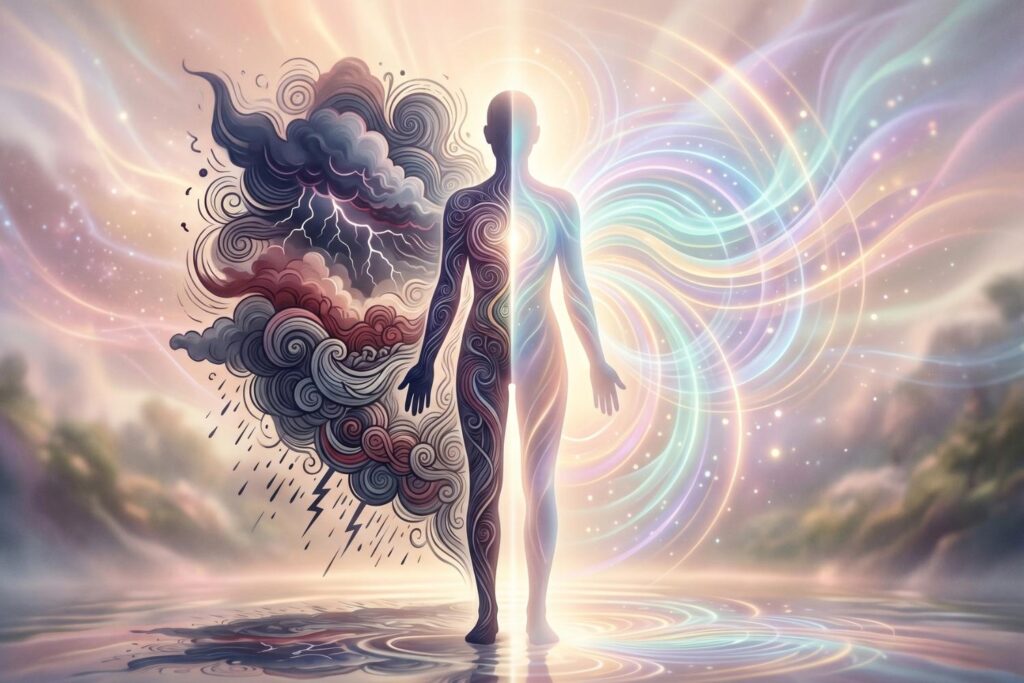
To be expansive means to feel open, aware, and connected. It’s when your emotional state is not limited by fear, stress, or past pain. Instead, your inner world feels spacious—like you can breathe again.
An expansive emotional state often includes:
- Clarity of thought
- Emotional openness
- Reduced fear-based reactions
- Increased empathy and understanding
- A sense of inner peace
When people say they feel “lighter” or “free,” they are often describing an expansive emotional experience.
Affect vs Expansive: The Core Difference
While affect describes how emotions are expressed, expansiveness describes the quality of emotional experience.
Let’s break it down simply:
| Affect | Expansive |
|---|---|
| External emotional expression | Internal emotional state |
| Visible reactions | Inner emotional openness |
| Can be restricted or flat | Always associated with openness |
| Observed by others | Felt within oneself |
A person can have:
- A positive affect but still feel emotionally restricted inside
- A neutral affect but experience deep emotional expansiveness internally
This is why emotional awareness matters. What we show is not always what we feel.
Why Emotional Expansion Matters in Daily Life
Living in an expansive emotional state has a powerful impact on your mental health and relationships.
1. Better Emotional Regulation
When you are emotionally expansive, you don’t react impulsively. You pause, reflect, and respond with awareness instead of reacting from fear or anger.
2. Healthier Relationships
Expansiveness allows you to listen more deeply, understand others better, and avoid unnecessary conflict.
3. Reduced Anxiety and Stress
A contracted emotional state often leads to overthinking and worry. Expansion creates mental space, reducing internal pressure.
4. Stronger Self-Awareness
You begin to notice your emotional patterns instead of being controlled by them.
What Causes Emotional Contraction?
To understand expansiveness, we must also understand its opposite: emotional contraction.
Emotional contraction happens when your internal world becomes tight, reactive, or overwhelmed.
Common causes include:
- Chronic stress
- Unresolved trauma
- Toxic relationships
- Fear of rejection
- Overthinking and mental overload
When you are emotionally contracted, your affect may appear:
- Flat
- Irritated
- Withdrawn
- Defensive
This doesn’t mean something is wrong with you—it means your nervous system is protecting you.
How Affect and Expansion Work Together
Affect is like the “surface signal” of emotion, while expansiveness is the “inner landscape.”
For example:
- Someone with calm affect may appear emotionally stable, but inside feel anxious
- Someone expressive may show strong affect but still feel emotionally open and expansive
True emotional well-being comes when both align:
- Your external expression matches your internal state
- You feel what you express, and express what you feel in a healthy way
How to Move Toward an Expansive Emotional State
Emotional expansion is not something you “achieve” once—it is something you practice.
Here are some ways to develop it:
1. Slow Down Your Reactions
Before reacting emotionally, pause. Even a 5-second pause can shift your emotional state.
2. Practice Emotional Awareness
Ask yourself:
- What am I feeling right now?
- Where do I feel it in my body?
3. Release Stored Emotions
Journaling, talking, or even crying can help release emotional buildup.
4. Reduce Mental Overload
Too much information, stress, or social media can shrink emotional space.
5. Connect With Safe People
Emotional safety expands your nervous system’s capacity to feel calm and open.
Emotional Growth Is Not Linear
One of the most important things to understand is that emotional growth doesn’t move in a straight line.
You may feel expansive one day and contracted the next. That is normal.
Growth looks like:
- Becoming aware faster
- Recovering faster
- Understanding yourself deeper over time
Not perfection.
The Role of Awareness in Emotional Transformation
Awareness is the bridge between affect and expansiveness.
When you become aware of your emotional state:
- You stop reacting unconsciously
- You start responding consciously
- You begin choosing emotional direction instead of being controlled by it
This awareness slowly creates long-term emotional expansion.
Final Thoughts
Understanding affect expansive emotional states is not just a psychological concept—it is a life skill.
Affect shows how your emotions appear to the world. Expansiveness shows how your emotions exist within you.
When both are balanced, you experience:
- Greater emotional clarity
- Healthier relationships
- Reduced internal stress
- A deeper sense of peace
Emotional growth is not about eliminating difficult feelings. It is about learning to hold them in a wider, more spacious inner world.