If you’ve ever had a heart stress test, you might have heard your healthcare provider mention CPT codes. These codes can seem confusing, but they are important for understanding your medical bills, insurance coverage, and even how doctors document procedures. This guide will break down stress test CPT codes in a way that’s easy for beginners to understand.
What Are CPT Codes?
CPT stands for Current Procedural Terminology. Think of them as a universal language for healthcare services. Each code corresponds to a specific medical test, procedure, or service. Hospitals, clinics, and insurance companies use these codes to:
- Document services provided
- Bill insurance correctly
- Keep track of patient care
For example, if you undergo a stress test, the CPT code helps your insurance company understand exactly what test was performed.
What Is a Stress Test?
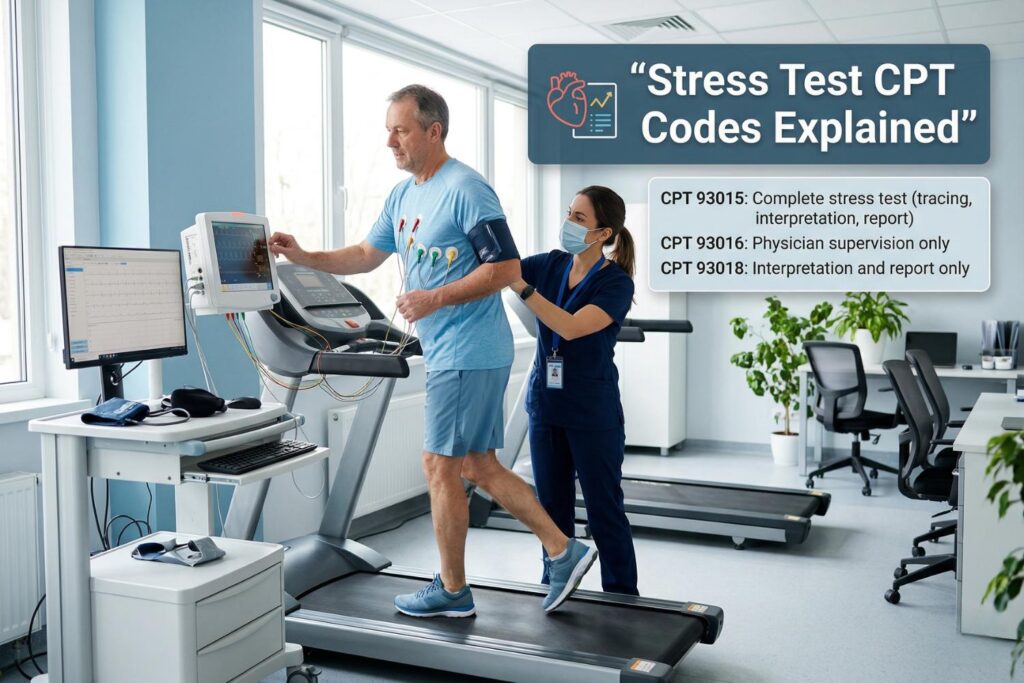
A stress test, also known as a treadmill test or exercise ECG, measures how your heart functions under physical stress. During the test:
- Electrodes are attached to your chest to monitor your heart’s activity.
- You walk on a treadmill or pedal a stationary bike, gradually increasing intensity.
- The doctor observes your heart rate, rhythm, and blood pressure.
Stress tests are essential for detecting heart problems, evaluating chest pain, and monitoring heart health after treatment.
Types of Stress Tests and Their CPT Codes
Stress tests come in different forms, each with its own CPT code. Here’s a simple guide to the most common ones:
1. Exercise Stress Test (Basic ECG Monitoring)
- CPT Code: 93015
- Description: This code covers the basic ECG recording during exercise. It’s usually the first step in a stress test evaluation.
2. Exercise Stress Test with Interpretation
- CPT Code: 93016
- Description: Includes the interpretation and report by the physician. This is the code that most insurance companies use to reimburse the doctor for reviewing the results.
3. Stress Test with Imaging (Nuclear or Echocardiogram)
- CPT Codes:
- 93350: Stress echocardiography, including interpretation
- 78451–78454: Nuclear stress test procedures
- Description: These tests provide more detailed information about blood flow and heart function under stress. They are typically used for patients with known heart disease or high risk.
4. Pharmacologic Stress Test
- CPT Codes: 93017 (if combined with ECG), 93351 (echocardiography)
- Description: Used for patients who cannot exercise. Medication is given to simulate exercise effects on the heart.
Why CPT Codes Matter for Patients
Understanding stress test CPT codes can help patients:
- Verify medical bills
- Understand insurance coverage
- Avoid unexpected out-of-pocket costs
- Keep accurate personal health records
For instance, if your insurance covers CPT code 93016 but not 93350, knowing the difference could save you hundreds of dollars.
How Insurance Uses Stress Test CPT Codes
Insurance companies rely on CPT codes to determine:
- What procedures are covered
- How much the doctor will be reimbursed
- If pre-authorization is required
If a stress test is billed under the wrong CPT code, it could result in denied claims or delayed payment. That’s why healthcare providers are meticulous about coding.
Common Questions About Stress Test CPT Codes
1. Are CPT Codes the Same as ICD Codes?
No. ICD codes describe diagnoses (e.g., heart disease), while CPT codes describe procedures (e.g., treadmill stress test).
2. Can Patients See Their CPT Codes?
Yes. Your billing statement or explanation of benefits (EOB) will list CPT codes for all procedures performed.
3. Do CPT Codes Affect Cost?
Yes. The CPT code determines what your insurance will cover and what your copay or deductible might be.
4. Do All Stress Tests Have the Same Code?
No. Basic ECG stress tests, imaging tests, and pharmacologic tests each have different CPT codes. Always ask your provider which code applies to your test.
Tips for Patients Preparing for a Stress Test
- Wear comfortable clothing and shoes suitable for walking or exercise.
- Bring a list of medications; some may affect the test.
- Avoid heavy meals, caffeine, and certain medications as instructed.
- Ask your provider which stress test CPT code will be used and confirm insurance coverage.
Knowing your CPT code in advance can prevent surprises on your bill.
Stress Test CPT Codes Simplified
Understanding stress test CPT codes doesn’t have to be complicated. Here’s a quick recap:
- CPT codes identify the procedure your doctor performed.
- Common stress test codes include 93015, 93016, 93350, and 78451–78454.
- Insurance companies use these codes to determine coverage and payment.
- Patients benefit by knowing the codes for verification, billing, and personal health records.
By learning a few key codes, you can approach your stress test with confidence and clarity.