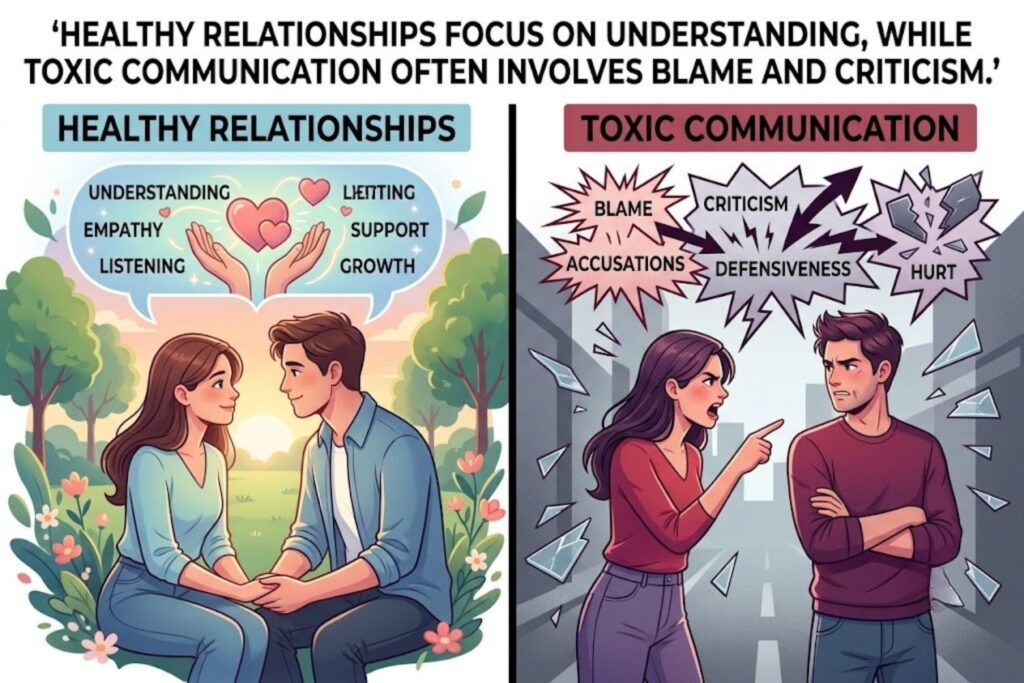
Relationships influence almost every area of life, including emotional health, confidence, stress levels, and personal growth. However, not every relationship dynamic is healthy.
Understanding the difference between a toxic relationship vs healthy relationship can help you recognize patterns, improve communication, and create stronger emotional connections.
A healthy relationship is not one without problems. Every couple experiences disagreements, misunderstandings, and difficult moments.
The real difference is how those challenges are handled.
A toxic relationship creates repeated patterns of fear, disrespect, manipulation, or emotional exhaustion. A healthy relationship creates space for honesty, respect, growth, and mutual support.
What Is a Toxic Relationship?
A toxic relationship is a connection where unhealthy behaviors repeatedly damage emotional well-being.
Toxic patterns often involve one or both people feeling:
- Unheard
- Controlled
- Disrespected
- Emotionally exhausted
- Unable to express themselves freely
A difficult period does not automatically mean a relationship is toxic. Everyone experiences conflict.
The concern is when harmful patterns become consistent and neither person works toward improvement.
Common Characteristics of Toxic Relationships
1. Poor Communication
In unhealthy relationships, conversations may involve:
- Blaming
- Shouting
- Silent treatment
- Avoiding important topics
- Refusing accountability
Problems often repeat because the goal becomes winning the argument instead of understanding each other.
2. Lack of Respect
Respect is one of the strongest indicators of relationship health.
Toxic patterns may include:
- Mocking feelings
- Ignoring boundaries
- Belittling opinions
- Making decisions without considering the other person
3. Control and Manipulation
Control can appear in subtle ways.
Examples include:
- Trying to isolate someone from friends or family
- Making someone feel guilty for having needs
- Monitoring personal choices excessively
Healthy relationships encourage independence rather than control.
What Is a Healthy Relationship?
A healthy relationship is built on mutual respect, trust, communication, and emotional safety.
Partners in healthy relationships understand that they are two individuals choosing to grow together.
Healthy relationships allow people to:
- Express emotions honestly
- Maintain personal identity
- Disagree respectfully
- Support each other’s goals
Toxic Relationship vs Healthy Relationship: Key Differences
| Area | Toxic Relationship | Healthy Relationship |
|---|---|---|
| Communication | Blame, criticism, avoidance | Honest conversations |
| Conflict | Winning or attacking | Solving problems together |
| Trust | Suspicion and control | Confidence and honesty |
| Boundaries | Ignored or criticized | Respected |
| Support | Competition or jealousy | Encouragement |
| Accountability | Excuses and blame | Taking responsibility |
| Emotional Safety | Fear of being yourself | Freedom to express feelings |
Communication Differences: Toxic vs Healthy
Toxic Communication Example:
“I always have to do everything because you never care.”
This statement attacks the person rather than addressing the issue.
Healthy Communication Example:
“I feel overwhelmed when responsibilities are not shared. Can we find a better balance?”
The focus is solving the problem together.
Signs You May Be in a Toxic Relationship
Some warning signs include:
You Feel Constantly Drained
Relationships require effort, but you should not consistently feel emotionally exhausted.
You Cannot Express Yourself Safely
If you regularly fear your partner’s reaction when sharing feelings, this may indicate an unhealthy dynamic.
Your Boundaries Are Ignored
Healthy partners respect limits.
Examples of boundaries include:
- Personal space
- Privacy
- Time with friends
- Emotional needs
Problems Never Improve
Conflict is normal.
However, repeating the same harmful cycle without accountability can damage the relationship.
Signs of a Healthy Relationship
You Feel Respected
Your thoughts, emotions, and opinions matter.
You Can Be Yourself
Healthy relationships do not require pretending or hiding parts of who you are.
Both People Take Responsibility
Mistakes happen.
Healthy partners can say:
“I was wrong.”
“I understand why that hurt you.”
“I want to improve.”
Can a Toxic Relationship Become Healthy?
Sometimes unhealthy relationship patterns can improve.
Change is more likely when:
- Both people recognize problems
- Both partners want improvement
- Communication improves
- Accountability exists
However, a relationship cannot become healthy if only one person is trying.
Growth requires participation from both individuals.
How to Build a Healthier Relationship
1. Improve Communication
Practice:
- Listening before responding
- Expressing feelings clearly
- Avoiding personal attacks
2. Create Healthy Boundaries
Boundaries are not punishments.
They communicate:
“What I need to feel respected and emotionally safe.”
3. Practice Accountability
Healthy relationships require people to recognize their impact.
Apologies matter, but changed behavior matters more.
4. Encourage Personal Growth
Strong relationships allow both people to continue developing as individuals.
Support each other’s:
- Goals
- Interests
- Friendships
- Personal development
Common Mistakes That Create Toxic Patterns
Even good relationships can develop unhealthy habits.
Common mistakes include:
- Avoiding difficult conversations
- Expecting partners to read your mind
- Ignoring small problems until they become major issues
- Keeping score during conflicts
- Prioritizing being right over understanding
Relationship Self-Assessment Checklist
Ask yourself:
Communication
☐ Can we discuss difficult topics respectfully?
☐ Do both people feel heard?
Respect
☐ Are boundaries respected?
☐ Do we value each other’s opinions?
Emotional Safety
☐ Can I express myself honestly?
☐ Do I feel accepted?
Growth
☐ Are we both willing to improve?
If most answers are positive, the relationship may have healthy foundations.
Final Thoughts
Understanding the difference between a toxic relationship vs healthy relationship is not about judging yourself or your partner.
It is about recognizing patterns.
Healthy relationships are not perfect. They require patience, communication, and effort.
The goal is not avoiding every conflict.
The goal is creating a relationship where both people feel respected, supported, and emotionally safe.