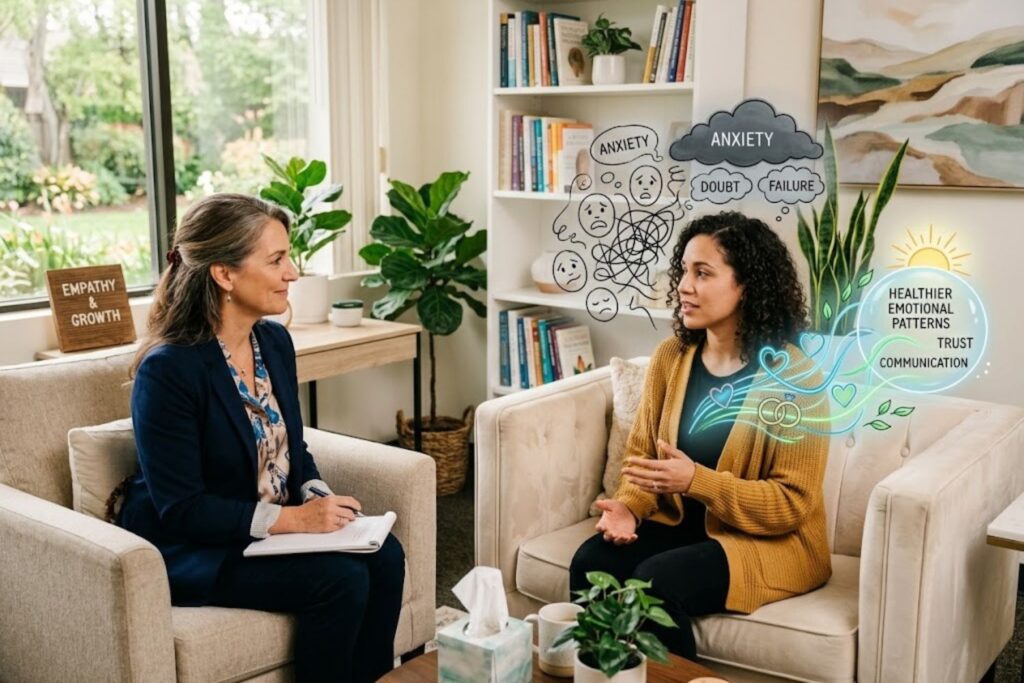
Relationships can bring deep connection, love, and emotional security, but they can also trigger intense worry, fear, and uncertainty. If you constantly question your partner’s feelings, fear abandonment, overanalyze conversations, or struggle to trust reassurance, you may be experiencing relationship anxiety.
Finding the right therapists for relationship anxiety can help you understand where these fears come from, develop healthier emotional patterns, and build stronger relationships.
Relationship anxiety is not simply “thinking too much.” For many people, it involves repeated emotional distress that affects communication, confidence, intimacy, and daily life. Therapy can provide practical tools to manage anxious thoughts, improve self-awareness, and create more secure connections.
This guide explains what relationship anxiety is, how therapy helps, what type of therapist to look for, and how to choose professional support that fits your needs.
What Is Relationship Anxiety?
Understanding Anxiety Within Romantic Relationships
Relationship anxiety refers to persistent worry, fear, or insecurity connected to romantic relationships. A person experiencing relationship anxiety may feel uncertain about their partner’s feelings, question the stability of the relationship, or constantly search for signs that something is wrong.
Some common experiences include:
- Worrying that your partner will leave unexpectedly
- Overthinking texts, conversations, or changes in behavior
- Needing frequent reassurance that the relationship is okay
- Feeling anxious even when there is no clear problem
- Doubting your partner’s love despite positive evidence
- Avoiding emotional vulnerability because of fear of rejection
Everyone experiences occasional relationship concerns. The difference is that relationship anxiety often feels repetitive, overwhelming, and difficult to control.
Relationship Anxiety vs Normal Relationship Concerns
Understanding the difference between normal worries and anxiety patterns can help you decide whether professional support may be useful.
| Normal Relationship Concerns | Relationship Anxiety |
|---|---|
| Happens occasionally | Happens frequently |
| Usually connected to a specific situation | Often appears without clear evidence |
| Improves after communication | Returns even after reassurance |
| Allows healthy problem-solving | Creates fear and emotional distress |
| Does not control daily decisions | Influences behavior and choices |
For example, feeling nervous before an important conversation with your partner is normal. However, repeatedly assuming a delayed text means rejection or a breakup may indicate an anxiety pattern that deserves attention.
How Can Therapists Help With Relationship Anxiety?
A qualified therapist can help you identify the emotional patterns behind relationship anxiety and develop healthier ways to respond.
1. Identifying Anxiety Triggers
The first step in therapy is often understanding what activates anxious thoughts.
A therapist may help you explore:
- Past relationship experiences
- Childhood attachment patterns
- Fear of rejection or abandonment
- Negative beliefs about yourself
- Communication habits
- Emotional triggers
For example, someone may discover that their fear of being abandoned is connected to earlier experiences of inconsistency or rejection.
Understanding the source does not mean blaming the past. Instead, it helps create awareness so you can respond differently in the present.
2. Challenging Negative Thought Patterns
Relationship anxiety often involves automatic thoughts such as:
- “They seem distant, so they must be losing interest.”
- “If we disagree, the relationship is failing.”
- “I need constant reassurance to feel secure.”
Therapists often use evidence-based approaches to help clients examine whether these thoughts are accurate or anxiety-driven.
Cognitive Behavioral Therapy (CBT), for example, focuses on identifying unhelpful thought patterns and developing healthier perspectives.
3. Developing Emotional Regulation Skills
Many people with relationship anxiety experience intense emotional reactions.
Therapy can teach skills such as:
- Managing overwhelming emotions
- Reducing impulsive reactions
- Practicing mindfulness
- Improving self-soothing techniques
- Building emotional awareness
These skills can help you pause before reacting and choose healthier responses.
4. Improving Communication and Trust
Relationship anxiety can affect communication.
Some people:
- Seek constant reassurance
- Avoid difficult conversations
- Become overly dependent on their partner’s responses
- Misinterpret neutral behaviors as negative
A therapist can help you develop communication strategies that encourage honesty, boundaries, and emotional safety.
What Type of Therapist Helps With Relationship Anxiety?
Not every therapist specializes in the same areas. Choosing someone with relevant experience can make the process more effective.
Cognitive Behavioral Therapy (CBT) Therapists
CBT therapists help people identify and change anxiety-related thought patterns.
CBT may be helpful if you:
- Overthink relationship situations
- Experience persistent worry
- Struggle with negative assumptions
- Want practical coping strategies
Attachment-Based Therapists
Attachment-focused therapy explores how early emotional experiences influence adult relationships.
This approach may help people who experience:
- Fear of abandonment
- Difficulty trusting others
- Fear of intimacy
- Emotional insecurity
Understanding attachment patterns can help explain why certain relationship situations feel especially threatening.
Couples Therapists
Couples therapy may be helpful when relationship anxiety affects both partners.
A couples therapist can help with:
- Communication challenges
- Repeated conflicts
- Building emotional connection
- Understanding each partner’s needs
However, individual therapy may also be valuable when anxiety patterns are strongly connected to personal experiences.
Anxiety Specialists
Some therapists focus specifically on anxiety-related concerns.
An anxiety-focused therapist may help with:
- Persistent worry
- Fear responses
- Avoidance behaviors
- Emotional regulation skills
How to Choose the Right Therapist for Relationship Anxiety
Finding a therapist is not only about credentials. The right fit also involves comfort, communication style, and treatment approach.
1. Look for Relevant Experience
Before scheduling a session, review whether the therapist works with:
- Relationship concerns
- Anxiety disorders
- Attachment issues
- Emotional regulation
- Couples or interpersonal challenges
A therapist who understands relationship anxiety can better recognize the patterns behind your concerns.
2. Ask About Their Treatment Approach
Different therapists use different methods.
Helpful questions include:
- What approaches do you use for relationship anxiety?
- How do you help clients manage anxious thoughts?
- What does progress usually look like?
- How do you create treatment goals?
A good therapist should be able to explain their approach clearly.
3. Consider Personal Compatibility
A strong therapeutic relationship matters.
Consider whether you feel:
- Comfortable sharing personal thoughts
- Respected and understood
- Able to ask questions
- Supported without judgment
Therapy works best when you feel safe enough to be honest.
4. Decide Between Online and In-Person Therapy
Online therapy has become a common option for many people.
Potential benefits include:
- Greater scheduling flexibility
- Easier access to specialists
- Comfort of attending sessions from home
In-person therapy may be preferred by people who value face-to-face interaction or a structured environment.
The best choice depends on your preferences and needs.
Questions to Ask Before Choosing a Relationship Anxiety Therapist
Before starting therapy, consider asking:
About Experience
- Have you worked with clients experiencing relationship anxiety?
- Do you specialize in anxiety-related concerns?
About Treatment
- What therapy methods do you typically use?
- How do you measure improvement?
About Sessions
- What can I expect during the first appointment?
- How often do you recommend sessions?
About Goals
- How can therapy help me develop healthier relationship patterns?
- What skills will I learn?
These questions can help you make a more informed decision.
Common Mistakes People Make When Seeking Therapy for Relationship Anxiety
Expecting Therapy to Change Their Partner
Therapy focuses on your thoughts, emotions, behaviors, and relationship patterns.
While couples therapy can improve communication, individual therapy is not designed to control another person’s actions.
Choosing a Therapist Without Research
A therapist’s specialty matters.
Someone who primarily works with unrelated concerns may not provide the same experience as someone familiar with anxiety and relationship dynamics.
Looking Only for Quick Fixes
Relationship anxiety often develops over time.
Building emotional awareness and healthier patterns usually requires patience and consistent effort.
Ignoring Personal Growth
It can be tempting to focus only on what your partner does.
However, therapy often helps you explore:
- Your emotional triggers
- Your beliefs about relationships
- Your coping strategies
- Your communication habits
What Happens During Relationship Anxiety Therapy?
Many people feel uncertain about starting therapy because they do not know what to expect.
A typical process may include:
Step 1: Initial Assessment
The therapist learns about:
- Your relationship history
- Current concerns
- Anxiety symptoms
- Personal goals
Step 2: Identifying Patterns
Together, you may explore:
- Repeated emotional reactions
- Fear-based thinking
- Communication habits
- Relationship triggers
Step 3: Learning New Skills
You may practice:
- Thought restructuring
- Emotional regulation techniques
- Communication strategies
- Boundary-setting skills
Step 4: Building Long-Term Change
The goal is not only reducing anxiety during stressful moments.
The goal is developing lasting confidence and healthier relationship patterns.
Can Therapy Help With Relationship Anxiety?
Yes, therapy can help many people understand and manage relationship anxiety.
The effectiveness of therapy depends on several factors, including:
- Finding a therapist who fits your needs
- Being willing to explore patterns honestly
- Practicing skills outside sessions
- Maintaining consistent effort
Therapy is not about becoming a completely different person. It is about developing healthier ways to understand emotions, communicate, and connect.
When Should You Consider Seeing a Therapist?
Consider professional support if relationship anxiety:
- Causes frequent distress
- Creates repeated conflicts
- Affects your daily functioning
- Makes it difficult to trust your partner
- Leads to constant reassurance-seeking
- Prevents emotional closeness
Seeking help early can make it easier to understand patterns before they become deeply established.
Final Thoughts: Finding Support for Relationship Anxiety
Relationship anxiety can make love feel uncertain even when a relationship is healthy. The right therapist can help you understand the fears behind your anxiety, develop stronger emotional skills, and create healthier relationship patterns.
When searching for therapists for relationship anxiety, focus on experience, treatment approach, and personal compatibility. The goal is not simply to eliminate anxious feelings but to build confidence, emotional security, and more meaningful connections.
If relationship anxiety is affecting your life, reaching out to a qualified mental health professional can be a valuable first step toward change.