
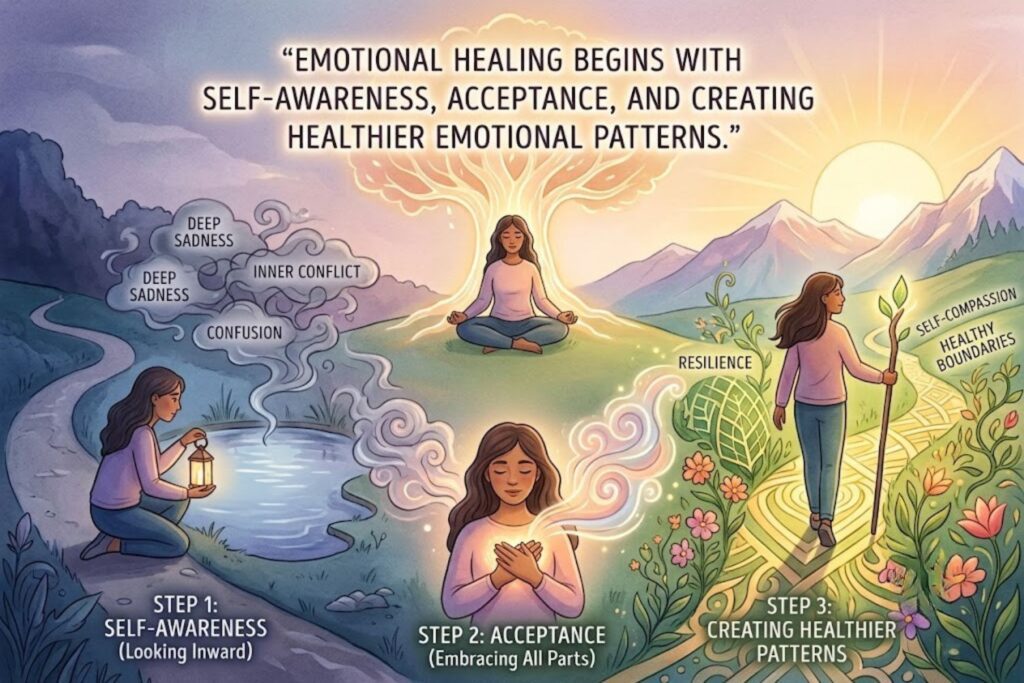
Emotional pain is a natural part of being human. Loss, rejection, betrayal, disappointment, difficult relationships, and major life changes can leave emotional wounds that affect how we think, feel, and interact with the world.
While physical wounds are easier to recognize, emotional wounds are often invisible. A person may appear successful and confident while privately struggling with fear, sadness, anger, insecurity, or unresolved pain from the past.
Emotional healing is the process of acknowledging painful experiences, understanding your emotions, and developing healthier ways to move forward. It does not mean forgetting what happened or pretending everything is fine. Instead, it means learning how to process emotions, rebuild your relationship with yourself, and create a stronger emotional foundation.
Healing is not a quick fix or a straight path. Some days may feel easier than others. However, with self-awareness, patience, and intentional practices, emotional growth is possible.
What Is Emotional Healing?
Emotional healing is the process of recovering from emotional pain by understanding, accepting, and processing difficult feelings and experiences. It involves developing self-awareness, practicing self-compassion, and creating healthier emotional patterns.
Unlike simply ignoring painful emotions, emotional healing requires you to recognize what hurts, explore why it affects you, and choose healthier responses.
Emotional healing can involve recovering from:
- A painful breakup
- Childhood emotional wounds
- Loss or grief
- Betrayal
- Rejection
- Failure or disappointment
- Toxic relationships
- Stress and burnout
- Major life transitions
Every person’s healing journey looks different. Some people heal through therapy, while others find growth through reflection, supportive relationships, mindfulness, journaling, and personal development practices.
Understanding Emotional Wounds
Emotional wounds are painful experiences that continue influencing your thoughts, behaviors, or relationships long after the original event happened.
For example:
- Someone who experienced rejection may struggle with feeling “not good enough.”
- Someone who experienced betrayal may find it difficult to trust others.
- Someone who grew up with constant criticism may develop harsh self-talk.
These emotional patterns often develop as protective responses. Your mind learns ways to avoid future pain, but sometimes those protective habits can limit happiness, connection, and personal growth.
Recognizing these patterns is the first step toward healing.
Emotional Healing vs. Avoiding Your Feelings
Many people confuse emotional healing with simply “moving on.” However, avoiding emotions and healing from emotions are very different.
| Avoiding Emotions | Emotional Healing |
|---|---|
| Pushes feelings away | Acknowledges feelings |
| Provides temporary relief | Creates long-term growth |
| Avoids painful memories | Learns from experiences |
| Keeps emotional patterns hidden | Builds self-awareness |
Ignoring emotions may make discomfort disappear temporarily, but unresolved feelings often return through anxiety, frustration, unhealthy relationships, or emotional exhaustion.
Healing begins when you allow yourself to understand what you feel instead of fighting against it.
Why Emotional Healing Matters
Emotional healing is important because your emotional health influences many areas of your life, including relationships, confidence, decision-making, and overall well-being.
1. Healthier Relationships
When emotional wounds remain unresolved, they can affect how you connect with others.
You may:
- Fear vulnerability
- Struggle with trust
- Expect rejection
- Avoid intimacy
Healing helps you build relationships based on understanding rather than fear.
2. Improved Self-Confidence
Past experiences can shape the way you view yourself.
Emotional healing allows you to separate:
- What happened to you
from - Who you are
Your past experiences do not define your worth.
3. Better Emotional Regulation
Healing helps you recognize emotions before they control your actions.
Instead of reacting immediately, you learn to pause, understand your feelings, and respond intentionally.
Signs You May Need Emotional Healing
Sometimes emotional wounds are easier to notice through patterns than individual moments.
You may benefit from emotional healing if you experience:
- Constant self-criticism
- Difficulty trusting people
- Feeling emotionally drained
- Overreacting to small situations
- Fear of being vulnerable
- Repeating unhealthy relationship patterns
- Difficulty letting go of past experiences
- Feeling disconnected from yourself
- Avoiding certain memories or emotions
These signs do not mean something is wrong with you. They may simply indicate that certain emotional experiences need attention and care.
The Emotional Healing Process: 5 Steps to Begin
Step 1: Recognize Your Emotional Pain
The first step in emotional healing is awareness.
Ask yourself:
- What emotions keep returning?
- What situations trigger strong reactions?
- What experiences still affect me today?
- What feelings do I avoid?
Many people try to change their emotions before understanding them.
Awareness creates the foundation for meaningful change.
Step 2: Allow Yourself to Feel
Many people learn to suppress emotions because they believe certain feelings are unacceptable.
Examples:
- “I should be over this by now.”
- “I shouldn’t feel hurt.”
- “I need to stay strong.”
However, emotions are signals. They provide information about your needs, values, and experiences.
Allowing yourself to feel sadness, anger, disappointment, or grief does not make you weak. It allows your mind to process what happened.
Step 3: Understand Where the Pain Comes From
Healing requires curiosity.
Instead of asking:
“Why am I like this?”
Try asking:
“What happened that taught me to feel this way?”
This shift creates compassion instead of judgment.
Reflection questions:
- When did I first notice this pattern?
- What belief did I develop from this experience?
- Is this belief still helping me today?
- What would I say to a friend experiencing the same thing?
Step 4: Practice Self-Compassion
Many people carry emotional pain because they are hard on themselves.
Self-compassion means treating yourself with the same kindness you would offer someone you care about.
Instead of:
“I should have known better.”
Try:
“I made the best decision I could with what I understood at that time.”
Self-compassion does not remove accountability. It allows growth without unnecessary shame.
Step 5: Build Healthier Emotional Habits
Healing continues through daily choices.
Helpful emotional healing habits include:
- Setting healthy boundaries
- Spending time with supportive people
- Practicing mindfulness
- Writing down your thoughts
- Taking care of your physical health
- Learning communication skills
- Asking for support when needed
Small consistent actions often create lasting emotional change.
Practical Emotional Healing Exercises
1. Emotional Healing Journaling
Writing can help organize thoughts and identify emotional patterns.
Try answering:
- What emotion am I feeling today?
- What triggered this feeling?
- What does this emotion need from me?
- What is one kind thing I can do for myself?
2. The Emotion Naming Exercise
When you feel overwhelmed:
- Stop and pause.
- Identify the emotion.
- Describe where you feel it physically.
- Ask what caused it.
- Choose a thoughtful response.
For example:
Instead of saying:
“I feel terrible.”
Try:
“I feel disappointed because I expected a different outcome.”
Naming emotions can make them easier to understand.
3. Mindfulness Practice
Mindfulness involves paying attention to the present moment without judgment.
A simple practice:
- Sit quietly for a few minutes.
- Notice your breathing.
- Observe thoughts without criticizing yourself.
- Return attention to the present.
Mindfulness can help create space between emotions and reactions.
Common Emotional Healing Mistakes
Trying to Heal Too Quickly
Healing is not a race.
Everyone processes emotions differently. Comparing your progress with someone else’s journey can create unnecessary pressure.
Suppressing Negative Emotions
Positive thinking is helpful, but it should not become a way to avoid difficult feelings.
Healthy emotional wellness includes all emotions.
Blaming Yourself for Everything
Personal growth requires responsibility, but carrying excessive guilt can prevent healing.
Ask:
“What can I learn?”
instead of:
“What is wrong with me?”
Isolating Yourself
While alone time can be valuable, complete isolation may make emotional struggles harder.
Supportive connections can provide encouragement and perspective.
How Long Does Emotional Healing Take?
There is no universal timeline for emotional healing.
Factors that influence healing include:
- The type of experience
- Personal coping skills
- Available support
- Willingness to process emotions
- Previous experiences
Healing is also not always linear.
You may feel better for weeks and then experience difficult emotions again. This does not mean you have failed. It is often part of the process.
Progress may look like:
- Recovering faster after difficult moments
- Understanding your triggers
- Setting healthier boundaries
- Feeling more comfortable being yourself
When to Seek Professional Support
Self-reflection and personal growth can be powerful, but professional support may be helpful when emotional pain becomes overwhelming.
Consider speaking with a mental health professional if you experience:
- Persistent sadness
- Severe anxiety
- Difficulty functioning daily
- Trauma-related distress
- Emotional struggles affecting relationships or work
Therapy can provide a structured environment to explore emotions and develop healthier coping strategies.
Emotional Healing in Real Life
Example 1: Healing After Heartbreak
After a painful breakup, someone may believe:
“I will never trust anyone again.”
Emotional healing involves:
- Processing grief
- Understanding relationship patterns
- Rebuilding self-worth
- Learning from the experience
The goal is not forgetting the relationship. The goal is moving forward with greater awareness.
Example 2: Recovering Confidence After Failure
A professional who experiences career failure may begin believing:
“I am not capable.”
Healing involves recognizing that one event does not define personal ability.
A healthier belief becomes:
“I experienced a setback, but I can learn and grow.”
Daily Practices That Support Emotional Healing
Use this simple checklist:
☐ Spend time reflecting on your emotions
☐ Practice gratitude
☐ Create healthy boundaries
☐ Communicate honestly
☐ Spend time with supportive people
☐ Prioritize rest and self-care
☐ Practice self-compassion
☐ Celebrate small progress
Final Thoughts: Your Emotional Healing Journey Matters
Emotional healing is not about becoming someone completely different. It is about reconnecting with yourself, understanding your experiences, and creating healthier ways to respond to life.
Your emotions are not obstacles to overcome. They are messages that can help you understand yourself more deeply.
Healing begins with small steps:
- Recognizing what hurts
- Allowing yourself to feel
- Showing yourself compassion
- Choosing healthier patterns
Every step toward emotional awareness is a step toward greater peace, resilience, and personal growth.
If you are beginning your healing journey, remember that progress does not require perfection. It requires patience, honesty, and a willingness to care for yourself.