
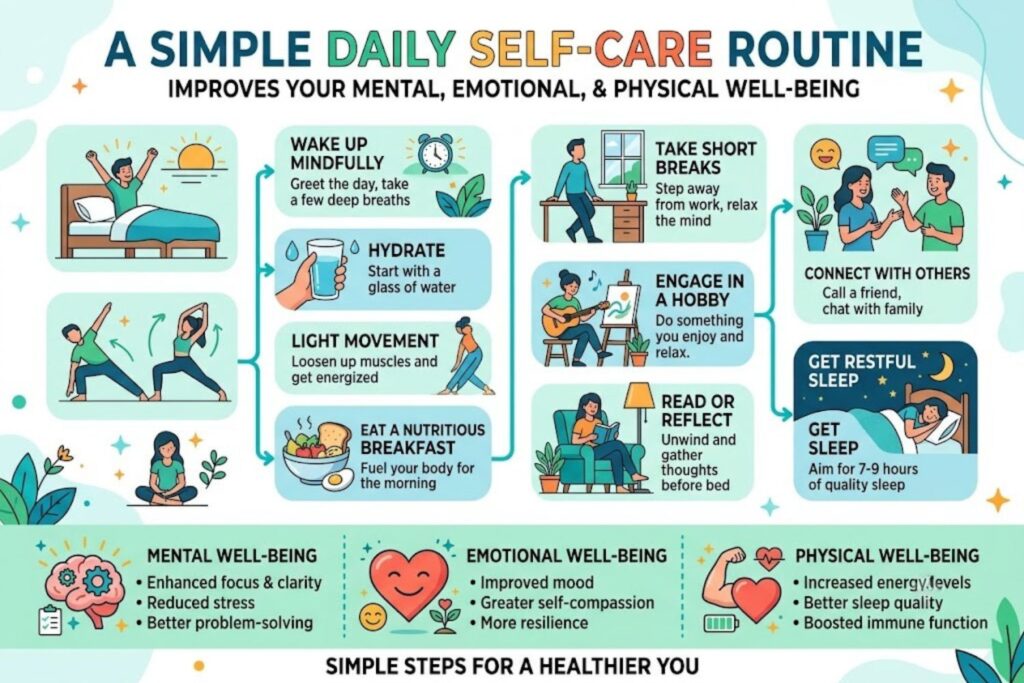
Self-care isn’t about escaping your responsibilities—it’s about building habits that help you handle them with more energy, resilience, and clarity. A consistent daily self-care routine can improve your physical health, support emotional well-being, reduce stress, and help you stay focused even during life’s busiest seasons.
The good news? You don’t need expensive products, hours of free time, or a perfectly organized life to practice self-care. Small, intentional actions repeated every day often have a greater impact than occasional grand gestures.
In this guide, you’ll learn how to create a realistic self-care routine that fits your schedule, supports your mental and physical health, and grows with your lifestyle. Whether you’re a student, a working professional, a caregiver, or simply looking to improve your daily habits, you’ll find practical strategies you can start using today.
What Is a Daily Self-Care Routine?
Quick Answer (Featured Snippet)
A daily self-care routine is a set of intentional habits that support your physical, mental, emotional, and social well-being. These habits are performed consistently to reduce stress, improve health, increase energy, and build long-term resilience rather than simply providing temporary comfort.
Unlike occasional relaxation activities, a daily routine focuses on sustainable habits that become part of everyday life.
Why Daily Self-Care Matters
Many people think self-care is only necessary when they’re overwhelmed. In reality, it’s most effective as a preventive practice.
A consistent routine can help you:
- Reduce daily stress
- Improve concentration
- Sleep more consistently
- Increase emotional resilience
- Maintain healthier relationships
- Feel more energized throughout the day
- Lower the risk of burnout
- Build healthier habits over time
Think of self-care as regular maintenance for your mind and body. Just as brushing your teeth prevents dental problems, daily wellness habits can help prevent chronic stress from building up.
Self-Care vs. Self-Indulgence
One of the biggest misconceptions is that self-care always involves treating yourself.
While enjoying a favorite meal or taking a relaxing bath can certainly be part of self-care, true self-care often involves choices that benefit your future self.
| Self-Care | Self-Indulgence |
|---|---|
| Going to bed on time | Staying up late binge-watching shows |
| Drinking enough water | Excessive sugary drinks |
| Setting healthy boundaries | Avoiding responsibilities |
| Taking a walk | Spending hours scrolling social media |
| Preparing nutritious meals | Constant emotional spending |
The goal isn’t to eliminate enjoyment—it’s to balance immediate pleasure with long-term well-being.
The Five Pillars of Daily Self-Care
Creating a balanced routine means looking beyond physical health. True wellness involves several interconnected areas of life.
1. Physical Self-Care
Physical well-being forms the foundation of every effective self-care routine.
Focus on habits such as:
- Drinking enough water
- Eating balanced meals
- Getting regular movement
- Prioritizing quality sleep
- Stretching throughout the day
- Scheduling preventive healthcare appointments
You don’t need intense workouts every day. A 20-minute walk or a few minutes of stretching can make a meaningful difference.
Expert Tip: Instead of asking, “How can I exercise today?” ask, “How can I move my body today?” This mindset encourages consistency over perfection.
2. Emotional Self-Care
Emotional wellness involves recognizing, processing, and responding to your feelings in healthy ways.
Daily emotional self-care might include:
- Journaling
- Practicing gratitude
- Talking with someone you trust
- Taking breaks when overwhelmed
- Acknowledging difficult emotions without judging yourself
- Celebrating small accomplishments
Ignoring emotions doesn’t make them disappear. Giving yourself space to process them can improve resilience and decision-making.
3. Mental Self-Care
Your brain needs recovery just as much as your body.
Support your mental health by:
- Reading books
- Solving puzzles
- Learning new skills
- Practicing mindfulness
- Limiting information overload
- Taking short breaks between demanding tasks
Mental self-care also means recognizing when your mind needs rest instead of more stimulation.
4. Social Self-Care
Healthy relationships play a significant role in overall well-being.
Social self-care includes:
- Spending quality time with family
- Connecting with supportive friends
- Asking for help when needed
- Setting healthy boundaries
- Saying “no” without guilt
- Making time for meaningful conversations
A strong support network can help reduce stress and improve emotional resilience during challenging times.
5. Digital Self-Care
Technology offers incredible benefits, but constant connectivity can also contribute to stress and mental fatigue.
Healthy digital habits include:
- Turning off unnecessary notifications
- Taking screen breaks
- Avoiding social media before bed
- Limiting doomscrolling
- Creating phone-free meals
- Scheduling time away from devices
Digital wellness has become one of the most overlooked aspects of modern self-care.
How to Build a Daily Self-Care Routine That Lasts
Many people fail not because they lack motivation, but because they try to change too much at once.
Sustainable routines grow gradually.
Step 1: Start with the 5-Minute Rule
If a new habit feels overwhelming, shrink it until it feels manageable.
Instead of:
- Meditate for 30 minutes
Start with:
- One minute of deep breathing
Instead of:
- Exercise for an hour
Start with:
- Five minutes of walking
Small actions create momentum. Once a habit becomes automatic, it’s easier to expand naturally.
Step 2: Perform an Energy Audit
Rather than copying someone else’s routine, identify what affects your own energy levels.
Ask yourself:
What gives me energy?
Examples:
- Fresh air
- Morning coffee
- Quiet reading
- Walking outside
- Listening to music
- Talking with friends
What drains my energy?
Examples:
- Poor sleep
- Constant notifications
- Skipping meals
- Multitasking
- Negative self-talk
- Cluttered workspaces
Your self-care routine should include more activities from the first list and reduce the impact of the second.
Step 3: Build Around Your Existing Schedule
Instead of finding extra time, attach new habits to routines you already have.
Examples:
After brushing your teeth:
→ Drink a glass of water.
After making coffee:
→ Write three things you’re grateful for.
After lunch:
→ Take a five-minute walk.
Before bed:
→ Read one chapter of a book.
This technique, often called habit stacking, makes new behaviors easier to remember because they’re linked to existing routines.
Step 4: Focus on Progress, Not Perfection
Life will interrupt your routine.
Vacations.
Busy workweeks.
Family responsibilities.
Unexpected challenges.
Missing one day doesn’t erase your progress.
Consistency over months matters far more than perfection every day.
A helpful mindset is to “never miss twice.” If you skip today’s walk or journaling session, simply return to your routine tomorrow without guilt.
Morning Self-Care Routine
Your morning sets the tone for the rest of the day. A thoughtful start doesn’t need to be lengthy—it simply needs to be intentional.
1. Wake Up Without Rushing
If possible, allow yourself a few minutes before checking emails or social media.
Take a few slow breaths, stretch, or simply notice how your body feels before diving into your responsibilities.
2. Hydrate First
After several hours of sleep, your body naturally needs fluids.
Drinking a glass of water soon after waking can help you feel more refreshed and support healthy daily hydration.
If you enjoy coffee or tea, consider drinking water first before reaching for caffeinated beverages.
3. Move Your Body
Morning movement doesn’t require a gym membership.
Consider:
- Gentle stretching
- Yoga
- A short walk
- Bodyweight exercises
- Dancing to your favorite song
Even five to ten minutes of movement can help increase alertness and reduce stiffness from sleep.
4. Set an Intention for the Day
Before your day becomes busy, ask yourself one simple question:
“What is the most important way I want to show up today?”
Your answer might be:
- Stay patient.
- Focus on one task at a time.
- Take breaks when needed.
- Practice gratitude.
- Listen more than I speak.
Setting an intention provides direction and can help you make decisions that align with your well-being throughout the day.
Midday Self-Care: Stay Energized Without Losing Momentum
Many people begin the day with good intentions but lose energy by early afternoon. A few small habits during the middle of the day can help you reset without disrupting your schedule.
The goal isn’t to stop working—it’s to recharge so you can work more effectively.
Take a Five-Minute Movement Break
Sitting for long periods can contribute to physical discomfort and mental fatigue.
Try one of these quick activities:
- Walk around your office or home
- Stretch your shoulders and neck
- Stand while taking a phone call
- Climb a flight of stairs
- Step outside for fresh air
These small movement breaks can improve circulation and help you return to your tasks feeling more alert.
Practice Mindful Breathing
Stress often builds gradually without us noticing.
Pause for one minute and try this simple breathing exercise:
- Inhale slowly through your nose for four seconds.
- Hold your breath for four seconds.
- Exhale gently through your mouth for six seconds.
- Repeat five times.
This quick reset can help reduce tension and improve focus during busy days.
Fuel Your Body
Skipping meals or relying on sugary snacks can lead to energy crashes.
Aim for balanced meals and snacks that include:
- Lean protein
- Whole grains
- Fruits
- Vegetables
- Healthy fats
Keep a reusable water bottle nearby as a visual reminder to stay hydrated throughout the day.
Take a Digital Pause
Constant notifications can interrupt concentration and increase stress.
Consider:
- Silencing non-essential notifications
- Closing unused browser tabs
- Scheduling specific times to check email
- Spending a few minutes away from all screens
Even short breaks from technology can improve mental clarity.
Evening Self-Care Routine
Evening habits prepare your body and mind for restful sleep and help you transition out of “work mode.”
Rather than scrolling until bedtime, create a routine that encourages relaxation.
Disconnect from Screens
Blue light and constant stimulation can make it harder to unwind.
Try to reduce screen use during the last 30 to 60 minutes before bed.
Instead, consider:
- Reading
- Listening to calming music
- Gentle stretching
- Journaling
- Practicing mindfulness
Reflect on Your Day
Reflection doesn’t have to be complicated.
Ask yourself:
- What went well today?
- What challenged me?
- What am I grateful for?
- What can I improve tomorrow?
A few minutes of reflection can help you recognize progress instead of focusing only on unfinished tasks.
Prepare for Tomorrow
Reducing tomorrow’s decisions can lower morning stress.
Simple actions include:
- Choosing tomorrow’s clothes
- Packing your lunch
- Making a short to-do list
- Cleaning your workspace
- Filling your water bottle
These small habits make mornings feel calmer and more organized.
Prioritize Quality Sleep
Sleep is one of the most powerful forms of self-care.
Healthy sleep habits include:
- Going to bed at a consistent time
- Keeping your bedroom cool and comfortable
- Limiting caffeine late in the day
- Avoiding heavy meals before bedtime
- Following a relaxing bedtime routine
Remember, self-care isn’t complete without adequate rest.
Common Self-Care Mistakes to Avoid
Many routines fail because they’re built on unrealistic expectations.
Here are the most common pitfalls—and how to avoid them.
| Mistake | Better Approach |
|---|---|
| Trying to change everything at once | Start with one or two habits |
| Waiting until you’re burned out | Practice self-care consistently |
| Comparing your routine to others | Build one that fits your lifestyle |
| Believing self-care must be expensive | Focus on simple, meaningful habits |
| Feeling guilty for taking breaks | View self-care as part of productivity |
| Giving up after missing one day | Restart the next day without judgment |
A Simple 15-Minute Daily Self-Care Routine
If you’re short on time, this routine can fit into almost any schedule.
Morning (5 Minutes)
- Drink a glass of water
- Stretch for two minutes
- Set one intention for the day
Afternoon (5 Minutes)
- Walk around for three minutes
- Practice mindful breathing
- Refill your water bottle
Evening (5 Minutes)
- Write down three things you’re grateful for
- Read a few pages of a book
- Prepare one task for tomorrow
Fifteen intentional minutes each day can be more sustainable than aiming for an elaborate routine you’ll struggle to maintain.
Daily Self-Care Checklist
Use this checklist as a flexible guide rather than a strict set of rules.
Physical Wellness
✔ Drank enough water
✔ Ate balanced meals
✔ Moved your body
✔ Slept well
Mental Wellness
✔ Took a mindful break
✔ Reduced unnecessary screen time
✔ Learned something new
Emotional Wellness
✔ Checked in with your feelings
✔ Practiced gratitude
✔ Celebrated a small win
Social Wellness
✔ Connected with someone
✔ Set a healthy boundary if needed
Personal Growth
✔ Read or reflected
✔ Took one small step toward a goal
Remember, you don’t need to check every box every day. The goal is steady progress, not perfection.
How to Know Your Self-Care Routine Is Working
Results may not appear overnight, but consistency often leads to noticeable improvements over time.
Positive signs include:
- More consistent energy
- Better sleep quality
- Improved concentration
- Feeling calmer during stressful situations
- Better emotional awareness
- Increased productivity
- Healthier relationships
- Greater confidence in handling challenges
Rather than asking, “Do I feel amazing every day?” ask, “Am I feeling better than I did a month ago?”
Small improvements often add up to meaningful long-term change.
Weekly Self-Care Reset
Once a week, spend a few minutes reviewing your routine.
Ask yourself:
What’s working?
Identify habits that feel natural and helpful.
What’s not working?
Be honest about habits that don’t fit your lifestyle.
What needs adjusting?
Maybe your evening routine is too ambitious, or your mornings are busier than expected. Modify your plan instead of abandoning it.
Celebrate Progress
Recognize your consistency, even if it’s imperfect.
Building healthy habits is a long-term investment, not a race.
Final Thoughts
A meaningful daily self-care routine isn’t about creating a perfect life—it’s about creating a sustainable one.
Some days you’ll have an hour for yourself. Other days you may only have five minutes.
Both count.
The most effective routines are built around your real life, not an idealized version of it.
Start small.
Stay consistent.
Adjust as your needs change.
Over time, those small daily choices can support better physical health, stronger emotional resilience, improved focus, and a greater sense of balance.
Self-care isn’t a luxury. It’s one of the most practical ways to care for your future self.
Frequently Asked Questions
1. What is a daily self-care routine?
A daily self-care routine is a collection of intentional habits that support your physical, mental, emotional, and social well-being. These habits help reduce stress, improve overall health, and create long-term resilience through consistent daily practice.
2. How long should a daily self-care routine take?
There is no perfect length. Even 5 to 15 minutes of intentional self-care each day can have a positive impact. The best routine is one you can maintain consistently.
3. What are the five types of self-care?
The five main areas of self-care include:
- Physical
- Emotional
- Mental
- Social
- Digital
A balanced routine includes habits from each of these categories.
4. What should I include in my morning self-care routine?
A simple morning routine might include:
- Drinking water
- Gentle stretching
- Eating a healthy breakfast
- Practicing gratitude
- Setting an intention for the day
5. How do I stay consistent with self-care?
Start with small habits, attach them to existing routines, schedule them into your day, and focus on progress rather than perfection. Missing one day doesn’t mean you’ve failed—simply return to your routine the next day.
6. Is self-care the same as being selfish?
No. Healthy self-care helps you maintain your physical and emotional well-being, making it easier to care for others and meet your responsibilities effectively.
7. Can self-care improve mental health?
Daily self-care can support mental well-being by helping reduce stress, improve emotional regulation, encourage healthier coping strategies, and promote better sleep. It complements—but does not replace—professional mental health care when needed.
8. What if I don’t have time for self-care?
Start with one or two small habits that take less than five minutes, such as drinking a glass of water, taking a short walk, or practicing deep breathing. Small, consistent actions are often more sustainable than lengthy routines.
9. Should my self-care routine change over time?
Yes. Your needs may change with different life stages, work schedules, health conditions, or family responsibilities. Review your routine regularly and adjust it to match your current priorities.
10. What’s the biggest mistake people make with self-care?
Many people try to overhaul their entire lifestyle at once. Building one or two habits at a time is usually more effective and sustainable.