Anxiety is a normal part of life. It can help you stay alert before a job interview, prepare for an important presentation, or react quickly in a dangerous situation. However, when anxious thoughts become constant, overwhelming, or begin interfering with daily life, they can affect your health, relationships, work performance, and overall well-being.
For people working in technology, anxiety can feel especially persistent. Tight deadlines, endless notifications, remote work isolation, rapid industry changes, and the pressure to keep learning new skills can create a constant state of mental overload.
The good news is that anxiety is manageable. While there isn’t a single solution that works for everyone, there are evidence-based strategies that can reduce symptoms, improve emotional resilience, and help you regain a sense of control.
In this guide, you’ll learn what anxiety is, why it happens, how to calm it in the moment, and which long-term habits can make a lasting difference.
What Is Anxiety?
Quick Answer (Featured Snippet)
Anxiety is your body’s natural response to stress or perceived danger. It involves emotional, physical, and mental reactions that prepare you to respond to a challenge. While occasional anxiety is normal, persistent or excessive anxiety that disrupts daily life may require professional evaluation and treatment.
Anxiety isn’t simply “worrying too much.” It’s a complex response involving your brain, nervous system, hormones, and thoughts.
When your brain senses a potential threat—even if that threat isn’t physically dangerous—it activates your body’s stress response. Your heart rate increases, muscles tense, breathing changes, and your mind becomes highly alert.
This response is helpful in genuine emergencies. The problem occurs when your brain begins treating everyday situations as constant threats.
Examples include:
- Checking work emails late at night
- Waiting for an important message
- Speaking during virtual meetings
- Financial uncertainty
- Relationship conflicts
- Health concerns
- Information overload from news and social media
Normal Anxiety vs. Anxiety Disorders
Everyone experiences anxiety from time to time. The difference lies in its intensity, frequency, and impact on daily life.
| Normal Anxiety | Anxiety Disorder |
|---|---|
| Temporary | Persistent |
| Linked to a specific situation | May occur without a clear cause |
| Doesn’t significantly disrupt daily life | Interferes with work, relationships, or routines |
| Improves after the stressful event | Continues long after the event has passed |
If anxiety lasts for weeks or months, causes significant distress, or affects your ability to function, it’s important to speak with a qualified healthcare or mental health professional for an evaluation.
Common Symptoms of Anxiety
Anxiety affects people differently, but common symptoms include:
Physical Symptoms
- Rapid heartbeat
- Sweating
- Muscle tension
- Headaches
- Digestive discomfort
- Shortness of breath
- Dizziness
- Fatigue
Emotional Symptoms
- Constant worry
- Feeling overwhelmed
- Irritability
- Fear of losing control
- Restlessness
Cognitive Symptoms
- Racing thoughts
- Difficulty concentrating
- Overthinking
- Trouble making decisions
- Expecting the worst-case scenario
Behavioral Symptoms
- Avoiding certain situations
- Procrastination
- Seeking excessive reassurance
- Difficulty relaxing
- Changes in sleep patterns
Understanding Why Anxiety Happens
Quick Summary
Anxiety develops when your brain interprets situations as potential threats. Your nervous system responds by preparing your body for action, even when no immediate danger exists. Genetics, life experiences, stress, and environmental factors all influence how often this response occurs.
Your Brain’s Built-In Alarm System
Think of anxiety as an alarm system designed to protect you.
When functioning properly, it alerts you to real risks. But sometimes, this alarm becomes overly sensitive, activating in situations that aren’t actually dangerous.
For example:
- Receiving constructive feedback
- Sending an important email
- Waiting for medical test results
- Giving a presentation
- Applying for a new job
Your brain can’t always distinguish between physical danger and emotional uncertainty.
The Fight, Flight, or Freeze Response
When anxiety is triggered, your body releases stress hormones such as adrenaline and cortisol.
This leads to:
- Faster breathing
- Increased heart rate
- Heightened awareness
- Muscle tension
- Reduced digestion
- Increased blood flow to major muscles
These changes prepare you to react quickly. However, if this response remains active for long periods, it can leave you feeling mentally and physically exhausted.
Why Overthinking Makes Anxiety Worse
Overthinking often creates a cycle:
- A stressful thought appears.
- Your brain searches for possible outcomes.
- You imagine worst-case scenarios.
- Your body reacts as though those scenarios are real.
- Physical symptoms increase.
- Those symptoms create even more worry.
Breaking this cycle doesn’t mean ignoring your thoughts. It means learning to respond differently to them.
How to Calm Anxiety in the Moment
Quick Answer (Featured Snippet)
The fastest ways to calm anxiety include slowing your breathing, grounding yourself in the present, relaxing tense muscles, moving your body, and replacing catastrophic thoughts with balanced ones. These techniques reduce your body’s stress response and help restore a sense of control.
1. Practice Box Breathing
Box breathing is a simple technique used by athletes, first responders, and military personnel to regulate stress.
Steps
- Inhale for four seconds.
- Hold your breath for four seconds.
- Exhale for four seconds.
- Hold again for four seconds.
Repeat for several minutes.
Why it works: Slow, controlled breathing signals your nervous system that you’re safe, helping reduce the intensity of the stress response.
2. Use the 5-4-3-2-1 Grounding Technique
Grounding helps shift your focus away from anxious thoughts and back to your surroundings.
Identify:
- 5 things you can see
- 4 things you can touch
- 3 things you can hear
- 2 things you can smell
- 1 thing you can taste
This technique is especially useful when anxiety makes you feel disconnected or overwhelmed.
3. Relax Your Muscles
Anxiety often causes people to tense their shoulders, neck, jaw, and hands without realizing it.
Try progressive muscle relaxation:
- Tighten one muscle group for five seconds.
- Release the tension slowly.
- Move to the next muscle group.
As your muscles relax, your brain receives signals that the immediate threat has passed.
4. Challenge Unhelpful Thoughts
Ask yourself:
- What evidence supports this thought?
- What evidence challenges it?
- Am I assuming the worst?
- What would I say to a friend in this situation?
Replacing catastrophic thinking with balanced perspectives can reduce anxiety over time.
5. Take a Movement Break
Physical activity doesn’t have to mean an intense workout.
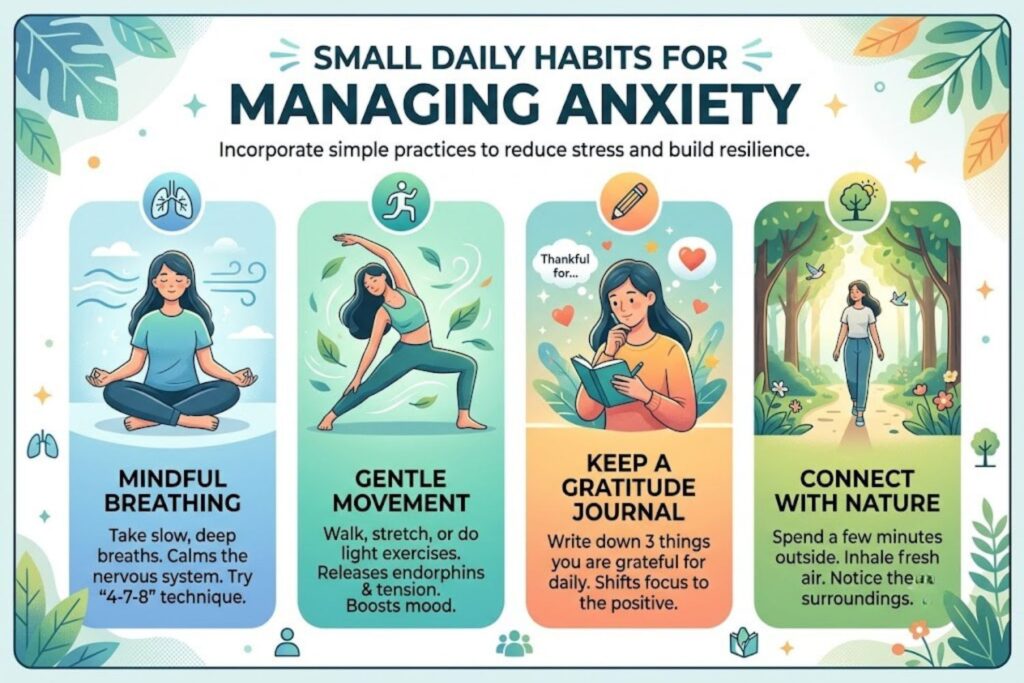
Even a short walk, gentle stretching, or climbing a few flights of stairs can help your body process stress hormones and improve your mood.
For people who spend long hours at a desk, setting a reminder to move every hour can make a noticeable difference.
Choosing the Right Coping Strategy
Not every coping technique works equally well in every situation. Matching the strategy to your symptoms can improve its effectiveness.
| If You’re Experiencing… | Try This | Why It Helps |
|---|---|---|
| Racing thoughts | Box breathing | Slows the body’s stress response |
| Feeling disconnected | 5-4-3-2-1 grounding | Brings attention back to the present |
| Muscle tension | Progressive muscle relaxation | Releases physical stress |
| Overthinking | Thought reframing | Challenges unhelpful thinking patterns |
| Restlessness | Short walk or stretching | Helps burn off stress hormones |
Expert Tip
Create a personal “anxiety toolkit.” Write down three or four coping strategies that work best for you and keep them easily accessible—whether in a notes app, a journal, or on a small card in your wallet. Having a plan before anxiety spikes makes it easier to respond calmly rather than react impulsively.
Long-Term Coping With Anxiety
Quick fixes can help you through stressful moments, but lasting improvement usually comes from consistent daily habits. Think of these strategies as strengthening your mental resilience over time rather than simply putting out fires.
Prioritize Quality Sleep
Sleep and anxiety have a two-way relationship. Poor sleep can increase anxiety, while anxiety can make it harder to fall or stay asleep.
Better Sleep Habits
- Go to bed and wake up at the same time each day.
- Avoid caffeine late in the afternoon and evening.
- Limit screen time for at least 30–60 minutes before bed.
- Keep your bedroom cool, dark, and quiet.
- Develop a relaxing bedtime routine, such as reading or gentle stretching.
Expert Tip: If your mind races at night, keep a notebook beside your bed. Write down lingering thoughts or tomorrow’s tasks so you don’t feel pressured to remember everything.
Stay Physically Active
Exercise benefits both physical and mental health. Regular movement helps regulate stress hormones and supports the release of chemicals that improve mood.
You don’t have to spend hours at the gym. Consistency matters more than intensity.
Try:
- Walking
- Cycling
- Swimming
- Yoga
- Strength training
- Dancing
Aim for movement you genuinely enjoy, making it easier to maintain over time.
Eat to Support Mental Well-Being
Food alone won’t cure anxiety, but balanced nutrition supports brain function and stable energy levels.
Focus on:
- Fruits and vegetables
- Whole grains
- Lean proteins
- Healthy fats
- Staying hydrated
Reduce excessive caffeine, alcohol, and highly processed foods if you notice they increase your anxiety.
Practice Mindfulness
Mindfulness doesn’t require emptying your mind. Instead, it involves noticing your thoughts without immediately reacting to them.
Simple mindfulness exercises include:
- Paying attention to your breathing.
- Observing your surroundings during a walk.
- Eating without distractions.
- Spending five minutes noticing thoughts without judgment.
With practice, mindfulness can help reduce automatic stress responses and improve emotional regulation.
Build Emotional Resilience
Resilience is the ability to recover from setbacks—not avoid them entirely.
Strengthen resilience by:
- Maintaining supportive relationships.
- Celebrating small wins.
- Setting realistic expectations.
- Accepting that uncertainty is part of life.
- Practicing self-compassion during difficult moments.
Technology and Anxiety
Technology offers incredible opportunities, but it also introduces unique stressors.
For people working in tech—or anyone who spends much of the day online—digital habits can significantly influence anxiety levels.
Digital Overload
Constant information can overwhelm your brain.
Signs include:
- Feeling mentally exhausted after scrolling.
- Difficulty focusing.
- Constant switching between tasks.
- Feeling behind despite working all day.
Solution: Schedule short periods during the day without screens whenever possible.
Notification Fatigue
Every notification interrupts attention and can increase stress.
Try:
- Turning off non-essential notifications.
- Using “Do Not Disturb” during focused work.
- Checking email at scheduled times instead of continuously.
Social Media Comparison
Social media often highlights achievements while hiding everyday struggles.
If scrolling leaves you feeling inadequate or anxious:
- Limit usage.
- Unfollow accounts that increase stress.
- Follow creators who promote realistic, balanced content.
Remote Work Challenges
Working remotely can blur the boundaries between work and personal life.
Healthy habits include:
- Creating a dedicated workspace.
- Taking regular breaks.
- Ending work at a consistent time.
- Scheduling social interaction outside of work.
Common Mistakes That Can Make Anxiety Worse
Even well-intentioned habits can unintentionally reinforce anxiety.
Avoid these common pitfalls:
| Mistake | A Better Approach |
|---|---|
| Avoiding every stressful situation | Gradually face manageable challenges. |
| Constantly seeking reassurance | Build confidence in your own decision-making. |
| Ignoring physical health | Prioritize sleep, movement, and nutrition. |
| Expecting instant results | Focus on steady, consistent progress. |
| Comparing your journey to others | Measure improvement against your own goals. |
A Simple 7-Day Anxiety Reset Plan
If you’re unsure where to start, try this one-week plan.
Day 1
Practice box breathing for five minutes.
Day 2
Take a 20-minute walk without checking your phone.
Day 3
Write down three anxious thoughts and challenge each one with evidence.
Day 4
Turn off non-essential notifications for the day.
Day 5
Spend ten minutes practicing mindfulness or meditation.
Day 6
Reach out to a trusted friend or family member for a meaningful conversation.
Day 7
Reflect on what helped most and create a personalized anxiety toolkit you can use in the future.
Remember, this isn’t about eliminating anxiety overnight. It’s about building sustainable habits that support long-term well-being.
When Should You Seek Professional Help?
Occasional anxiety is common, but professional support may be appropriate if anxiety:
- Persists for several weeks or months.
- Interferes with work, school, or relationships.
- Causes frequent panic attacks.
- Leads you to avoid everyday situations.
- Feels overwhelming despite self-help strategies.
A licensed mental health professional can assess your symptoms and recommend appropriate treatment, which may include therapy, medication, lifestyle changes, or a combination of approaches.
Seeking help is a proactive step toward improving your quality of life.
Final Thoughts
Coping with anxiety is a skill that develops over time. There is no perfect routine or universal solution, but consistent, practical strategies can make anxiety more manageable.
Whether you’re dealing with everyday stress, workplace pressure, or ongoing worry, small changes practiced regularly can lead to meaningful improvements.
Focus on progress rather than perfection. Build healthy habits, stay connected with supportive people, and don’t hesitate to seek professional guidance if anxiety begins affecting your daily life.
At Daily Dose Of Dee, we’re committed to sharing practical, compassionate resources that empower you to care for your mental and emotional well-being—one step at a time.
Frequently Asked Questions
1. What is the fastest way to cope with anxiety?
Slow, controlled breathing, grounding exercises, and brief physical movement can help reduce anxiety symptoms in the moment.
2. Can anxiety go away on its own?
Temporary anxiety often improves after a stressful situation passes. Persistent anxiety may benefit from professional evaluation and evidence-based treatment.
3. Is exercise good for anxiety?
Yes. Regular physical activity supports stress management and can improve mood and overall mental well-being.
4. Can technology increase anxiety?
Excessive screen time, constant notifications, and social media comparison may contribute to stress and anxiety for some people.
5. Should I avoid situations that make me anxious?
Not always. Gradually facing manageable challenges can help build confidence. If anxiety is severe, work with a qualified mental health professional.
6. What’s the difference between stress and anxiety?
Stress is typically a response to an external situation, while anxiety can persist even when no immediate stressor is present.
7. Can mindfulness help reduce anxiety?
Many people find mindfulness helpful for becoming more aware of anxious thoughts without reacting to them automatically.
8. When should I talk to a professional?
If anxiety interferes with daily life, relationships, work, or continues for an extended period, consider speaking with a licensed healthcare or mental health professional.