
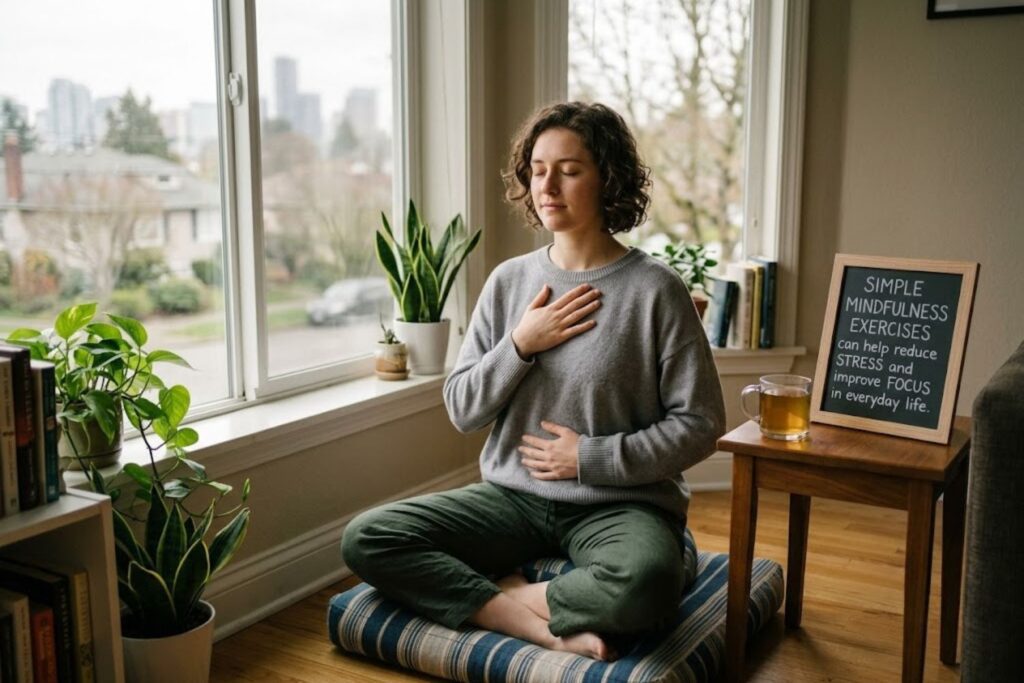
Modern life rarely gives our minds a chance to slow down. Emails arrive around the clock, phones buzz with notifications, and many people move from one task to another without a real mental break. Over time, this constant stimulation can increase stress, reduce concentration, and leave you feeling emotionally drained.
That’s where mindfulness exercises can help.
Mindfulness isn’t about clearing your mind or achieving perfect calm. It’s about paying attention to the present moment with openness and curiosity. With regular practice, even a few minutes a day can help you become more aware of your thoughts, emotions, and physical sensations without feeling controlled by them.
Whether you’re looking to improve focus at work, reduce anxiety, sleep better, or simply feel more grounded, this guide will walk you through practical mindfulness techniques you can begin using today.
What Are Mindfulness Exercises?
Quick Definition (Featured Snippet):
Mindfulness exercises are simple practices that help you focus your attention on the present moment. They involve observing your thoughts, feelings, breathing, or surroundings without judgment, allowing you to respond more calmly to stress and everyday challenges.
Unlike many wellness trends, mindfulness doesn’t require special equipment, expensive classes, or hours of practice. It can be done almost anywhere—in your home, office, car (while parked), or even while walking.
The goal isn’t to eliminate thoughts. Instead, it’s to notice them without immediately reacting.
Mindfulness vs. Meditation
These terms are often used interchangeably, but they aren’t exactly the same.
| Mindfulness | Meditation |
|---|---|
| A way of paying attention throughout the day | A dedicated period of focused practice |
| Can happen during everyday activities | Usually practiced while sitting or lying down |
| Flexible and informal | More structured |
| Helps build awareness in daily life | Helps strengthen mindfulness through regular training |
Think of meditation as a workout and mindfulness as using those skills throughout your day.
Why Mindfulness Works
Quick Answer
Mindfulness helps interrupt automatic stress responses by encouraging awareness instead of impulsive reactions. Research suggests regular mindfulness practice may improve attention, emotional regulation, resilience, and overall well-being.
The Mind-Body Connection
When you’re under pressure, your body often shifts into a stress response. Your breathing becomes shallow, your muscles tighten, and your thoughts may race from one worry to the next.
Mindfulness creates a pause between what’s happening and how you respond.
For example:
- Instead of immediately reacting to a frustrating email, you notice your tension first.
- Instead of spiraling into worry before a presentation, you focus on your breathing.
- Instead of multitasking through lunch, you slow down and pay attention to the experience of eating.
These small moments of awareness can gradually reshape how you handle everyday stress.
Benefits of Practicing Mindfulness
Regular mindfulness practice may help you:
- Reduce everyday stress
- Improve concentration and mental clarity
- Increase emotional awareness
- Sleep more peacefully
- Build resilience during difficult situations
- Strengthen patience
- Improve decision-making
- Enhance relationships through better listening
- Reduce mental fatigue
- Feel more connected to the present moment
Results vary from person to person, and mindfulness is not a replacement for professional mental health treatment when it’s needed.
How to Choose the Right Mindfulness Exercise
Not every technique works equally well in every situation. The best exercise often depends on how you’re feeling in the moment.
| If You Feel… | Try This Exercise | Why It Helps |
|---|---|---|
| Stressed | Box Breathing | Slows breathing and promotes calm |
| Distracted | Single-Task Focus | Reduces mental clutter |
| Anxious | Five Senses Grounding | Brings attention back to the present |
| Emotionally overwhelmed | Body Scan | Increases awareness of physical tension |
| Mentally exhausted | Mindful Walking | Combines gentle movement with focus |
| Restless before bed | Progressive Muscle Relaxation | Encourages physical relaxation |
| Overloaded by technology | Digital Detox Minute | Creates a mental reset |
| Burned out at work | STOP Technique | Helps interrupt automatic reactions |
You don’t need to master every exercise. Start with one or two that fit your current challenges.
25 Mindfulness Exercises You Can Start Today
1. Mindful Breathing
Best for: Everyday stress, anxiety, and improving focus
Mindful breathing is one of the simplest and most effective mindfulness exercises because your breath is always available.
How to Practice
- Sit comfortably.
- Close your eyes if it feels comfortable.
- Inhale slowly through your nose.
- Exhale gently.
- Focus only on your breathing.
- When your mind wanders, simply return your attention to your breath.
Start with just two minutes.
Expert Tip: Don’t worry about stopping your thoughts. Every time you gently return your attention to your breath, you’re strengthening your mindfulness skills.
2. Box Breathing
Best for: High-pressure situations
Box breathing is commonly used by professionals in demanding environments because it’s simple and easy to remember.
Steps
- Inhale for 4 seconds.
- Hold for 4 seconds.
- Exhale for 4 seconds.
- Hold for 4 seconds.
- Repeat for several cycles.
This exercise works well before meetings, presentations, interviews, or difficult conversations.
3. Five Senses Grounding Exercise
Best for: Anxiety and racing thoughts
When your mind jumps into “what if” thinking, grounding techniques help bring your attention back to what’s actually happening around you.
Notice:
- 5 things you can see
- 4 things you can touch
- 3 things you can hear
- 2 things you can smell
- 1 thing you can taste
This exercise can be completed in just a few minutes and doesn’t require any special setting.
4. Body Scan Meditation
Best for: Physical tension and emotional awareness
Stress often shows up in the body before we fully recognize it mentally.
A body scan helps you notice where you’re holding tension without trying to change anything immediately.
How to Do It
- Lie down or sit comfortably.
- Begin at your toes.
- Slowly move your attention upward through your body.
- Notice sensations without judging them.
- Continue until you reach the top of your head.
Many people discover they habitually tense their shoulders, jaw, or hands without realizing it.
5. Mindful Walking
Best for: People who struggle to sit still
Mindfulness doesn’t require sitting on a meditation cushion.
Walking can become a mindfulness exercise when you fully engage with each step.
As you walk, notice:
- the feeling of your feet touching the ground
- your breathing
- nearby sounds
- changing colors
- the movement of your arms
- the rhythm of your pace
Instead of thinking about your destination, focus on the experience of walking itself.
6. Mindful Eating
Best for: Developing healthier eating habits
Many people eat while scrolling through social media or watching television, barely noticing the meal.
Mindful eating encourages slowing down.
Before taking a bite, notice:
- aroma
- texture
- temperature
- flavor
- chewing
- hunger levels
- fullness cues
You don’t have to eat every meal this way. Even practicing with the first few bites can make a difference.
7. Gratitude Pause
Best for: Improving emotional balance
Rather than waiting until the end of the day, pause briefly and identify three things you appreciate in the present moment.
These don’t have to be major life events.
Examples include:
- warm coffee
- supportive coworkers
- sunshine through the window
- finishing a project
- hearing your favorite song
This practice helps shift attention toward positive experiences that often go unnoticed.
8. Mindful Listening
Best for: Building stronger relationships
During your next conversation:
- Avoid planning your response while the other person is speaking.
- Notice their tone of voice.
- Observe pauses.
- Pay attention to facial expressions.
- Listen with curiosity rather than judgment.
People often remember how well they felt heard more than the exact words spoken.
9. Observation Exercise
Choose a single everyday object—a leaf, coffee mug, pen, or flower.
Spend one minute noticing details you normally overlook.
Ask yourself:
- What colors do I see?
- What textures are present?
- What patterns stand out?
- How does the light change its appearance?
This simple exercise strengthens present-moment awareness and attention to detail.
10. Loving-Kindness Meditation
This mindfulness practice focuses on cultivating compassion toward yourself and others.
Silently repeat phrases such as:
- May I be healthy.
- May I be safe.
- May I be peaceful.
- May I live with ease.
Then gradually extend those wishes to loved ones, acquaintances, and even people you find challenging.
Research suggests compassion-focused practices may improve emotional well-being and interpersonal connection over time.
11. Breath Counting
Best for: Improving concentration
Breath counting gives your mind a simple task, making it easier to notice when your attention drifts.
How to Practice
- Inhale naturally.
- Exhale and count “one.”
- Continue counting each exhale until you reach ten.
- Start over at one.
If you lose track, don’t get frustrated. Simply begin again. The goal is awareness, not perfection.
12. Progressive Muscle Relaxation
Best for: Stress stored in the body
When you’re under pressure, muscles often tighten without you realizing it.
Starting at your feet, gently tense each muscle group for about five seconds, then release. Move gradually upward through your calves, thighs, abdomen, shoulders, arms, and face.
Many people find this especially helpful before bedtime.
13. The STOP Technique
Best for: Stressful moments at work or home
The STOP method creates a brief pause before reacting.
S – Stop
Pause what you’re doing.
T – Take a breath
Slow, intentional breathing helps interrupt automatic reactions.
O – Observe
Notice your thoughts, emotions, and physical sensations.
P – Proceed
Choose your next action deliberately instead of reacting impulsively.
Real-world example: Before responding to a frustrating message, use the STOP technique. That short pause can help you reply thoughtfully instead of emotionally.
14. The Digital Detox Minute
Best for: Reducing screen fatigue
Technology keeps us constantly connected, but that can make it difficult to stay mentally present.
Every hour:
- Put your phone away.
- Look away from your screen.
- Relax your shoulders.
- Take five slow breaths.
- Focus on something in the room for one minute.
These short breaks help reduce mental fatigue without disrupting your workflow.
15. Mindful Stretching
Best for: Office workers and remote employees
Stretch slowly while paying close attention to how your muscles feel.
Notice:
- tension releasing
- breathing rhythm
- posture
- balance
- flexibility
Avoid rushing. The awareness is more important than the stretch itself.
16. Sintion Labeling
Sometimes emotions feel overwhelming because they’re vague.
Pause and ask:
- What am I feeling?
- Where do I notice it in my body?
- What might have triggered it?
Instead of saying, “I’m stressed,” you might identify:
- disappointed
- frustrated
- nervous
- overwhelmed
- excited
- uncertain
Naming emotions can make them feel more manageable.
17. Emotion Labeling
Sometimes emotions feel overwhelming because they’re vague.
Pause and ask:
- What am I feeling?
- Where do I notice it in my body?
- What might have triggered it?
Instead of saying, “I’m stressed,” you might identify:
- disappointed
- frustrated
- nervous
- overwhelmed
- excited
- uncertain
Naming emotions can make them feel more manageable.
18. Nature Awareness
Whether you’re in a park or simply looking out a window, spend a few minutes observing nature.
Notice:
- movement of leaves
- cloud shapes
- birds
- sunlight
- wind
- changing colors
Nature naturally encourages slower observation and can provide a refreshing mental reset.
19. Mindful Journaling
Rather than documenting everything that happened today, focus on your present experience.
Prompts include:
- What am I feeling right now?
- What do I need today?
- What helped me feel calm?
- What challenged me?
- What can I let go of?
Keep your writing honest rather than perfect.
20. Guided Visualization
Close your eyes and imagine a peaceful place in vivid detail.
Picture:
- sounds
- colors
- temperature
- textures
- scents
Visualization works best when you engage multiple senses instead of only imagining a picture.
21. Self-Compassion Break
Many people speak to themselves more harshly than they would to a friend.
When facing a difficult moment:
- acknowledge that you’re struggling
- remind yourself that challenges are part of being human
- offer yourself the same kindness you’d offer someone you care about
Self-compassion supports resilience without encouraging avoidance or complacency.
22. Mindful Waiting
Waiting in line, sitting in traffic, or standing for an elevator often triggers impatience.
Instead of reaching for your phone:
- notice your breathing
- observe your surroundings
- relax your shoulders
- listen to nearby sounds
Turning unavoidable waiting into mindful moments can help reduce stress throughout the day.
23. The Desk Reset
Perfect for busy professionals.
Every two hours:
✓ Stand up
✓ Stretch
✓ Take five slow breaths
✓ Roll your shoulders
✓ Relax your jaw
✓ Drink water
✓ Refocus on your highest-priority task
This simple routine takes less than three minutes and helps break long periods of sedentary work.
24. Bedtime Reflection
Before sleeping, ask yourself:
- What went well today?
- What challenged me?
- What did I learn?
- What am I grateful for?
- What can I release before tomorrow?
This practice can help you end the day with greater clarity and emotional balance.
25. Morning Intention Practice
Instead of immediately checking emails or social media, begin your day with a simple intention.
Examples include:
- “Today I’ll be patient.”
- “Today I’ll focus on progress, not perfection.”
- “Today I’ll be present during conversations.”
- “Today I’ll notice small moments of gratitude.”
An intention provides direction without the pressure of a rigid goal.
A Simple 7-Day Mindfulness Plan
If you’re new to mindfulness, consistency matters more than duration. Here’s a beginner-friendly plan to help you build the habit.
| Day | Practice | Time |
|---|---|---|
| Monday | Mindful Breathing | 5 minutes |
| Tuesday | Five Senses Grounding | 5 minutes |
| Wednesday | Mindful Walking | 10 minutes |
| Thursday | Body Scan | 10 minutes |
| Friday | Gratitude Pause | 5 minutes |
| Saturday | Mindful Journaling | 10 minutes |
| Sunday | Loving-Kindness Meditation | 10 minutes |
After the first week, repeat the practices that resonated most with you or combine two shorter exercises into a daily routine.
Common Mistakes Beginners Make
Mindfulness is simple, but it’s easy to develop habits that make it less effective.
| Mistake | Why It Happens | Better Approach |
|---|---|---|
| Trying to stop all thoughts | Misunderstanding mindfulness | Observe thoughts without judgment |
| Practicing only when stressed | Waiting until there’s a problem | Build a daily habit |
| Expecting instant results | Unrealistic expectations | Focus on gradual progress |
| Being self-critical | Judging every session | Accept distractions as part of learning |
| Multitasking during practice | Habit of constant stimulation | Give one exercise your full attention |
Mindfulness for Tech Professionals
Technology can boost productivity, but it also increases distractions. Constant notifications, back-to-back virtual meetings, and prolonged screen time can contribute to cognitive overload and burnout.
Here are practical ways to weave mindfulness into a tech-driven workday:
Before You Open Your Inbox
Take three slow breaths and identify your top priority before reading emails.
Between Meetings
Instead of immediately joining the next call, spend one minute looking away from your screen and relaxing your shoulders.
During Coding or Deep Work
Use the Single-Task Focus exercise. Turn off non-essential notifications and work in focused intervals.
After a Difficult Conversation
Practice the STOP technique before responding to messages or making decisions.
At the End of the Workday
Write down one accomplishment, one lesson learned, and one thing you’re leaving behind until tomorrow.
Expert Insight: Mindfulness isn’t about avoiding technology. It’s about using technology intentionally instead of allowing it to control your attention.
Expert Tips for Making Mindfulness a Habit
- Pair mindfulness with an existing routine, such as your morning coffee or evening walk.
- Start with just two to five minutes a day.
- Keep your expectations realistic. Some days will feel easier than others.
- Track consistency rather than perfection.
- Experiment with different techniques to discover what works best for you.
- Treat missed days as opportunities to begin again, not reasons to quit.
When Mindfulness Alone May Not Be Enough
Mindfulness can be a valuable tool for managing everyday stress, improving focus, and supporting emotional well-being. However, it is not a substitute for professional care.
If stress, anxiety, depression, or other mental health concerns are persistent, significantly affect daily functioning, or feel overwhelming, consider reaching out to a licensed mental health professional. Mindfulness often works best as part of a broader self-care or treatment plan.
Conclusion
Mindfulness isn’t about escaping life—it’s about engaging with it more fully.
Whether you begin with a single mindful breath, a short walk, or a five-minute body scan, each practice strengthens your ability to respond thoughtfully instead of reacting automatically.
You don’t need an hour of meditation each day to experience meaningful benefits. Small, consistent moments of awareness can gradually improve your focus, reduce stress, and help you build greater resilience over time.
At Daily Dose Of Dee, we believe personal growth starts with simple, intentional actions. Explore our collection of resources on mindfulness, emotional wellness, self-care, and healthy habits to continue building a life that’s more balanced, present, and fulfilling.
FAQs
1. What are mindfulness exercises?
Mindfulness exercises are practices that help you focus on the present moment without judgment. They often involve breathing, observing your surroundings, or paying attention to your thoughts and physical sensations to improve awareness and reduce stress.
2. What is the best mindfulness exercise for beginners?
Mindful breathing is one of the easiest ways to start. It requires no equipment and can be practiced almost anywhere. Even two to five minutes of focusing on your breath each day can help build mindfulness.
3. Can mindfulness exercises reduce anxiety?
Mindfulness can help many people manage everyday anxiety by encouraging awareness of thoughts and emotions instead of reacting automatically. It is a supportive practice but should not replace professional mental health care when anxiety is severe or persistent.
4. How long should I practice mindfulness each day?
Quality matters more than duration. Beginners often benefit from practicing for 5–10 minutes daily, while experienced practitioners may choose longer sessions. Consistency is the most important factor.
5. What’s the difference between mindfulness and meditation?
Meditation is a structured practice, while mindfulness is the skill of paying attention to the present moment during everyday activities. Meditation helps develop mindfulness, which you can then apply throughout your day.
6. Can I practice mindfulness at work?
Yes. Simple techniques such as mindful breathing, the STOP method, or taking a one-minute screen break can fit naturally into a busy workday without interrupting productivity.
7. Are mindfulness exercises backed by research?
A growing body of research suggests mindfulness-based practices can support stress management, emotional regulation, attention, and overall well-being. Results vary by individual, and mindfulness is one component of a healthy lifestyle.
8. Can mindfulness improve focus?
Many people find mindfulness helpful for improving concentration because it trains attention. Practicing regularly can make it easier to notice distractions and return your focus to the task at hand.
9. Is mindfulness suitable for children?
Yes, when adapted to their age and developmental stage. Activities like mindful breathing, listening exercises, and gratitude practices can help children build attention and emotional awareness.
10. When should I seek professional help instead of relying on mindfulness?
If stress, anxiety, depression, or emotional challenges are persistent, worsen over time, or interfere with daily life, consult a qualified healthcare or mental health professional. Mindfulness can complement—but should not replace—appropriate treatment.