Mental strength isn’t about pretending everything is fine or never feeling stressed. It’s about responding to life’s challenges with clarity, resilience, and purpose—even when circumstances are difficult.
Whether you’re navigating career pressure, relationship struggles, financial uncertainty, or personal setbacks, learning how to be mentally strong can help you adapt, recover, and keep moving forward.
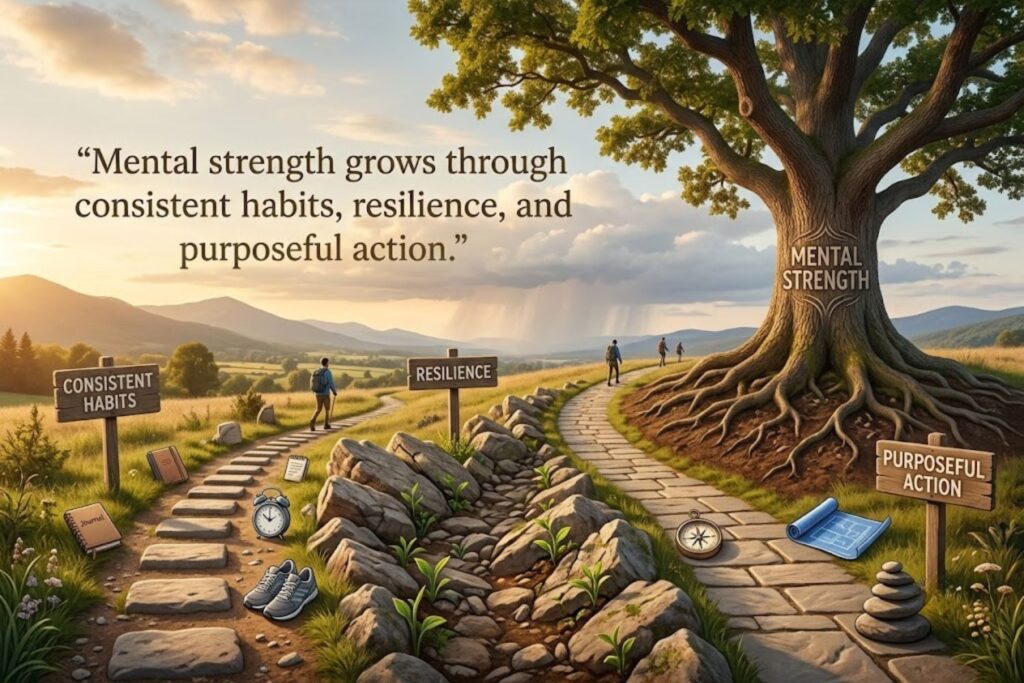
Unlike personality traits you’re born with, mental strength is a skill. It develops through consistent habits, intentional thinking, and healthy responses to adversity.
In this guide, you’ll learn:
- What mental strength really means
- The four pillars of lasting resilience
- Practical daily habits to strengthen your mindset
- Common mistakes that hold people back
- Actionable strategies you can start using today
What Does It Mean to Be Mentally Strong?
Quick Answer
Being mentally strong means managing your thoughts, emotions, and behaviors effectively during both success and adversity. It doesn’t mean avoiding emotions—it means responding to them in healthy, constructive ways.
Many people confuse mental strength with being emotionally distant or “tough.” In reality, mentally strong people experience fear, disappointment, frustration, and sadness just like everyone else. The difference lies in how they process those emotions and choose their next action.
Mental Strength vs. Related Concepts
| Concept | Focus | Key Difference |
|---|---|---|
| Mental Strength | Managing thoughts, emotions, and actions | Built through daily habits and intentional choices |
| Resilience | Recovering from setbacks | Focuses on bouncing back after challenges |
| Mental Toughness | Performing under pressure | Often associated with sports or high-performance environments |
| Emotional Intelligence | Understanding and managing emotions | Includes recognizing emotions in yourself and others |
Together, these qualities complement one another, but mental strength serves as the foundation for handling life’s uncertainties.
Why Mental Strength Matters
Developing mental strength can improve nearly every area of your life.
Better Stress Management
Stress is unavoidable, but your response to it is within your control. Mentally strong individuals learn to pause, assess situations objectively, and respond instead of reacting impulsively.
Improved Decision-Making
Strong emotions can cloud judgment. Mental resilience helps you evaluate options logically while still acknowledging your feelings.
Greater Confidence
Confidence grows through action, not perfection. Every challenge you face and overcome reinforces your belief in your ability to handle future obstacles.
Healthier Relationships
Mental strength supports healthy communication, emotional regulation, and personal boundaries, all of which contribute to stronger relationships.
Career Growth
Professionals who adapt to change, accept feedback, and remain composed during setbacks often become trusted leaders and problem-solvers.
The Four Pillars of Mental Strength
Mental strength isn’t built on one habit. It’s the result of strengthening four interconnected areas of your life.
1. Emotional Control
Emotional control doesn’t mean suppressing your feelings.
Instead, it means:
- Recognizing emotions without judgment
- Naming what you’re feeling
- Choosing your response intentionally
For example:
Instead of saying:
“I’m angry, so I need to argue.”
A mentally strong response is:
“I’m angry. I’ll give myself time before responding.”
This small pause often prevents decisions you’ll later regret.
2. Flexible Thinking
Life rarely unfolds exactly as planned.
Mentally strong people avoid rigid thinking and ask questions like:
- What can I learn from this?
- Is there another perspective?
- What part of this situation can I influence?
This mindset reduces overthinking and encourages constructive problem-solving.
3. Purposeful Action
Motivation comes and goes. Purpose keeps you moving.
Mentally strong people rely less on how they feel and more on the systems they’ve built.
For example:
- Exercising because it’s part of a routine, not because you feel motivated
- Saving money consistently instead of waiting for the “right time”
- Completing important tasks even when they’re uncomfortable
Small, consistent actions create long-term resilience.
4. Recovery After Stress
Recovery is often overlooked, but it’s essential.
Mental strength isn’t about pushing yourself endlessly. It’s about knowing when to recharge so you can continue performing well.
Healthy recovery includes:
- Quality sleep
- Physical activity
- Time in nature
- Meaningful social connection
- Reflection and journaling
- Taking breaks from digital distractions
Recovery isn’t a reward—it’s part of the process.
How to Be Mentally Strong: 15 Practical Strategies
1. Accept Reality Instead of Fighting It
Quick Answer
Acceptance isn’t giving up. It’s recognizing the facts of a situation so you can focus your energy on what you can change.
Many people waste emotional energy wishing circumstances were different.
Instead, ask:
- What has already happened?
- What can I influence now?
- What’s my next best step?
Acceptance creates clarity, and clarity leads to action.
2. Focus on What You Can Control
One of the fastest ways to reduce anxiety is to separate what’s within your control from what isn’t.
Control
- Your effort
- Your attitude
- Your habits
- Your communication
- Your reactions
Beyond Your Control
- Other people’s opinions
- The past
- Unexpected events
- Economic conditions
- Social media algorithms
Redirecting your attention toward controllable actions helps conserve mental energy and reduces unnecessary stress.
Expert Tip: When you’re overwhelmed, write two columns on paper: “I Can Control” and “I Can’t Control.” Commit your energy only to the first column.
3. Reframe Negative Thoughts
Everyone experiences negative thoughts. Mentally strong people don’t automatically believe them.
Instead of thinking:
“I always fail.”
Try asking:
- Is this completely true?
- What evidence supports this?
- What evidence challenges it?
- What would I say to a friend in this situation?
This practice, known as cognitive reframing, helps replace distorted thinking with balanced perspectives.
4. Build Discipline Instead of Waiting for Motivation
Motivation is unpredictable.
Discipline creates consistency.
If your goals depend on feeling inspired every day, progress will be inconsistent.
Instead:
- Schedule important tasks.
- Create routines.
- Reduce decision fatigue.
- Keep promises to yourself.
Each completed commitment strengthens self-trust, making future challenges easier to tackle.
5. Practice Emotional Regulation
Emotional regulation is the ability to experience emotions without allowing them to control your behavior.
Simple techniques include:
- Deep breathing
- Counting to ten before responding
- Taking a short walk
- Writing your thoughts in a journal
- Talking to someone you trust
These strategies don’t eliminate emotions—they help you respond thoughtfully rather than impulsively.
6. Strengthen Your Body to Support Your Mind
Physical and mental well-being are closely connected.
Regular exercise, nutritious meals, hydration, and sufficient sleep improve your ability to manage stress, concentrate, and recover from challenges.
You don’t need an intense fitness routine.
Even small habits matter:
- Walking for 20–30 minutes
- Stretching between work sessions
- Prioritizing consistent sleep
- Drinking enough water throughout the day
Taking care of your body provides a stronger foundation for mental resilience.
7. Learn from Failure Instead of Defining Yourself by It
Failure is feedback—not your identity.
Instead of asking:
“Why did I fail?”
Ask:
- What worked?
- What didn’t?
- What can I improve next time?
- What’s one lesson I can apply immediately?
Every setback becomes valuable when it leads to better decisions moving forward.
8. Set Healthy Boundaries
One of the clearest signs of mental strength is knowing when to say “no.”
Many people overcommit because they fear disappointing others. Over time, this leads to stress, resentment, and burnout.
Healthy boundaries protect your:
- Time
- Energy
- Mental health
- Relationships
- Personal goals
Try This
Instead of saying:
“I guess I can do it.”
Say:
“I appreciate you asking, but I can’t commit to that right now.”
Remember, every “yes” to something unimportant is often a “no” to something that truly matters.
Expert Insight: Boundaries aren’t about pushing people away—they’re about creating space for healthy, respectful relationships.
9. Build Confidence Through Action
Many people wait until they feel confident before taking action.
Mentally strong people do the opposite.
Confidence grows because of action, not before it.
A Simple Confidence Formula
Small Action → Small Success → More Confidence → Bigger Action
For example:
If public speaking makes you nervous:
- Speak up once during a meeting.
- Volunteer to present a small update.
- Practice with friends.
- Gradually increase the challenge.
Progress compounds over time.
10. Practice Gratitude Without Ignoring Reality
Gratitude doesn’t mean pretending everything is perfect.
It means recognizing what is still good, even during difficult seasons.
Each evening, write down:
- Three things that went well today.
- One lesson you learned.
- One thing you’re looking forward to tomorrow.
This simple habit trains your brain to notice opportunities instead of only problems.
11. Train Your Focus in a Distracted World
Technology is one of the biggest challenges to mental strength.
Constant notifications, emails, and social media updates can reduce concentration and increase stress.
Build Better Focus
- Turn off non-essential notifications.
- Schedule distraction-free work sessions.
- Avoid multitasking.
- Take short breaks between tasks.
- Limit unnecessary screen time before bed.
Being mentally strong also means protecting your attention.
12. Surround Yourself with Supportive People
Your environment influences your mindset more than you may realize.
Supportive relationships can encourage growth, provide perspective, and help you navigate challenges.
Look for people who:
- Celebrate your progress.
- Offer honest feedback.
- Respect your boundaries.
- Inspire healthy habits.
- Encourage accountability.
At the same time, consider limiting time with people who consistently create negativity or undermine your goals.
13. Do Difficult Things on Purpose
Growth happens outside your comfort zone.
Mentally strong people intentionally practice manageable discomfort because it builds resilience over time.
Examples include:
- Trying a new skill.
- Starting a difficult conversation.
- Exercising when motivation is low.
- Learning from constructive criticism.
- Applying for opportunities even if rejection is possible.
Each challenge teaches your brain that discomfort is temporary and manageable.
14. Make Recovery Part of Your Routine
Rest is not a sign of weakness.
Without recovery, stress accumulates and decision-making suffers.
Healthy recovery includes:
- Getting enough sleep.
- Spending time outdoors.
- Practicing mindfulness or prayer.
- Enjoying hobbies.
- Taking regular breaks during work.
Recovery allows you to return stronger and more focused.
15. Reflect on Your Progress Every Week
Growth is easier to maintain when you measure it.
Once a week, ask yourself:
- What challenged me this week?
- How did I respond?
- What am I proud of?
- What can I improve next week?
- Which habits helped me most?
Small improvements become meaningful over months and years.
A Daily Mental Strength Routine
You don’t need to overhaul your life overnight. Start with a simple routine you can sustain.
Morning
- Avoid checking your phone immediately after waking.
- Spend five minutes practicing gratitude or mindful breathing.
- Review your top three priorities for the day.
- Engage in light movement or exercise.
Afternoon
- Focus on one task at a time.
- Take short movement breaks.
- Pause before reacting to stressful situations.
- Drink water and eat balanced meals.
Evening
- Reflect on what went well.
- Journal one lesson from the day.
- Limit screen time before bed.
- Aim for a consistent sleep schedule.
Consistency matters more than perfection.
Common Mistakes That Keep People Mentally Stuck
Avoid these common habits:
❌ Waiting for motivation.
❌ Comparing yourself to others.
❌ Ignoring your emotions instead of processing them.
❌ Trying to control everything.
❌ Avoiding difficult conversations.
❌ Refusing to ask for help.
❌ Believing one setback defines your future.
Mental strength grows when you learn from mistakes—not when you avoid them.
Signs You’re Becoming Mentally Stronger
You may be making more progress than you realize.
Look for these signs:
- You recover from setbacks more quickly.
- You pause before reacting emotionally.
- You set healthier boundaries.
- You worry less about others’ opinions.
- You accept constructive feedback.
- You keep commitments to yourself.
- You focus on solutions instead of blame.
- You embrace challenges rather than avoiding them.
Progress isn’t about becoming fearless. It’s about becoming more capable of handling life’s ups and downs.
A 30-Day Mental Strength Challenge
Try one small action each day.
Week 1: Build Awareness
- Journal your thoughts for five minutes.
- Practice gratitude daily.
- Identify one limiting belief.
- Take a short walk without your phone.
- Pause before reacting to stress.
- Get at least seven hours of sleep.
- Reflect on your week.
Week 2: Strengthen Discipline
- Complete one task you’ve been avoiding.
- Limit social media for one hour.
- Exercise for 20 minutes.
- Read 10 pages of a personal growth book.
- Practice saying “no” respectfully.
- Try a new healthy habit.
- Review your progress.
Week 3: Expand Your Comfort Zone
- Start a difficult conversation.
- Learn a new skill.
- Ask for feedback.
- Volunteer for a new responsibility.
- Help someone without expecting anything in return.
- Practice mindfulness.
- Celebrate your growth.
Week 4: Build Long-Term Resilience
- Review your goals.
- Update your routines.
- Reflect on lessons learned.
- Plan for future challenges.
- Continue your strongest habits.
- Rest intentionally.
- Create your next 30-day plan.
Mental Strength Decision Framework
Whenever you face a difficult situation, ask yourself these three questions:
1. What can I control?
Focus your energy where it can make a difference.
2. What action will benefit my future self?
Choose the option that aligns with your long-term values rather than short-term comfort.
3. What matters most right now?
Prioritize what truly deserves your attention instead of reacting to every distraction.
This simple framework can help you make calmer, more intentional decisions under pressure.
When to Seek Professional Support
Building mental strength doesn’t mean handling everything alone.
If you’re experiencing persistent anxiety, depression, overwhelming stress, trauma, or emotional distress that interferes with daily life, seeking support from a licensed mental health professional is a sign of self-awareness—not weakness.
Therapy, counseling, or support groups can provide valuable tools that complement the habits discussed in this guide.
Final Thoughts
Learning how to be mentally strong is a lifelong journey, not a destination.
You’ll still encounter setbacks, stress, and uncertainty. The goal isn’t to avoid challenges but to respond to them with greater resilience, clarity, and confidence.
Every intentional choice—whether it’s setting a boundary, practicing gratitude, or facing discomfort—strengthens your ability to handle whatever life brings next.
Start with one habit today. Build on it tomorrow. Over time, those small, consistent actions can transform the way you think, feel, and live.
Frequently Asked Questions (FAQ)
1. What does it mean to be mentally strong?
Being mentally strong means managing your thoughts, emotions, and behaviors effectively during difficult situations. It involves resilience, emotional regulation, self-discipline, and the ability to recover from setbacks rather than avoiding them.
2. Can mental strength be learned?
Yes. Mental strength is a skill that can be developed through consistent habits, self-awareness, and practice. Just like physical fitness, it improves over time with regular effort.
3. How long does it take to become mentally stronger?
There’s no fixed timeline. Many people notice improvements within a few weeks of practicing healthy habits consistently, but developing lasting mental resilience is an ongoing process.
4. What’s the difference between mental strength and resilience?
Mental strength is your ability to manage thoughts, emotions, and behaviors effectively. Resilience is your ability to recover after setbacks. Resilience is one important part of overall mental strength.
5. Can exercise improve mental strength?
Yes. Regular physical activity supports mental well-being by reducing stress, improving mood, enhancing focus, and helping you cope more effectively with life’s challenges.
6. Is being mentally strong the same as hiding emotions?
No. Mentally strong people acknowledge and process their emotions. They don’t ignore or suppress them—they respond thoughtfully rather than reacting impulsively.
7. How can I stay mentally strong during stressful times?
Focus on what you can control, maintain healthy routines, seek support from trusted people, prioritize sleep, and break overwhelming problems into smaller, manageable steps.
8. What are the habits of mentally strong people?
Common habits include:
- Practicing gratitude
- Setting healthy boundaries
- Learning from mistakes
- Managing stress effectively
- Staying physically active
- Maintaining consistent routines
- Accepting change
- Seeking help when needed
9. Why do I lose motivation so quickly?
Motivation naturally fluctuates. Mentally strong people rely on discipline, habits, and routines instead of waiting until they feel motivated.
10. Does meditation help build mental strength?
Mindfulness and meditation can improve emotional awareness, reduce stress, and strengthen focus. These practices are valuable tools, though they work best alongside healthy daily habits.
11. Can mental strength improve relationships?
Yes. Emotional regulation, healthy communication, empathy, and boundary-setting all contribute to stronger, healthier relationships.
12. Is asking for help a sign of weakness?
No. Recognizing when you need support demonstrates self-awareness and good judgment. Seeking help from trusted friends, family members, or mental health professionals is a healthy and proactive choice.