
Many people spend years encouraging friends, supporting family members, and meeting expectations at work while quietly neglecting themselves. Over time, this can lead to self-doubt, burnout, anxiety, and the feeling that you’re never “good enough.”
A self-love journey isn’t about becoming self-centered or pretending life is perfect. It’s about learning to value yourself with the same kindness, patience, and respect you naturally extend to others.
At Daily Dose Of Dee, we believe self-love is built through small, intentional choices made every day—not through overnight transformation. Whether you’re recovering from a difficult relationship, rebuilding confidence, or simply wanting a healthier mindset, every step forward matters.
This guide explains what self-love truly means, why it matters, and how to build habits that create lasting emotional well-being.
What Is a Self-Love Journey?
A self-love journey is the ongoing practice of recognizing your worth, accepting your imperfections, and making decisions that support your long-term well-being.
Unlike temporary motivation, self-love develops gradually. It grows through repeated actions that reinforce respect for yourself, even during difficult moments.
Self-love includes:
- Accepting both strengths and weaknesses
- Practicing self-compassion instead of harsh self-judgment
- Setting healthy personal boundaries
- Caring for your physical and emotional health
- Letting go of unrealistic expectations
- Continuing to grow without believing you must be perfect first
Think of it less as reaching a destination and more as building a healthier relationship with yourself over time.
Why Self-Love Matters More Than Ever
Modern life constantly encourages comparison. Social media highlights curated moments, work demands increase, and many people feel pressure to meet unrealistic standards.
A strong foundation of self-love can help you navigate these challenges with greater resilience.
Mental Well-Being
When you practice self-love consistently, you’re more likely to:
- Manage stress effectively
- Develop emotional resilience
- Reduce negative self-talk
- Recover more quickly from setbacks
- Feel greater emotional stability
Self-love doesn’t eliminate difficult emotions, but it changes how you respond to them.
Better Relationships
Healthy relationships begin with a healthy relationship with yourself.
People who value themselves are often better equipped to:
- Communicate honestly
- Express their needs respectfully
- Set healthy boundaries
- Avoid people-pleasing behaviors
- Build relationships based on mutual respect
Instead of seeking validation from others, they develop confidence from within.
Improved Decision-Making
When your self-worth isn’t dependent on external approval, decisions become clearer.
Rather than asking:
“What will everyone else think?”
You begin asking:
“Does this align with my values and goals?”
This shift often leads to healthier choices in careers, friendships, finances, and personal growth.
Increased Confidence
Confidence isn’t the absence of fear.
It’s trusting yourself enough to move forward despite uncertainty.
Self-love helps replace constant self-doubt with self-belief built on experience and self-respect.
Signs You May Need to Begin Your Self-Love Journey
Many people assume low self-love always looks like low confidence.
In reality, it can appear in subtle ways.
You constantly criticize yourself.
You notice mistakes far more than successes and struggle to acknowledge your achievements.
You feel guilty saying “no.”
You regularly prioritize everyone else’s needs while ignoring your own.
You compare yourself to others.
Whether online or in everyday life, comparisons leave you feeling inadequate.
Your self-worth depends on achievement.
You only feel valuable after accomplishing something or receiving praise.
You struggle to accept compliments.
Instead of saying “thank you,” you dismiss positive feedback or assume people are being polite.
You ignore your own needs.
Rest feels unproductive, asking for help feels uncomfortable, and self-care always comes last.
Recognizing these patterns isn’t a reason for self-judgment. It’s an opportunity to begin making meaningful changes.
The 7 Stages of a Self-Love Journey
Everyone’s experience is unique, but many people move through similar stages.
Stage 1: Awareness
The journey begins when you notice your inner dialogue.
You become aware of:
- Negative thought patterns
- Limiting beliefs
- Emotional triggers
- Unhealthy habits
Awareness creates the opportunity for change.
Stage 2: Acceptance
Acceptance doesn’t mean giving up.
It means acknowledging where you are today without denying your experiences or pretending everything is fine.
Instead of saying:
“I shouldn’t feel this way.”
You begin saying:
“This is how I feel right now, and I can work through it.”
Stage 3: Self-Compassion
Many people speak to themselves more harshly than they would ever speak to a friend.
Self-compassion involves replacing criticism with understanding.
For example:
Instead of:
“I always fail.”
Try:
“This didn’t go as planned, but I can learn from it.”
Small shifts in language can gradually reshape how you see yourself.
Stage 4: Setting Healthy Boundaries
Boundaries protect your time, energy, and emotional well-being.
Healthy boundaries may include:
- Declining commitments you can’t realistically manage
- Limiting time with people who consistently drain your energy
- Protecting time for rest and recovery
- Speaking honestly about your needs
Saying “no” to one thing often means saying “yes” to your well-being.
Stage 5: Healing
Healing isn’t linear.
Some days you’ll feel confident and hopeful.
Other days, old habits may resurface.
Progress isn’t measured by perfection. It’s measured by how gently you return to healthier patterns after setbacks.
Stage 6: Growth
As self-love strengthens, many people notice changes that extend beyond emotional well-being.
They often become:
- More confident
- More resilient
- More authentic
- More willing to take healthy risks
- Better at managing challenges
Growth happens gradually through consistent practice.
Stage 7: Maintenance
Self-love isn’t something you complete once.
It’s an ongoing commitment.
Life circumstances will change, and new challenges will arise. Continuing healthy habits helps you stay grounded through those changes.
How to Start Your Self-Love Journey
Beginning doesn’t require a dramatic life change. Small, consistent actions often create the most lasting results.
Step 1: Notice Your Inner Voice
For one week, pay attention to how you speak to yourself.
Ask:
- Would I say this to someone I care about?
- Is this thought based on evidence or fear?
- Am I assuming the worst?
Awareness is the first step toward changing unhelpful patterns.
Step 2: Challenge Limiting Beliefs
Many beliefs about ourselves develop from past experiences rather than present reality.
Common examples include:
- “I’m not smart enough.”
- “I don’t deserve success.”
- “I’ll never change.”
Instead of accepting these thoughts as facts, question them.
Ask yourself:
- What evidence supports this belief?
- What evidence challenges it?
- What would I tell a friend who believed this?
Reframing unhelpful beliefs can gradually shift your perspective and open the door to healthier, more balanced thinking.
Step 3: Practice Self-Compassion Daily
Self-compassion is one of the strongest foundations of a successful self-love journey.
Instead of demanding perfection, practice treating yourself with patience when things don’t go as planned.
Simple ways to build self-compassion include:
- Taking a few deep breaths before reacting to mistakes.
- Writing encouraging notes to yourself.
- Celebrating effort—not just results.
- Replacing self-criticism with curiosity.
Expert Tip: Ask yourself, “What would I say to someone I love if they were in my situation?” Then offer yourself the same kindness.
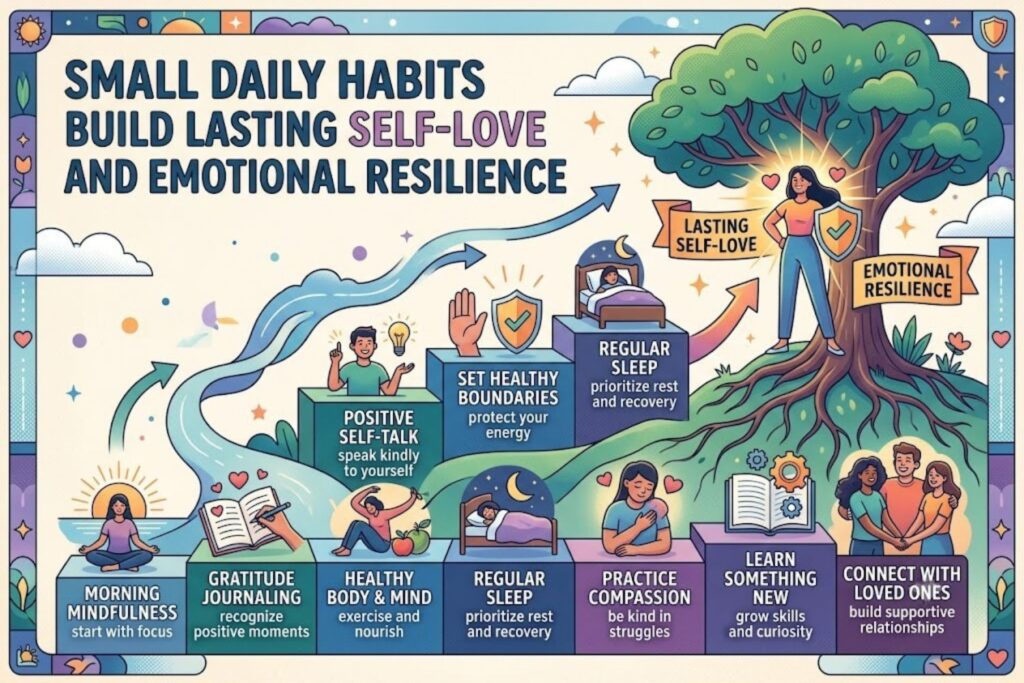
Step 4: Build Healthy Daily Habits
Small habits create lasting change because they are easier to maintain than dramatic lifestyle overhauls.
Consider adding these habits to your routine:
- Drink enough water.
- Move your body in a way you enjoy.
- Spend 10 minutes journaling.
- Practice gratitude.
- Limit unnecessary screen time.
- Prioritize quality sleep.
- Schedule time for hobbies that bring you joy.
Consistency matters more than perfection.
Step 5: Surround Yourself with Positive Influences
The people and environments around you influence how you see yourself.
Healthy relationships encourage growth, while unhealthy ones can reinforce self-doubt.
Take time to evaluate:
- Who energizes you?
- Who constantly criticizes or discourages you?
- Which relationships feel balanced?
- Where do you feel safe being yourself?
Building supportive connections doesn’t mean your life will always be conflict-free, but it can make personal growth much easier.
Step 6: Celebrate Small Wins
Many people wait until they’ve achieved a major goal before acknowledging their progress.
Instead, celebrate every meaningful step.
Examples include:
- Speaking kindly to yourself after a mistake.
- Saying “no” without guilt.
- Asking for help when needed.
- Completing a healthy morning routine.
- Taking time to rest instead of pushing through exhaustion.
Progress is built one choice at a time.
A 30-Day Self-Love Challenge
Instead of trying to change everything at once, focus on one intentional action each day.
| Week | Focus | Examples |
|---|---|---|
| Week 1 | Awareness | Journal your thoughts, notice self-talk, identify emotional triggers. |
| Week 2 | Self-Care | Prioritize sleep, hydration, movement, and nourishing meals. |
| Week 3 | Boundaries | Practice saying no, reduce unnecessary commitments, limit negative influences. |
| Week 4 | Growth | Reflect on progress, set meaningful goals, celebrate your achievements. |
By the end of the month, you’ll likely notice greater awareness and healthier habits—even if the journey is still unfolding.
Habits That Strengthen Self-Love
Morning Habits
- Avoid checking your phone immediately after waking.
- Stretch or take a short walk.
- Write three things you’re grateful for.
- Set one realistic intention for the day.
Evening Habits
- Reflect on one success from the day.
- Practice deep breathing or meditation.
- Read instead of scrolling before bed.
- Prepare for tomorrow to reduce stress.
Weekly Habits
- Spend time in nature.
- Connect with supportive friends or family.
- Review your goals.
- Schedule time for activities that genuinely recharge you.
Common Mistakes That Slow Your Progress
Many people unknowingly make their self-love journey harder than it needs to be.
Avoid these common pitfalls:
Waiting Until You Feel Motivated
Action often creates motivation—not the other way around.
Comparing Yourself to Others
Remember that social media rarely reflects everyday reality.
Expecting Constant Progress
Growth includes setbacks. They don’t erase the progress you’ve already made.
Ignoring Difficult Emotions
Healing doesn’t come from avoiding uncomfortable feelings. It comes from acknowledging them and learning healthy ways to respond.
Seeking Constant Validation
External praise feels good, but lasting confidence comes from trusting your own values and choices.
Self-Love vs. Selfishness
| Self-Love | Selfishness |
|---|---|
| Respects your needs while considering others | Prioritizes personal gain at others’ expense |
| Encourages healthy boundaries | Ignores others’ boundaries |
| Builds empathy | Reduces empathy |
| Supports long-term well-being | Focuses mainly on immediate personal benefit |
| Creates healthier relationships | Often damages relationships |
Choosing yourself when necessary isn’t selfish. It’s part of maintaining your well-being.
How Self-Love Improves Every Area of Life
Relationships
People who value themselves are often more comfortable expressing their needs, communicating openly, and recognizing unhealthy relationship patterns.
Career
Self-love can help you:
- Ask for opportunities.
- Handle constructive feedback.
- Recover from setbacks.
- Avoid burnout.
- Recognize your strengths.
Physical Health
Caring for yourself often leads to healthier lifestyle choices, including regular movement, balanced nutrition, and better sleep.
Mental Well-Being
A healthier relationship with yourself can improve emotional resilience and reduce the impact of negative self-talk.
Personal Growth
When you’re not consumed by self-doubt, you create more space to learn, explore new experiences, and pursue meaningful goals.
How to Know You’re Making Progress
You may be making progress if you notice that you:
- Recover from setbacks more quickly.
- Speak to yourself with greater kindness.
- Set healthier boundaries.
- Feel less dependent on others’ approval.
- Accept compliments more easily.
- Celebrate small achievements.
- Make decisions based on your values rather than fear.
- Feel more comfortable being authentic.
Progress isn’t always dramatic. Sometimes it’s found in the quiet moments when you choose yourself with compassion.
Final Thoughts
Your self-love journey isn’t about becoming someone new—it’s about building a healthier relationship with the person you already are.
There will be days when progress feels effortless and days when it feels challenging. Both are part of the process.
The goal isn’t perfection. It’s consistency.
Every compassionate choice, healthy boundary, and intentional habit strengthens your confidence and emotional well-being over time.
Remember, self-love isn’t a destination you reach once. It’s a lifelong practice of choosing yourself with kindness, honesty, and respect.
Continue Your Journey with Daily Dose Of Dee
If you found this guide helpful, explore more personal growth, mindfulness, and emotional wellness resources on Daily Dose Of Dee. Every article is designed to provide practical strategies that support lasting mental and emotional well-being.
Frequently Asked Questions
1. What is a self-love journey?
A self-love journey is the ongoing process of accepting yourself, practicing self-compassion, and making choices that support your emotional, mental, and physical well-being.
2. How do I start loving myself?
Begin by noticing your inner dialogue, challenging negative beliefs, practicing self-compassion, setting healthy boundaries, and building supportive daily habits.
3. How long does a self-love journey take?
There is no fixed timeline. Self-love develops over time through consistent actions and personal growth.
4. Is self-love the same as self-care?
No. Self-care involves specific activities that support well-being, while self-love is the mindset that motivates those healthy choices.
5. Is self-love selfish?
No. Healthy self-love respects both your needs and the needs of others. It differs from selfishness because it includes empathy and healthy boundaries.
6. Can therapy help with self-love?
Yes. A licensed mental health professional can help you explore negative thought patterns, process past experiences, and develop healthier coping strategies.
7. What are signs that my self-love is improving?
Signs include greater self-compassion, healthier boundaries, increased confidence, reduced dependence on external validation, and better emotional resilience.
8. Why is self-love so difficult?
Past experiences, unrealistic expectations, negative self-talk, and societal pressures can make self-love challenging. Awareness and consistent practice can help.