Mental health awareness is more than recognizing mental illness—it is about understanding how emotional, psychological, and social well-being affect every part of our lives. From managing workplace stress to maintaining healthy relationships, mental health influences how we think, feel, and make decisions every day.
Although conversations about mental health have become more common, stigma, misinformation, and delayed treatment remain significant challenges. Many people dismiss persistent stress, anxiety, or emotional exhaustion as “just part of life,” even when these experiences begin affecting their work, relationships, or physical health.
Whether you’re looking to improve your own well-being, support a loved one, or create a healthier workplace, increasing mental health awareness is the first step toward meaningful change.
What Is Mental Health Awareness?
Quick Answer: Mental health awareness is the understanding that mental health is an essential part of overall health. It involves recognizing common mental health challenges, reducing stigma, encouraging early support, and promoting habits that improve emotional well-being.
Mental health affects how people:
- Think
- Feel
- Respond to challenges
- Handle stress
- Build relationships
- Make decisions
- Work and learn
Awareness is not about diagnosing mental illnesses. Instead, it helps people recognize when something doesn’t feel right and encourages them to seek appropriate support without fear or shame.
Mental Health vs. Mental Illness
These terms are often used interchangeably, but they are not the same.
| Mental Health | Mental Illness |
|---|---|
| Everyone has mental health. | Not everyone experiences a mental illness. |
| Exists on a spectrum that changes over time. | Refers to diagnosed conditions that affect thinking, mood, or behavior. |
| Can improve through healthy habits and support. | May require professional treatment, therapy, medication, or a combination of approaches. |
Just as physical health changes throughout life, mental health can also fluctuate depending on life events, work pressures, relationships, and overall wellness.
Why Mental Health Awareness Matters
Quick Answer: Mental health awareness helps people recognize warning signs early, reduces stigma, encourages timely support, and promotes healthier individuals, families, schools, and workplaces.
Awareness creates positive outcomes because it encourages people to:
- Talk openly about emotional challenges
- Recognize symptoms before they worsen
- Seek professional support sooner
- Support friends, family members, and coworkers
- Build healthier daily habits
- Reduce discrimination surrounding mental illness
The earlier concerns are recognized, the greater the opportunity to manage them effectively.
Why Mental Health Is Just as Important as Physical Health
Many people prioritize annual physical checkups but rarely evaluate their emotional well-being.
However, mental and physical health are deeply connected.
The Mind-Body Connection
Chronic stress can affect nearly every system in the body, contributing to:
- Poor sleep
- Fatigue
- Digestive issues
- High blood pressure
- Headaches
- Reduced concentration
- Lower immune function
Likewise, ongoing physical health conditions can increase emotional strain, making it even more important to care for both mind and body.
How Mental Health Influences Daily Life
Healthy mental well-being supports:
- Better decision-making
- Increased productivity
- Stronger relationships
- Greater resilience during setbacks
- Improved creativity and focus
- Healthier communication
When mental health declines, everyday responsibilities may become more difficult, even if the cause isn’t immediately obvious.
Common Mental Health Challenges
Mental health exists on a spectrum. Experiencing stress or sadness occasionally is a normal part of life. However, when these feelings become persistent or interfere with daily functioning, they deserve attention.
Stress
Stress is the body’s natural response to challenges or demands.
Short-term stress can motivate action, but chronic stress may contribute to emotional exhaustion, sleep disturbances, and reduced performance.
Common sources include:
- Heavy workloads
- Financial concerns
- Family responsibilities
- Health issues
- Major life changes
Anxiety
Everyone experiences worry from time to time.
Anxiety becomes more concerning when excessive fear or worry:
- Persists for weeks or months
- Feels difficult to control
- Interferes with work or relationships
- Causes physical symptoms such as rapid heartbeat or restlessness
Depression
Depression is more than feeling sad after a difficult day.
It may involve:
- Persistent low mood
- Loss of interest in enjoyable activities
- Changes in appetite or sleep
- Difficulty concentrating
- Feelings of hopelessness
- Low energy
Because symptoms vary from person to person, professional evaluation is important when these experiences continue or worsen.
Burnout
Burnout has become increasingly common, especially among professionals in demanding industries.
It is characterized by:
- Emotional exhaustion
- Reduced motivation
- Cynicism
- Feeling detached from work
- Declining productivity
Burnout develops gradually and often results from prolonged workplace stress rather than a single event.
Loneliness
People can feel lonely even when surrounded by others.
Factors contributing to loneliness include:
- Remote work
- Social isolation
- Major life transitions
- Limited social support
- Excessive time spent online instead of engaging in meaningful, in-person connections
Strong social relationships remain one of the most protective factors for long-term mental well-being.
Early Warning Signs You Shouldn’t Ignore
Recognizing changes early allows individuals to seek support before problems become more difficult to manage.
Emotional Signs
Watch for:
- Persistent sadness
- Irritability
- Feeling overwhelmed
- Hopelessness
- Excessive worry
- Loss of motivation
Behavioral Signs
Notice changes such as:
- Withdrawing from friends or family
- Avoiding responsibilities
- Increased substance use
- Declining work performance
- Difficulty completing everyday tasks
- Loss of interest in hobbies
Physical Signs
Mental health challenges can also appear physically.
Common examples include:
- Frequent headaches
- Muscle tension
- Digestive discomfort
- Persistent fatigue
- Sleep difficulties
- Changes in appetite
These symptoms can have many possible causes, but when they persist alongside emotional changes, they shouldn’t be ignored.
Mental Health in the Technology Industry
The technology sector offers innovation, flexibility, and exciting career opportunities—but it also presents unique mental health challenges.
Common Stressors for Tech Professionals
Technology workers often experience:
- Long screen time
- Tight project deadlines
- Frequent product launches
- Constant notifications
- Rapid technological change
- Distributed or remote teams
- Pressure to continuously learn new skills
Over time, these demands can contribute to mental fatigue and burnout if healthy boundaries are not maintained.
Digital Fatigue
Many professionals spend eight to twelve hours each day interacting with screens.
Symptoms of digital fatigue may include:
- Difficulty concentrating
- Eye strain
- Reduced creativity
- Mental exhaustion
- Feeling “always connected”
Expert Tip: Schedule short breaks away from screens every 60–90 minutes. Even a brief walk or stretching session can help refresh attention and reduce cognitive overload.
Remote Work Challenges
Working remotely provides flexibility but may also blur the line between professional and personal life.
Healthy practices include:
- Creating a dedicated workspace
- Setting consistent working hours
- Turning off work notifications after hours
- Taking regular breaks
- Scheduling social interactions outside of work
- Using vacation time to recharge
Callout Box: Mental Fitness Starts with Small Habits
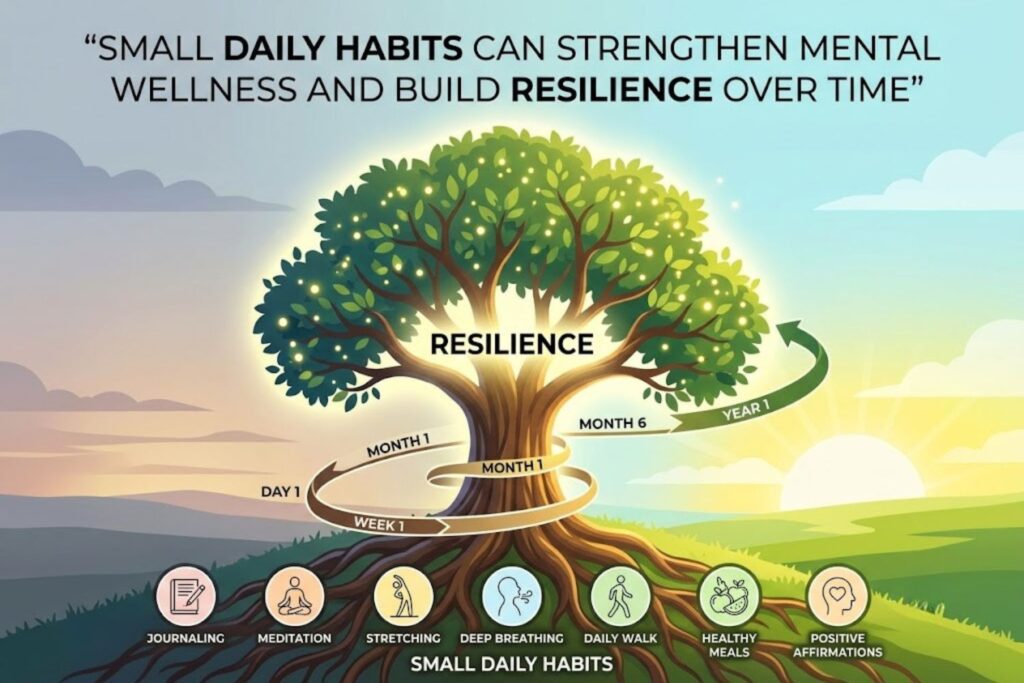
Improving mental health doesn’t always require major life changes. Consistent, small actions—such as getting enough sleep, staying active, connecting with others, and taking regular breaks—can make a meaningful difference over time.
How to Improve Mental Health Every Day
Quick Answer: Improving mental health doesn’t require perfection. Small, consistent habits practiced over time can strengthen resilience, reduce stress, and support emotional well-being.
Think of mental wellness as a daily investment rather than a one-time goal. Just as physical fitness requires regular exercise, mental fitness grows through consistent, healthy routines.
A Simple Daily Mental Wellness Routine
| Time of Day | Healthy Habit | Why It Helps |
|---|---|---|
| Morning | Avoid checking emails immediately | Starts the day with less stress |
| Morning | Eat a balanced breakfast and hydrate | Supports energy and concentration |
| During Work | Take a 5–10 minute break every 60–90 minutes | Reduces mental fatigue |
| Afternoon | Stretch or take a short walk | Improves mood and focus |
| Evening | Limit screen time before bed | Promotes better sleep quality |
| Night | Reflect on three positive moments | Encourages gratitude and emotional balance |
Expert Insight: You don’t need to adopt every habit at once. Start with one or two that fit your lifestyle and build from there. Sustainable routines are more effective than dramatic, short-lived changes.
The Mental Fitness Framework
Awareness is only the beginning. The following five-step framework helps turn awareness into action.
1. Recognize
Pay attention to changes in your thoughts, emotions, energy levels, or behavior.
Ask yourself:
- Have I been feeling overwhelmed more often?
- Am I sleeping differently?
- Have I lost interest in activities I usually enjoy?
- Do I feel emotionally drained most days?
Self-awareness is often the first step toward positive change.
2. Reflect
Instead of judging yourself, become curious.
Consider:
- What has changed recently?
- What situations increase my stress?
- Which habits help me feel better?
- Which habits leave me feeling worse?
Reflection helps identify patterns rather than isolated moments.
3. Reset
Choose one practical action to interrupt unhealthy patterns.
Examples include:
- Going for a walk
- Practicing deep breathing
- Taking a lunch break away from your desk
- Calling a trusted friend
- Journaling for ten minutes
- Getting a full night’s sleep
Small resets can prevent stress from building into burnout.
4. Reach Out
You don’t have to manage every challenge alone.
Support may come from:
- Family
- Friends
- Mentors
- Therapists
- Counselors
- Employee Assistance Programs (EAPs)
- Community support groups
Seeking help is a sign of self-awareness, not weakness.
5. Repeat
Mental wellness isn’t something you achieve once—it’s something you maintain.
Checking in with yourself regularly helps you adapt as life changes.
How to Support Someone Who May Be Struggling
Many people want to help but worry about saying the wrong thing.
The most important thing is to approach the conversation with empathy rather than trying to “fix” the problem.
Helpful Things to Say
- “I’ve noticed you don’t seem like yourself lately.”
- “I’m here if you’d like to talk.”
- “How can I support you?”
- “Would it help to explore resources together?”
What to Avoid
- “Just think positive.”
- “Everyone feels stressed.”
- “You’ll get over it.”
- “Other people have it worse.”
- Offering solutions before listening.
- Minimizing someone’s feelings.
Sometimes, simply listening without judgment can make a meaningful difference.
Mental Health Myths vs. Facts
| Myth | Fact |
|---|---|
| Mental health only matters if someone has a diagnosis. | Everyone has mental health, and everyone benefits from caring for it. |
| Asking for help is a sign of weakness. | Seeking support demonstrates self-awareness and courage. |
| Stress and burnout are the same thing. | Burnout results from prolonged, unmanaged stress and has distinct characteristics. |
| Successful people don’t struggle with mental health. | Mental health challenges can affect anyone, regardless of profession or achievement. |
| Self-care solves every mental health concern. | Healthy habits help, but some situations require professional evaluation and treatment. |
Common Mistakes That Can Hurt Mental Well-Being
Even with good intentions, certain habits can make stress harder to manage.
Avoid these common pitfalls:
- Ignoring ongoing stress until it becomes overwhelming
- Skipping meals during busy workdays
- Sacrificing sleep to meet deadlines
- Comparing yourself to others on social media
- Remaining constantly available for work
- Isolating yourself from friends or family
- Waiting too long to ask for help
Recognizing these patterns early makes it easier to change them.
A Practical Mental Health Checklist
Daily
✔ Drink enough water
✔ Move your body
✔ Spend time outdoors if possible
✔ Take regular screen breaks
✔ Connect with someone you trust
✔ Practice mindfulness or deep breathing
✔ Get enough sleep
Weekly
✔ Reflect on your stress levels
✔ Make time for hobbies
✔ Review your work-life balance
✔ Schedule meaningful social interactions
✔ Celebrate small accomplishments
Monthly
✔ Evaluate your emotional well-being
✔ Review personal and professional goals
✔ Consider whether your current routines are supporting your mental health
✔ Reach out for additional support if needed
When Should You Seek Professional Help?
Decision Guide
Consider speaking with a qualified mental health professional if:
- Emotional distress lasts for several weeks
- Daily responsibilities become difficult to manage
- Sleep or appetite changes significantly
- You withdraw from relationships
- Stress feels overwhelming despite healthy coping strategies
- Anxiety or sadness interferes with work, school, or home life
Early support often leads to better outcomes than waiting until symptoms become more severe.
If you or someone you know is experiencing thoughts of self-harm or is in immediate danger, seek emergency assistance or contact your local crisis resources without delay.
Key Takeaways
- Mental health is an essential part of overall well-being.
- Awareness helps reduce stigma and encourages early support.
- Small, consistent habits contribute to long-term mental wellness.
- Technology professionals should pay close attention to digital fatigue and work-life boundaries.
- Supporting others begins with empathy, active listening, and encouraging appropriate help when needed.
- Mental wellness is an ongoing practice—not a destination.
Conclusion
Mental health awareness is about more than recognizing symptoms—it’s about creating environments where people feel safe discussing challenges, seeking support, and prioritizing their well-being.
Whether you’re managing workplace stress, supporting a loved one, or improving your own daily habits, small actions can have a lasting impact. Progress doesn’t require perfection. It requires consistency, self-awareness, and a willingness to care for your mental health as intentionally as your physical health.
At Daily Dose Of Dee, we believe that personal growth begins with understanding yourself. Explore our resources on mindfulness, emotional resilience, stress management, and self-care to continue building habits that support a healthier, more balanced life.
Frequently Asked Questions (FAQ)
1. What is mental health awareness?
Mental health awareness is the understanding that emotional, psychological, and social well-being are essential to overall health. It promotes education, reduces stigma, and encourages people to seek support when needed.
2. Why is mental health awareness important?
Mental health awareness helps people recognize warning signs early, reduces misconceptions about mental illness, encourages open conversations, and supports earlier access to professional care.
3. What are the early signs of poor mental health?
Common warning signs include persistent sadness, excessive worry, irritability, fatigue, sleep changes, difficulty concentrating, withdrawing from others, and losing interest in activities you once enjoyed.
4. What’s the difference between stress and burnout?
Stress is usually a short-term response to challenges, while burnout develops after prolonged, unmanaged stress and often includes emotional exhaustion, cynicism, and reduced performance.
5. How can I improve my mental health every day?
Focus on simple daily habits such as getting enough sleep, staying physically active, eating balanced meals, taking breaks from screens, practicing mindfulness, and maintaining supportive relationships.
6. How can I support someone experiencing mental health challenges?
Listen without judgment, express genuine concern, encourage professional support if needed, and avoid minimizing their feelings or trying to “fix” the situation immediately.
7. When should someone seek professional help?
Professional support is recommended when emotional distress lasts for several weeks, interferes with daily life, or significantly affects work, relationships, sleep, or overall well-being.
8. Does working in technology affect mental health?
It can. Long hours, digital fatigue, constant connectivity, demanding deadlines, and remote work isolation may increase stress and burnout risk if healthy boundaries aren’t maintained.
9. Can lifestyle habits improve mental well-being?
Healthy routines—including regular exercise, quality sleep, nutritious eating, stress management, and social connection—can support mental wellness. They complement, but do not replace, professional care when it’s needed.
10. Is mental health awareness only important during Mental Health Awareness Month?
No. While awareness campaigns increase visibility, supporting mental well-being is important throughout the year.