
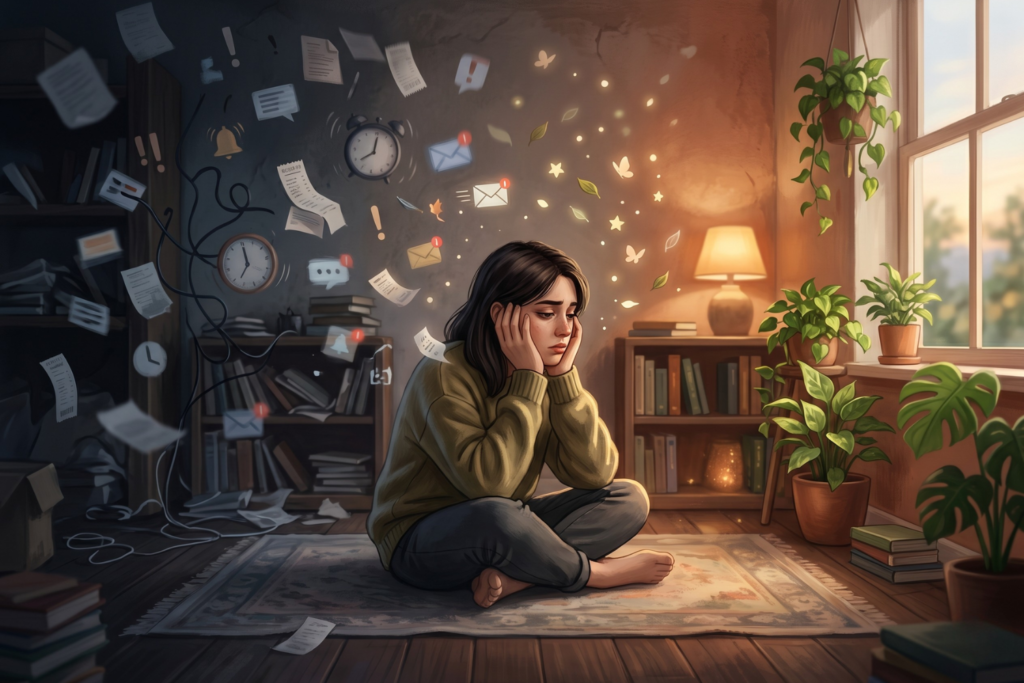
In today’s fast-paced world, exhaustion is often worn like a badge of honor. People proudly talk about being “busy,” “overworked,” or “running on empty,” as if constant exhaustion is proof of productivity. But beneath this normalised hustle culture lies a serious issue that often goes unnoticed until it becomes overwhelming: mental and emotional burnout.
Unlike physical tiredness that improves after rest, burnout is deeper. It affects how you think, feel, and function in everyday life. It can slowly drain your motivation, distort your emotions, and make even simple tasks feel impossible.
The biggest challenge with burnout is that it doesn’t happen overnight. It builds silently, through stress that is ignored, emotions that are suppressed, and rest that is constantly postponed. Recognizing it early is the key to preventing long-term emotional and psychological damage.
What is Mental and Emotional Burnout?
Mental and emotional burnout is a state of chronic psychological exhaustion caused by prolonged stress. It happens when your mind and emotions are overworked for too long without adequate recovery.
It is not just feeling tired after a long day. It is a deeper depletion where your emotional resilience weakens, your mental clarity fades, and your motivation drops significantly.
Burnout often develops in people who:
- Take on too many responsibilities
- Struggle with perfectionism
- Constantly prioritize others over themselves
- Experience ongoing stress at work, home, or relationships
Over time, the emotional load becomes too heavy to carry.
Early Signs You Should Never Ignore
Burnout rarely announces itself loudly. Instead, it shows subtle warning signs that are often overlooked.
1. Constant Mental Fatigue
You may feel tired even after sleeping well. Your mind feels foggy, and focusing on simple tasks becomes difficult.
2. Emotional Numbness
Instead of feeling happy or sad, you may feel “nothing.” Things that once excited you no longer bring joy.
3. Irritability and Mood Swings
Small issues start to feel overwhelming. You may find yourself snapping at others or feeling unusually sensitive.
4. Loss of Motivation
Tasks that once felt manageable now feel pointless or exhausting. Even starting something feels like a burden.
5. Physical Symptoms
Burnout doesn’t just affect the mind. It can show up as headaches, muscle tension, stomach issues, or frequent fatigue.
Why Mental and Emotional Burnout Happens
Burnout doesn’t have a single cause. It is usually the result of multiple pressures building up over time.
Chronic Stress
Ongoing stress from work, studies, or personal responsibilities keeps your nervous system in a constant state of alert.
Emotional Overload
Being the “strong one” for everyone else can lead to emotional exhaustion when you never process your own feelings.
Lack of Boundaries
When you constantly say yes to others and no to yourself, your emotional energy becomes depleted.
Perfectionism
Trying to meet unrealistic standards can create constant internal pressure and self-criticism.
Lack of Rest and Recovery
Rest is not just sleep. It includes emotional rest, mental breaks, and time away from responsibility.
The Difference Between Stress and Burnout
Stress and burnout are often confused, but they are not the same.
- Stress feels like “too much” — too many tasks, too many demands, too much pressure.
- Burnout feels like “nothing” — no energy, no motivation, no emotional capacity.
Stress is usually temporary and can sometimes push productivity. Burnout, however, drains your ability to function altogether.
The Hidden Emotional Impact of Burnout
One of the most damaging aspects of burnout is its emotional effect. You may begin to feel disconnected from yourself and others.
Common emotional experiences include:
- Feeling detached from reality
- Loss of interest in relationships
- Constant self-doubt
- Feeling like you are “not yourself anymore”
This emotional disconnection can make people feel isolated, even when surrounded by others.
How Burnout Affects Daily Life
Burnout doesn’t stay in one area of life—it spreads.
Work or Study Performance
Tasks take longer, mistakes increase, and concentration decreases.
Relationships
You may withdraw from loved ones or feel too drained to engage emotionally.
Self-Care
Basic routines like eating well, exercising, or maintaining hygiene may feel exhausting.
Decision Making
Even small choices feel overwhelming because mental energy is low.
How to Recognize You Are Heading Toward Burnout
The key is early awareness. If you notice these patterns, it may be time to pause and reassess:
- You feel tired most of the time, even after rest
- You are emotionally disconnected from things you used to enjoy
- You feel overwhelmed by small tasks
- You are constantly irritated or emotionally drained
- You struggle to concentrate or stay present
Recognizing these signs early can prevent deeper emotional exhaustion.
Practical Ways to Recover from Mental and Emotional Burnout
Recovery is not instant—it is a gradual process of rebuilding emotional and mental energy.
1. Slow Down Your Pace
You cannot heal in the same environment that caused the burnout. Reducing your workload, even slightly, helps your mind recover.
2. Set Emotional Boundaries
Learn to say no without guilt. Protecting your energy is not selfish—it is necessary.
3. Prioritize Rest (Not Just Sleep)
Rest includes:
- Doing nothing without guilt
- Taking breaks during the day
- Disconnecting from screens
- Spending time in quiet environments
4. Express Your Emotions
Talking to someone, journaling, or even simply acknowledging your feelings can help release emotional pressure.
5. Reconnect with Small Joys
You don’t need big changes. Start with small things that bring comfort, like listening to music, walking, or reading.
6. Reduce Mental Overload
Avoid multitasking and unnecessary commitments. Focus on one thing at a time.
Preventing Burnout in the Future
Once you recover, prevention becomes important.
- Build consistent rest into your routine
- Avoid overcommitting yourself
- Check in with your emotions regularly
- Create boundaries in work and relationships
- Learn to recognize early stress signals
Prevention is about balance, not perfection.
Final Thoughts
Mental and emotional burnout is not a sign of weakness—it is a sign that your mind and body have been under too much pressure for too long. Ignoring it only deepens the exhaustion, while recognizing it early opens the door to healing.
Your productivity, success, or responsibilities should never come at the cost of your emotional well-being. Taking care of your mental health is not a luxury—it is a necessity.
The earlier you listen to your mind and emotions, the easier it becomes to restore balance, clarity, and peace in your life.