
Stress and worry have become part of daily life for many people. From work pressure and financial concerns to personal struggles and social expectations, anxiety can quietly take over your mind and body. While occasional stress is normal, ongoing anxiety can affect sleep, relationships, focus, and overall well-being. The good news is that learning effective anxiety management techniques can help you regain emotional balance and feel more in control of your life.
In today’s fast-paced world, people often ignore the early signs of anxiety until it becomes overwhelming. Racing thoughts, restlessness, irritability, fatigue, and difficulty concentrating are just a few symptoms that can interfere with daily living. However, small lifestyle changes and mindful habits can make a major difference in reducing anxiety naturally.
This guide explores practical and proven ways to manage anxiety, improve mental clarity, and create a calmer, healthier mindset.
Understanding Anxiety and Why It Happens
Before learning how to manage anxiety, it’s important to understand what anxiety actually is. Anxiety is your body’s natural response to stress or perceived danger. It activates your “fight or flight” system, releasing hormones like adrenaline and cortisol that prepare your body to react.
While this response can be helpful in dangerous situations, chronic anxiety keeps your nervous system in a constant state of alertness. Over time, this can lead to emotional exhaustion and physical symptoms such as headaches, rapid heartbeat, muscle tension, and digestive problems.
Common causes of anxiety include:
- Work-related stress
- Financial pressure
- Relationship conflicts
- Health concerns
- Traumatic experiences
- Social anxiety
- Lack of sleep
- Excessive screen time
- Negative thinking patterns
Understanding your triggers is the first step toward successful anxiety management.
Practice Deep Breathing Exercises
One of the quickest ways to calm anxiety is through controlled breathing. When anxiety rises, breathing often becomes shallow and rapid, which increases tension in the body. Deep breathing helps activate the parasympathetic nervous system, encouraging relaxation.
Try this simple breathing technique:
- Sit comfortably in a quiet place.
- Inhale slowly through your nose for four seconds.
- Hold your breath for four seconds.
- Exhale slowly through your mouth for six seconds.
- Repeat for several minutes.
This technique can instantly reduce stress and bring your focus back to the present moment. Regular breathing exercises are highly effective for long-term anxiety management.
Get Regular Physical Exercise
Exercise is one of the most powerful natural remedies for anxiety. Physical activity releases endorphins, which are chemicals in the brain that improve mood and reduce stress.
You don’t need intense workouts to experience the benefits. Even moderate movement can help, such as:
- Walking outdoors
- Yoga
- Stretching
- Cycling
- Dancing
- Swimming
Exercise also improves sleep quality and increases confidence, both of which contribute to better emotional health.
People who stay physically active often experience lower anxiety levels and improved resilience during stressful situations.
Reduce Negative Thinking Patterns
Anxiety often grows stronger when negative thoughts go unchecked. Overthinking, assuming the worst, and constantly worrying about the future can create a cycle of stress.
A helpful way to challenge anxious thoughts is by asking yourself:
- Is this fear realistic?
- What evidence supports this thought?
- Am I assuming the worst-case scenario?
- What would I tell a friend in this situation?
Replacing negative thoughts with balanced thinking can reduce emotional overwhelm and improve self-awareness.
Journaling can also help identify recurring fears and emotional triggers. Writing your thoughts down allows you to process emotions more clearly and support healthier anxiety management habits.
Prioritize Sleep and Rest
Poor sleep and anxiety are deeply connected. Anxiety can make it difficult to fall asleep, while lack of sleep can increase feelings of stress and irritability.
To improve sleep quality:
- Create a consistent bedtime routine
- Avoid screens before sleeping
- Limit caffeine in the evening
- Keep your bedroom cool and quiet
- Practice relaxation techniques before bed
Quality sleep helps your brain process emotions more effectively and gives your body time to recover from daily stress.
If anxiety frequently disrupts your sleep, making rest a priority should become an essential part of your anxiety management strategy.
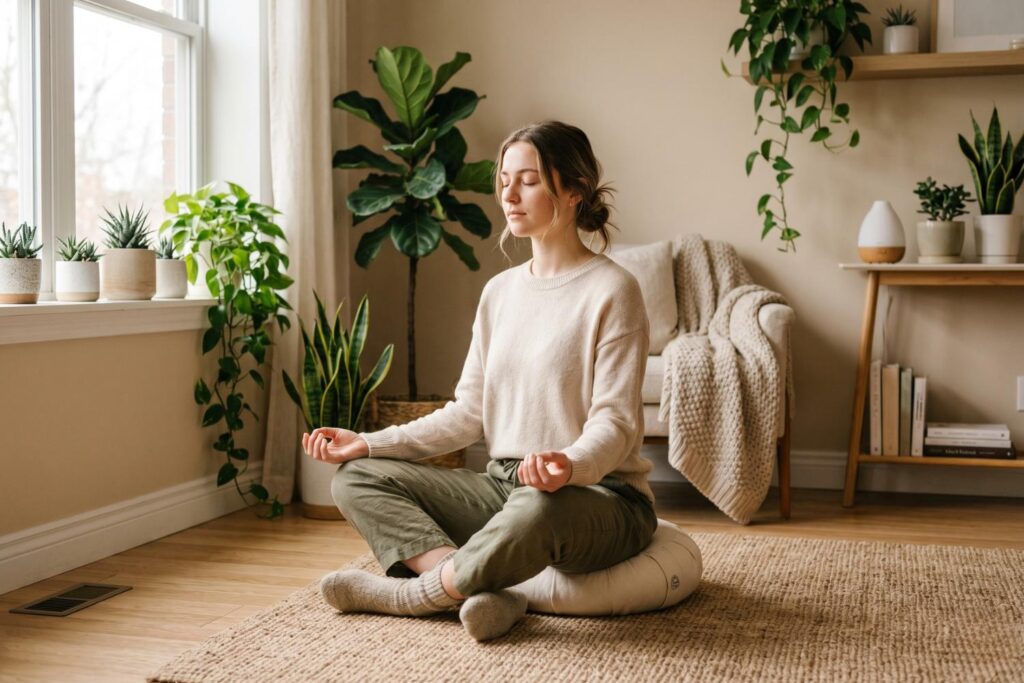
Try Meditation and Mindfulness
Mindfulness teaches you to focus on the present moment instead of worrying about the past or future. Meditation helps calm racing thoughts and improves emotional stability over time.
Even a few minutes of mindfulness each day can help reduce anxiety symptoms.
Simple mindfulness activities include:
- Guided meditation
- Body scan exercises
- Mindful walking
- Focusing on your senses
- Gratitude practice
Mindfulness doesn’t eliminate stress completely, but it changes how you respond to stressful situations.
People who practice meditation regularly often report feeling calmer, more focused, and emotionally balanced.
Limit Social Media and News Consumption
Constant exposure to social media and negative news can increase anxiety levels significantly. Comparing yourself to others online or consuming distressing information daily can overwhelm your nervous system.
To protect your mental health:
- Set screen time limits
- Unfollow accounts that trigger stress
- Take regular digital detox breaks
- Avoid checking news constantly
- Focus on real-life connections
Creating healthy boundaries with technology is an important yet often overlooked part of modern anxiety management.
Maintain a Healthy Diet
What you eat can directly impact your mood and stress levels. Processed foods, excessive sugar, and too much caffeine may increase anxiety symptoms.
Foods that support mental wellness include:
- Fruits and vegetables
- Whole grains
- Nuts and seeds
- Fatty fish
- Herbal teas
- Foods rich in magnesium and omega-3s
Staying hydrated is equally important because dehydration can affect mood and concentration.
A balanced diet supports brain function and provides the energy needed to cope with stress more effectively.
Learn to Set Healthy Boundaries
Many people experience anxiety because they constantly say yes to everything and neglect their own needs. Overcommitting yourself can quickly lead to burnout.
Healthy boundaries involve:
- Saying no when necessary
- Protecting your time and energy
- Avoiding toxic relationships
- Communicating your needs clearly
Setting boundaries is not selfish. It’s an essential form of self-care that helps maintain emotional balance and reduces unnecessary stress.
Strong personal boundaries are often linked to healthier and more sustainable anxiety management practices.
Connect With Supportive People
Isolation can make anxiety feel worse. Talking to someone you trust can provide comfort, reassurance, and emotional release.
Support may come from:
- Friends
- Family members
- Support groups
- Therapists
- Counselors
Human connection reminds you that you are not alone in your struggles. Sometimes simply expressing your thoughts out loud can reduce emotional pressure significantly.
Seeking professional help is especially important if anxiety begins interfering with daily life or relationships.
Spend Time in Nature
Nature has a calming effect on the mind and body. Spending time outdoors can lower stress hormones, improve mood, and help you feel more grounded.
Activities like:
- Walking in a park
- Gardening
- Hiking
- Sitting near water
- Watching sunsets
can help reduce mental fatigue and emotional tension.
Even short periods in nature can create a sense of peace and mental clarity.
Practice Gratitude Daily
Anxiety often focuses attention on fear and uncertainty. Gratitude shifts your focus toward positive experiences and meaningful moments.
You can practice gratitude by:
- Writing three things you appreciate each day
- Reflecting on positive experiences
- Thanking people around you
- Celebrating small wins
Over time, gratitude can improve emotional resilience and create a more optimistic mindset.
Use Grounding Techniques During Panic or Stress
Grounding techniques help bring your attention back to the present moment when anxiety feels overwhelming.
A popular method is the 5-4-3-2-1 grounding exercise:
- 5 things you can see
- 4 things you can touch
- 3 things you can hear
- 2 things you can smell
- 1 thing you can taste
This technique interrupts anxious thoughts and helps calm the nervous system during stressful moments.
Grounding exercises are simple yet powerful tools for effective anxiety management.
Create a Calm Daily Routine
Uncertainty and chaos can increase anxiety levels. Having a consistent daily routine creates structure and emotional stability.
A calming routine may include:
- Morning stretching
- Journaling
- Healthy meals
- Scheduled breaks
- Evening relaxation time
Consistency helps your mind feel safer and more organized, reducing feelings of overwhelm.
Small daily habits often have a bigger impact on mental health than occasional major changes.
When to Seek Professional Help
While self-help strategies can be extremely beneficial, severe or persistent anxiety may require professional support.
You should consider seeking help if anxiety:
- Interferes with work or relationships
- Causes frequent panic attacks
- Affects sleep regularly
- Leads to avoidance behaviors
- Feels impossible to control
Therapists and mental health professionals can provide personalized guidance, coping strategies, and treatment options.
There is strength in asking for support when needed.
Final Thoughts
Managing anxiety is not about eliminating stress completely. Life will always include challenges, uncertainty, and emotional ups and downs. The goal of effective anxiety management is to build healthier responses to stress so you can feel calmer, stronger, and more in control.
Simple practices like deep breathing, exercise, mindfulness, healthy boundaries, and quality sleep can make a significant difference in your emotional well-being. The key is consistency and self-awareness.
Remember that progress takes time. Some days will feel easier than others, and that’s completely normal. By taking small steps every day, you can create a healthier mindset and improve your overall quality of life.