Family relationships shape who we are. From parents and siblings to cousins, in-laws, and grandparents, every connection in a family has its own meaning and role. Yet, many people often feel confused when trying to understand how different relatives are connected. This is where a family relationship chart becomes incredibly helpful.
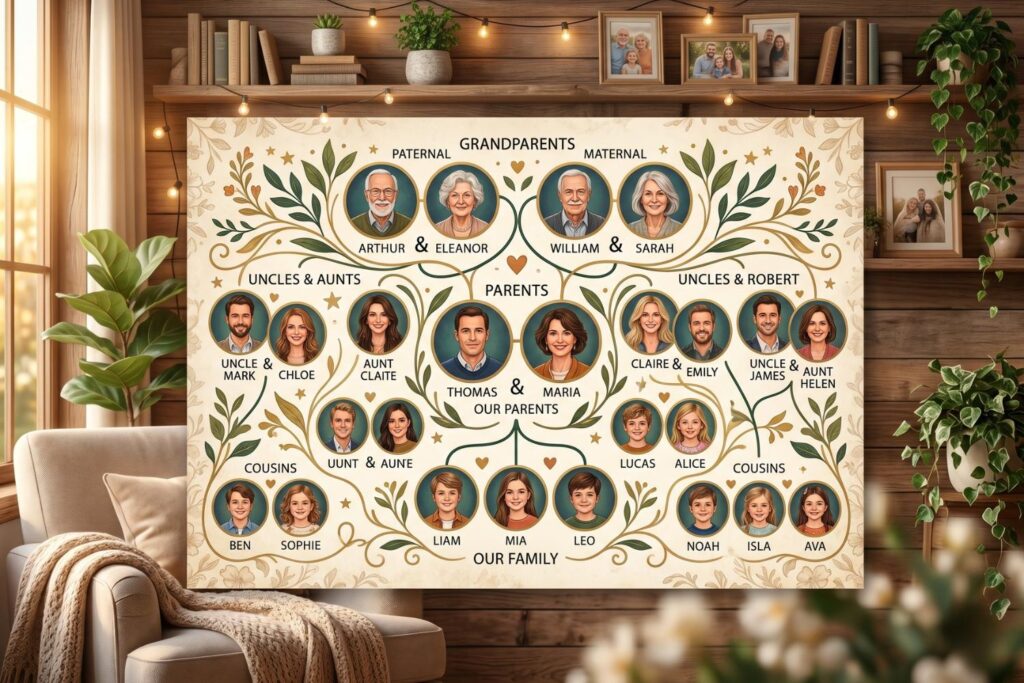
A family relationship chart is a visual guide that explains how people within a family are related to one another. Whether you are tracing your ancestry, teaching children about relatives, or simply trying to understand extended family ties, a family chart makes everything easier to understand.
In today’s world, where families are often spread across cities and countries, understanding family connections helps strengthen emotional bonds and preserve family history. A well-organized family chart can also help during family reunions, genealogy research, legal matters, and cultural traditions.
If you have ever wondered who your second cousin is or how your aunt’s children are related to you, this guide will explain everything in a simple and easy-to-follow way.
What Is a Family Relationship Chart?
A family relationship chart is a diagram that shows the connections between family members across generations. It organizes relatives into a structure that is easy to read and understand.
The chart usually begins with a common ancestor, such as grandparents or great-grandparents, and branches outward to show children, grandchildren, cousins, uncles, aunts, and extended family members.
These charts can be simple or highly detailed depending on the purpose. Some people use them for personal understanding, while others use them for genealogy or medical history tracking.
Common Information Found in a Family Relationship Chart
- Parents and children
- Siblings
- Grandparents and grandchildren
- Aunts and uncles
- Cousins
- In-laws
- Step-relatives
- Adoptive family members
A family chart helps people visualize relationships instead of trying to memorize complicated family terms.
Why Understanding Family Connections Matters
Understanding family relationships is important for emotional, social, and cultural reasons. Knowing how family members are connected can strengthen communication and create a deeper sense of belonging.
1. Strengthens Family Bonds
When people understand their relationships clearly, they often feel more connected to family traditions and values.
2. Preserves Family History
Family charts help preserve stories, names, and memories for future generations.
3. Helps Children Learn Relationships
Children often struggle to understand how cousins, uncles, and grandparents are related. A visual chart simplifies learning.
4. Useful for Genealogy Research
Many people use relationship charts while researching ancestry and building family trees.
5. Supports Medical Awareness
Some inherited medical conditions run in families. Understanding blood relationships can help doctors identify health risks.
Basic Family Relationship Terms Explained
Before understanding a family chart, it is important to know the common family relationship terms.
Parents
Your mother and father are your parents. They form the foundation of your immediate family.
Siblings
Brothers and sisters are your siblings. You share one or both parents with them.
Grandparents
Your parents’ parents are your grandparents.
Grandchildren
The children of your children are your grandchildren.
Aunts and Uncles
Your parents’ siblings are your aunts and uncles.
Cousins
Your aunt’s or uncle’s children are your cousins.
Nephews and Nieces
Your siblings’ children are your nephews and nieces.
In-Laws
Relatives gained through marriage are called in-laws.
Understanding Immediate Family vs Extended Family
One of the most important parts of reading a family relationship chart is knowing the difference between immediate and extended family.
Immediate Family
Immediate family includes:
- Parents
- Siblings
- Spouse
- Children
These are usually the people closest to your daily life.
Extended Family
Extended family includes:
- Grandparents
- Cousins
- Aunts and uncles
- Nephews and nieces
- In-laws
Extended family relationships can vary greatly depending on culture and traditions.
How a Family Relationship Chart Is Structured
Most charts follow a top-to-bottom format.
Top Generation
The oldest known ancestors appear at the top.
Middle Generations
Children and grandchildren appear beneath their parents.
Side Branches
Siblings, cousins, and extended relatives branch outward horizontally.
This layout makes it easier to trace relationships across generations.
Understanding Cousin Relationships
Cousin relationships are often the most confusing part of any family relationship chart.
First Cousins
You share grandparents with your first cousins.
Second Cousins
You share great-grandparents with second cousins.
Third Cousins
You share great-great-grandparents.
Cousins Once Removed
The phrase “removed” refers to a difference in generations.
For example:
- Your mother’s cousin is your first cousin once removed.
- Your cousin’s child is also your first cousin once removed.
Understanding cousin terminology becomes much easier when viewed through a chart.
Step-Families and Blended Families in Modern Charts
Modern families are more diverse than ever. Today’s family relationship charts often include:
- Step-parents
- Step-siblings
- Half-siblings
- Adoptive relatives
- Guardians
Half-Siblings
Half-siblings share one biological parent.
Step-Siblings
Step-siblings become family through marriage but are not biologically related.
Adoptive Relationships
Adopted family members are equally important and are often included in charts with special symbols or notes.
Modern family charts aim to represent emotional and legal family bonds, not just biological connections.
Cultural Differences in Family Relationships
Different cultures define family relationships in unique ways.
In many cultures:
- Cousins may be treated like siblings.
- Elders receive special titles and respect.
- Extended family plays a larger role in daily life.
Some cultures also have specific words for maternal and paternal relatives instead of using general terms like “uncle” or “aunt.”
Understanding cultural perspectives makes family charts even more meaningful.
How to Create Your Own Family Relationship Chart
Creating a family relationship chart can be a fun and meaningful activity.
Step 1: Start With Yourself
Write your name in the center or lower part of the chart.
Step 2: Add Parents and Siblings
Place parents above you and siblings beside you.
Step 3: Include Grandparents
Add grandparents above your parents.
Step 4: Add Extended Family
Include:
- Aunts
- Uncles
- Cousins
- Nieces
- Nephews
Step 5: Use Symbols or Colors
Different colors can help distinguish:
- Maternal relatives
- Paternal relatives
- Marriage connections
- Adoptive relationships
Step 6: Keep Updating the Chart
Families grow over time, so charts should be updated regularly.
Digital Tools for Building Family Charts
Technology has made family chart creation much easier.
Popular online tools help users:
- Build interactive family trees
- Store photographs
- Track ancestry
- Share charts with relatives
Some people even use DNA ancestry services to discover distant relatives and expand their family charts.
Common Challenges When Reading Family Charts
Family charts can sometimes feel overwhelming, especially in large families.
Similar Names
Generations may share identical names.
Multiple Marriages
Blended families can create complex branches.
Missing Information
Older records may be incomplete.
Cultural Differences
Family titles can vary between cultures and languages.
Despite these challenges, family charts remain one of the best ways to understand family structure.
The Emotional Value of Family Relationship Charts
Beyond names and lines, family charts hold emotional significance.
They remind us:
- Where we come from
- Who shaped our lives
- How generations are connected
For many people, creating a family relationship chart becomes a journey of self-discovery and emotional healing.
It can also help reconnect distant relatives and preserve family stories for future generations.
Family Relationship Charts for Children
Teaching children about family relationships becomes much easier with visual aids.
Children learn:
- Who their relatives are
- How people are connected
- The importance of family bonds
Using colorful charts, photographs, and storytelling can make learning enjoyable and memorable.
Family Charts and Genealogy Research
Genealogy is the study of family history and ancestry. Family charts are essential tools for genealogy researchers.
Researchers often use:
- Birth records
- Marriage certificates
- Census data
- Old photographs
- Family stories
Building a detailed chart can reveal surprising family connections and historical insights.
How Family Relationships Influence Personal Identity
Family relationships play a major role in shaping personality, beliefs, and emotional development.
Strong family connections can provide:
- Emotional support
- Guidance
- Security
- Shared traditions
At the same time, complicated family dynamics can also influence mental and emotional well-being.
Understanding family structures through charts can encourage healthier communication and deeper empathy among relatives.
Tips for Keeping Your Family Chart Organized
Here are a few helpful tips:
Keep Information Accurate
Double-check names, birth dates, and relationships.
Use Clear Labels
Label every connection properly.
Add Photos
Pictures make charts more engaging and personal.
Store Copies Digitally
Backup your chart online or in cloud storage.
Update Regularly
Add new births, marriages, and important family changes.
Conclusion
A family relationship chart is more than just a diagram. It is a meaningful way to understand the people who shape our lives and preserve the connections that bind generations together.
Whether you are learning about cousins, tracing your ancestry, or teaching children about family members, these charts simplify even the most complex relationships.
In a world where families continue to grow and evolve, understanding family connections helps strengthen identity, emotional bonds, and family traditions. By creating and maintaining a family relationship chart, you preserve not only names and relationships but also the stories and memories that define your family history.